For Women to Think Mathematically, Colleges Should Think Creatively
By Theodore P. Hill and Erika Rogers
The dearth of women in the so-called hard—meaning mathematically intensive—sciences in the United States has spawned a veritable industry. Hundreds of research papers have been published, hundreds of thousands of schoolchildren in nearly 50 countries have been studied, and hundreds of millions of dollars of public funds have been spent, all with the aim of solving the "problem" of gender gap in the STEM fields—science, technology, engineering, and mathematics.
Meanwhile, fields such as biology and the medical sciences, which are not as mathematically intensive, have witnessed a major reversal of gender representation since the women's movement began, in the 1960s. The abundance of women in those fields apparently is not considered problematic. The gender gap in the hard sciences, however, which is viewed by many decision makers as a detriment to society, stubbornly persists. Apocalyptic predictions suggest that, despite recent gains and aggressive hiring policies, gender representation in science faculties might not reach equity for another century.
Studies by psychologists, sociologists, and the American Association of University Women blame causes as varied as cultural bias, innate female affinity for "people" versus male affinity for "things," lack of early encouragement, the conflicts of motherhood, and biological differences in mathematical abilities.
In The Mathematics of Sex: How Biology and Society Conspire to Limit Talented Women and Girls, Stephen J. Ceci and Wendy M. Williams conclude that the single overriding cause of the scarcity of women in the hard sciences is women's choices and preferences. While bias, discrimination, and biological differences may have some secondary influence, they found, women simply prefer careers that don't involve math over careers in engineering, physics, mathematics, operations research, computer science, and chemistry. Why this is so remains unanswered.
Of the myriad articles on gender differences in the STEM fields, there is apparently little information from actual hard scientists. What does it take to do hard science and to be successful at it? We, a mathematician and a computer scientist, contend that research on women's underrepresentation in science itself has a huge gap.
The experts on gender differences in science have completely ignored gender differences in creativity. They are aware of the central role of creativity in science and, in fact, explicitly acknowledge the "highly creative thinking required of mathematicians," but they fail to connect the dots between creativity, hard sciences, and basic gender differences. In an article to appear in The Mathematical Intelligencer, we contend that consideration of creativity and certain closely associated factors offers several key explanatory and constructive ideas on gender gaps in the mathematically intensive subfields of STEM.
The notion of creativity itself is a difficult topic, and gender gaps in creativity are doubly so. But they are well-studied topics. The 2008 article "Gender Differences in Creativity," by the psychologists John Baer, of Rider University, and James C. Kaufman, of California State University at San Bernardino, for example, contains more than 180 references.
While results of studies on gender differences in creative ability are inconclusive, there is a broad consensus among experts and lay observers alike that, with the exception of creative writing and acting, men exhibit substantially more creative achievement than women. As Jane Piirto, a creativity expert at Ashland University, wrote, "Where are the publicly and professionally successful women visual artists, musicians, mathematicians, scientists, composers, film directors, playwrights, and architects?"
Because even the gender-gap experts recognize that mathematical thinking is a creative enterprise, the research on women's underrepresentation in other highly creative fields may lead to insights about women's underrepresentation in the hard sciences as well.
For instance, three factors that are widely accepted as being positively correlated with creativity are playfulness, curiosity, and willingness to take risks. Studies have found that boys and men are generally more playful than girls and women, and are more curious and more willing to take risks, which could help explain why men are more creatively productive than women in general, and in particular, in the hard sciences.
This also suggests several possible remedies. To encourage more play "on the job," colleges and universities could emulate nonacademic institutions like Google, Bell Labs, and IDEO by establishing playrooms and allocating time specifically for the purpose of fostering creativity. Another idea is to create an "innovation hothouse," like Stanford University's Hasso Plattner Institute of Design, where the goals are teaching imagination, choosing risky, out-of-the-box solutions, and working through repeated failures as part of the creative process.
Some of these ideas could be implemented effectively and quickly within current academic environments for the benefit of students and faculty alike. Encouraging a culture of creative opportunity may not directly increase the relative creative achievement of women in the hard sciences, of course, but it's worth a try.
As Charles Day, a Physics Today editor, wrote, if some of these ideas pan out, follow-up studies by science-gender-gap researchers will find a welcome rise in the number of girls and women who choose to become hard scientists. Then we may not have to wait a century to see gender equity in these fields.
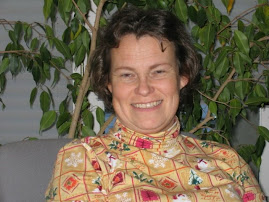
Theodore P. Hill is a professor emeritus of mathematics at the Georgia Institute of Technology and a research scholar in residence at the California Polytechnic State University at San Luis Obispo. Erika Rogers is retired from the California Polytechnic State University, where she was a professor of computer science and director of the university honors program.
Thursday, April 19, 2012

At a Small College, Female Chemists Reach a Tipping Point
April 11, 2012
At a Small College, Female Chemists Reach a Tipping Point
To the Editor:
"Gender Equity on Science Faculties Might Have to Wait a Century, Study Finds" (The Chronicle, February 16) describes the findings of recent studies published in Science and American Scientist related to the proportion and retention of women faculty in science and engineering. While this and other research leaves little doubt that the progress toward gender equity in STEM disciplines remains slow at many major institutions, progress in hiring women can accelerate.
The chemistry department here at Union College has 10 tenure-track faculty lines, seven of which are held by women. We also have two lecturers in the department, both of whom are women.
Union College did not admit female students until 1970. Two decades later, there were only two tenure-track women faculty members in the chemistry department. The fact that we now have nine women chemists represents a noteworthy trajectory. In fact, we can see a "tipping point" after which progress accelerated. In 1980, we had just one tenure-track female chemist; in 1990, two; and in 2000, three. But between 2000 and 2010, the number doubled to six.
When female chemists looking at Union see several senior female faculty members with impressive teaching and research records, along with children's photos and artwork on the walls of male and female faculty members' offices, they get the strong impression that Union is a place where they, too, can flourish both professionally and personally. Once we reached "critical mass"—in this case, roughly one-third of the department—the pace of change was no longer linear. At that point, our commitment to diversity in hiring practices and our faculty mentoring activities, which have been enhanced with support from the National Science Foundation's Advance program, started to pay off much more quickly.
Progress may not always be swift. But a few significant wins can help tip the scale and create the momentum for lasting change.
Mary K. Carroll
Professor of Chemistry
Therese A. McCarty
Dean of the Faculty
Union College
Schenectady, N.Y.
At a Small College, Female Chemists Reach a Tipping Point
To the Editor:
"Gender Equity on Science Faculties Might Have to Wait a Century, Study Finds" (The Chronicle, February 16) describes the findings of recent studies published in Science and American Scientist related to the proportion and retention of women faculty in science and engineering. While this and other research leaves little doubt that the progress toward gender equity in STEM disciplines remains slow at many major institutions, progress in hiring women can accelerate.
The chemistry department here at Union College has 10 tenure-track faculty lines, seven of which are held by women. We also have two lecturers in the department, both of whom are women.
Union College did not admit female students until 1970. Two decades later, there were only two tenure-track women faculty members in the chemistry department. The fact that we now have nine women chemists represents a noteworthy trajectory. In fact, we can see a "tipping point" after which progress accelerated. In 1980, we had just one tenure-track female chemist; in 1990, two; and in 2000, three. But between 2000 and 2010, the number doubled to six.
When female chemists looking at Union see several senior female faculty members with impressive teaching and research records, along with children's photos and artwork on the walls of male and female faculty members' offices, they get the strong impression that Union is a place where they, too, can flourish both professionally and personally. Once we reached "critical mass"—in this case, roughly one-third of the department—the pace of change was no longer linear. At that point, our commitment to diversity in hiring practices and our faculty mentoring activities, which have been enhanced with support from the National Science Foundation's Advance program, started to pay off much more quickly.
Progress may not always be swift. But a few significant wins can help tip the scale and create the momentum for lasting change.
Mary K. Carroll
Professor of Chemistry
Therese A. McCarty
Dean of the Faculty
Union College
Schenectady, N.Y.
Wednesday, August 17, 2011
Romance vs. STEM
August 16, 2011
Inside Higher Ed
When Lora Park was a graduate student in psychology at the University of Michigan, she used to hang out with a group of women in the physical sciences. And Parkhttp://www.blogger.com/img/blank.gif noticed that some of these exceptionally bright, academically successful women would hide their accomplishments from men they would meet, afraid of scaring them off.
Watching these scenes, Park wondered if women fear that they can't excel in math and science fields and also experience love. Park is now an assistant professor of psychology at the State University of New York at Buffalo. The journal Personality and Social Psychology Bulletin is about to publish a series of research projects she led, along with Buffalo graduate students, that suggest that when college-age women think about romance, they become less interested in studying STEM fields. College-age men, however, can get interested in romance without any impact on their engagement with math and science.
Read more
Inside Higher Ed
When Lora Park was a graduate student in psychology at the University of Michigan, she used to hang out with a group of women in the physical sciences. And Parkhttp://www.blogger.com/img/blank.gif noticed that some of these exceptionally bright, academically successful women would hide their accomplishments from men they would meet, afraid of scaring them off.
Watching these scenes, Park wondered if women fear that they can't excel in math and science fields and also experience love. Park is now an assistant professor of psychology at the State University of New York at Buffalo. The journal Personality and Social Psychology Bulletin is about to publish a series of research projects she led, along with Buffalo graduate students, that suggest that when college-age women think about romance, they become less interested in studying STEM fields. College-age men, however, can get interested in romance without any impact on their engagement with math and science.
Read more
Monday, May 16, 2011
Why do new female college grads earn 17% less than men?
Women earn 57% of four-year degrees and are hired at a higher rate than men. Yet their pay lags their male counterparts, even in identical jobs.
By Anne Fisher, contributor
FORTUNE -- If you're a woman about to graduate from college (or have a daughter who is), the National Association of Colleges and Employers has some disconcerting news for you.
First, the bright side: You probably won't have more trouble finding a job than the guy sitting next to you. In almost every year since 1994, unemployment among female grads has been lower than for their male counterparts. In 2010, it was 8.1% for women, versus 10.3% for men.
Great, but here's the rub: Even if you snag the exact same job as your male classmate, you'll probably get paid 17% less.
At least, that's what happened last year. NACE research director Ed Koc analyzed starting salaries of 2010 bachelor's degree graduates and found that women pulled down an average of $36,451, vs. $44,159 for men.
You might suppose that's a result of men choosing majors that lead to higher-paying jobs. But the NACE study found that men usually come out ahead even in the same fields. One exception: Engineering. Because only about 18% of engineering grads are female, women engineers "are highly sought-after 'commodities' and command a premium price," NACE reports.
That's not the case in other fields. Women earning degrees in computer science are scarce too -- also about 18% of all new entrants to the field last year. Yet their 2010 starting pay averaged $52,531, while men earned $56,227.
Oddly, the gap gets even wider in careers where women dominate. Consider, for example, education, where about 80% of new grads are female. Average starting pay: $29,092. Average starting pay for men with education degrees: $39,849.
What gives?
"Women don't negotiate their pay when hired, as if they're happy just to get the job," observes Marcia Reynolds, a Phoenix-based executive coach whose clients include AT&T (T), American Express (AXP), and Ernst & Young. Getting paid the same as the guys "takes a little time researching average male hiring salaries in the field you're entering. It also takes knowing how to promote yourself."
In her coaching work, Reynolds has noticed time after time that women are too modest for their own good.
"They don't like to self-promote. When I ask my female executive clients to identify what they contribute [to the organization], beyond their technical skills and knowledge, they act as if I'm speaking another language," Reynolds says.
Reynolds' book, Wander Woman: How High-Achieving Women Find Contentment and Direction, addresses this issue head-on, and describes some self-promotion exercises that women right out of college might consider practicing. First, make a list of "what traits you possess that have helped drive your success so far."
Can't come up with anything that makes you stand out from the crowd? Try sounding out your fans, whether they are professors, peers, or that boss who raved about your work at your last internship.
"When someone tells you, 'You did a great job,' don't just say, 'It was nothing,'" says Reynolds. "Ask them specifically what they thought you did. Let others help you identify your strengths."
Pinpointing their competitive advantage, and then talking it up, "has helped women not only get jobs, but get special projects and promotions once they're hired," Reynolds adds.
For newly minted college grads, it may also help lead to equal pay.
By Anne Fisher, contributor
FORTUNE -- If you're a woman about to graduate from college (or have a daughter who is), the National Association of Colleges and Employers has some disconcerting news for you.
First, the bright side: You probably won't have more trouble finding a job than the guy sitting next to you. In almost every year since 1994, unemployment among female grads has been lower than for their male counterparts. In 2010, it was 8.1% for women, versus 10.3% for men.
Great, but here's the rub: Even if you snag the exact same job as your male classmate, you'll probably get paid 17% less.
At least, that's what happened last year. NACE research director Ed Koc analyzed starting salaries of 2010 bachelor's degree graduates and found that women pulled down an average of $36,451, vs. $44,159 for men.
You might suppose that's a result of men choosing majors that lead to higher-paying jobs. But the NACE study found that men usually come out ahead even in the same fields. One exception: Engineering. Because only about 18% of engineering grads are female, women engineers "are highly sought-after 'commodities' and command a premium price," NACE reports.
That's not the case in other fields. Women earning degrees in computer science are scarce too -- also about 18% of all new entrants to the field last year. Yet their 2010 starting pay averaged $52,531, while men earned $56,227.
Oddly, the gap gets even wider in careers where women dominate. Consider, for example, education, where about 80% of new grads are female. Average starting pay: $29,092. Average starting pay for men with education degrees: $39,849.
What gives?
"Women don't negotiate their pay when hired, as if they're happy just to get the job," observes Marcia Reynolds, a Phoenix-based executive coach whose clients include AT&T (T), American Express (AXP), and Ernst & Young. Getting paid the same as the guys "takes a little time researching average male hiring salaries in the field you're entering. It also takes knowing how to promote yourself."
In her coaching work, Reynolds has noticed time after time that women are too modest for their own good.
"They don't like to self-promote. When I ask my female executive clients to identify what they contribute [to the organization], beyond their technical skills and knowledge, they act as if I'm speaking another language," Reynolds says.
Reynolds' book, Wander Woman: How High-Achieving Women Find Contentment and Direction, addresses this issue head-on, and describes some self-promotion exercises that women right out of college might consider practicing. First, make a list of "what traits you possess that have helped drive your success so far."
Can't come up with anything that makes you stand out from the crowd? Try sounding out your fans, whether they are professors, peers, or that boss who raved about your work at your last internship.
"When someone tells you, 'You did a great job,' don't just say, 'It was nothing,'" says Reynolds. "Ask them specifically what they thought you did. Let others help you identify your strengths."
Pinpointing their competitive advantage, and then talking it up, "has helped women not only get jobs, but get special projects and promotions once they're hired," Reynolds adds.
For newly minted college grads, it may also help lead to equal pay.
AWIS Update
Why are so few women scientists elected to the National Academy of Sciences? The Association for Women in the Sciences has some ideas.http://www.blogger.com/img/blank.gif
Friday, May 6, 2011
Mothers in Higher Education
Inside Higher Ed
Mothers in Higher Education
May 6, 2011
By Stephanie McNulty
As Mother’s Day approaches, I find myself feeling thankful for the many gifts I have as a working mother in academe: two healthy daughters who teach me lessons in patience and learning on a daily basis; a wonderful partner who supports my career and takes on his share of responsibilities; and a highly coveted tenure-track job at a prestigious liberal arts institution.
You could say that I am living the dream that my own mother had for me. While I was growing up in the 1970s, she told me that, with hard work and perseverance, I could be or do anything that I wanted. As we know, this was not true for her generation of young women; they were expected to marry young, stay home, or work a traditionally “female” job, if the family needed the extra money. Employers did not offer flex time, nursing rooms or telecommuting to help women succeed as working mothers. But women then could see what would make work environments better places for women, and by extension for their families, and after decades of demands, laws passed and workplaces changed.
Read more
Mothers in Higher Education
May 6, 2011
By Stephanie McNulty
As Mother’s Day approaches, I find myself feeling thankful for the many gifts I have as a working mother in academe: two healthy daughters who teach me lessons in patience and learning on a daily basis; a wonderful partner who supports my career and takes on his share of responsibilities; and a highly coveted tenure-track job at a prestigious liberal arts institution.
You could say that I am living the dream that my own mother had for me. While I was growing up in the 1970s, she told me that, with hard work and perseverance, I could be or do anything that I wanted. As we know, this was not true for her generation of young women; they were expected to marry young, stay home, or work a traditionally “female” job, if the family needed the extra money. Employers did not offer flex time, nursing rooms or telecommuting to help women succeed as working mothers. But women then could see what would make work environments better places for women, and by extension for their families, and after decades of demands, laws passed and workplaces changed.
Read more
Saturday, March 26, 2011
For Women Seeking to Advance in Academe, Advice From 4 Who Made It to the Top
The Chronicle of Higher Education
March 24, 2011
For Women Seeking to Advance in Academe, Advice From 4 Who Made It to the Top
By Jack Stripling
Washington
Be on powerful committees that control money.
Avoid petty disputes.
And always have the last word.
Such was the sometimes tongue-in-cheek—and sometimes not—advice a panel of female presidents gave an audience at the National Archives here Thursday night.
At the "Fourth Annual Forum on Women in Leadership" series, female university leaders discussed their trajectory through academe and the challenges that remain in a profession dominated by men. Speaking to an audience of mostly women, the presidents of four institutions warned that women are easily sidelined in academe in part because they are lured into positions and onto committees that won't help them advance through the administrative ranks.
"Be on the finance committee. Don't be on—this is going to sound awful—the child-care committee," said Catharine Bond Hill, president of Vassar College.
Ms. Hill, who has children, went on to clarify that one of the positive strides academe has made in recent decades is to begin to accommodate professors who are also parents. She noted, for example, that many institutions stop the tenure clock for faculty members who become pregnant. At the same time, however, Ms. Hill spoke to themes taken up by her fellow panelists: In a college environment, female full professors are still sometimes assigned duties such as note taking at meetings, and, in rooms full of men, women often have to fight to speak without interruption.
Teresa A. Sullivan, the first female president of the University of Virginia, also had some advice on the topic of speaking up: "Have the sound bite at the end of the conversation."
Other forum participants included H. Kim Bottomly, president of Wellesley College, and S. Georgia Nugent, president of Kenyon College. Donne G. Kampel, associate dean of faculty at Touro College, moderated the discussion.
When Ms. Kampel pressed the panel on the challenges they'd faced as women in achieving leadership roles, several suggested that their successes might be partially attributable to not dwelling on every slight. Ms. Nugent, for instance, recalled an occasion when a man told her at a cocktail party that there were too many women at Kenyon College. He was apparently unaware that the national population is majority female as well, Ms. Nugent said. So what did she do? Ms. Kampel inquired.
"I probably just refreshed his drink," Ms. Nugent said with a laugh.
Ms. Nugent's response spoke to the delicate balancing act the assembled presidents said they still face as female college leaders. At the same time, however, their experiences reflected seemingly universal elements of the modern college presidency. It is a consuming job from which there is seldom if any respite, the participants said. Indeed, it's a "lonely job," Ms. Bottomly noted.
"It's very hard for a president to have sort of an outside-the-presidency life," she said.
March 24, 2011
For Women Seeking to Advance in Academe, Advice From 4 Who Made It to the Top
By Jack Stripling
Washington
Be on powerful committees that control money.
Avoid petty disputes.
And always have the last word.
Such was the sometimes tongue-in-cheek—and sometimes not—advice a panel of female presidents gave an audience at the National Archives here Thursday night.
At the "Fourth Annual Forum on Women in Leadership" series, female university leaders discussed their trajectory through academe and the challenges that remain in a profession dominated by men. Speaking to an audience of mostly women, the presidents of four institutions warned that women are easily sidelined in academe in part because they are lured into positions and onto committees that won't help them advance through the administrative ranks.
"Be on the finance committee. Don't be on—this is going to sound awful—the child-care committee," said Catharine Bond Hill, president of Vassar College.
Ms. Hill, who has children, went on to clarify that one of the positive strides academe has made in recent decades is to begin to accommodate professors who are also parents. She noted, for example, that many institutions stop the tenure clock for faculty members who become pregnant. At the same time, however, Ms. Hill spoke to themes taken up by her fellow panelists: In a college environment, female full professors are still sometimes assigned duties such as note taking at meetings, and, in rooms full of men, women often have to fight to speak without interruption.
Teresa A. Sullivan, the first female president of the University of Virginia, also had some advice on the topic of speaking up: "Have the sound bite at the end of the conversation."
Other forum participants included H. Kim Bottomly, president of Wellesley College, and S. Georgia Nugent, president of Kenyon College. Donne G. Kampel, associate dean of faculty at Touro College, moderated the discussion.
When Ms. Kampel pressed the panel on the challenges they'd faced as women in achieving leadership roles, several suggested that their successes might be partially attributable to not dwelling on every slight. Ms. Nugent, for instance, recalled an occasion when a man told her at a cocktail party that there were too many women at Kenyon College. He was apparently unaware that the national population is majority female as well, Ms. Nugent said. So what did she do? Ms. Kampel inquired.
"I probably just refreshed his drink," Ms. Nugent said with a laugh.
Ms. Nugent's response spoke to the delicate balancing act the assembled presidents said they still face as female college leaders. At the same time, however, their experiences reflected seemingly universal elements of the modern college presidency. It is a consuming job from which there is seldom if any respite, the participants said. Indeed, it's a "lonely job," Ms. Bottomly noted.
"It's very hard for a president to have sort of an outside-the-presidency life," she said.
Friday, March 25, 2011
Education and Women in the Labor Market
March 11, 2011, 6:00 am
Education and Women in the Labor Market
By LAURA D'ANDREA TYSON
Today's Economist
Laura D’Andrea Tyson is an economics professor at the University of California, Berkeley, and served as chairwoman of the Council of Economic Advisers under President Clinton.
In an American workplace reshaped by recession, globalization and automation, a college education may no longer seem to offer a clear path to economic success. But my experience over 35 years as a full-time worker (with an undergraduate degree from Smith and a Ph.D. in economics from the Massachusetts Institute of Technology) – and the experience of millions of other women in the labor force during the same period – indicate otherwise.
In 1970 (around the time I completed college), only about 22 percent of female workers had attended some college or had a college degree. By 2010, that figure had increased threefold to nearly 67 percent of all women in the work force, while the percentage of women with less than a high-school degree had declined to less than 7 percent from about 34 percent.
The dramatic increase in college education among women is one major reason that the earnings of female workers have increased, that the gap between male and female earnings has fallen and that, in recent recessions, the unemployment rate for women has been lower than the rate for men.
Over the last several decades, the real earnings of the median American male worker have stagnated. Indeed, in a widely cited recent report, scholars at the Hamilton Project found that these earnings may have declined significantly.
But while the real earnings of the median male worker have stagnated, the real earnings of the median female worker have increased considerably. Between 1979 and 2009, median real weekly earnings of full-time female workers increased by 31 percent, compared with an increase of only 2 percent for full-time male workers.
During the same period, reflecting these divergent gains, the gap between the earnings of male and female workers narrowed for all age groups, most noticeably for younger workers who are more likely than older workers to have a college education. Between 1979 and 2009, median real female earnings increased to about 80 percent of median real male earnings from about 62 percent.
In recent years, the narrowing of the earnings gender gap has stalled, and a sizable gap persists in most occupations, regardless of the skill, education or experience required. The remaining gap cannot be explained by economic variables like education, experience, race, industry or unionization and is a subject of intense debate.
There is little doubt, however, that discrimination and implicit biases against women, even in jobs requiring college or postgraduate education, continue to play a role, nearly 50 years after the passage of the Equal Pay Act in 1963.
Despite residual discrimination, women, like men, can significantly improve their earnings through education, particularly college education. The earnings of both male and female college-educated workers have risen relative to those of high school-educated workers for nearly three decades.
Today, women and men with a high school diploma earn little more than half of what college graduates earn and those without a high school diploma do even worse.
College-educated workers also receive a disproportionate share of nonwage fringe benefits, and the gap in such benefits between workers with a high school education or less and those with a college education has been growing.
During the last several decades, the median real earnings of women have outperformed those of men, not just for college-educated workers but for all levels of education. Although both women and men with less than a high school diploma suffered a significant decline in real median earnings between 1979 and 2009, the decline for women was only 9 percent, compared with a decline of 28 percent for men.
Real earnings declined for male workers who were high-school graduates or had an associate degree, while real earnings rose for female workers with the same educational attainment. And the real earnings of women with college degrees rose by 33 percent, compared with a 22 percent rise for their male counterparts, the Bureau of Labor Statistics reported.
Bureau of Labor Statistics
Despite the steep rise in earnings for college graduates relative to nongraduates, college attainment rates for young male adults have surprisingly and inexplicably stagnated, while they have continued to grow for young female adults. Since 1994, the share of 25-to-34-year-olds with at least four years of college has been higher for women than for men, and the gap has been getting bigger. For the last decade, young women have been more likely than young men to graduate from high school and to attend college, and once enrolled in college more likely to graduate.
A college education not only means higher earnings but also means lower levels of unemployment. Regardless of whether the economy is in expansion or recession, the unemployment rate is considerably lower for workers with a college education than for workers with lower educational attainment levels and is the highest for high school dropouts.
Partly as a result of the growing share of female workers with a college degree, during the last four recessions the unemployment rate for women has risen less than the unemployment rate for men. During the most recent recession, the unemployment rate for women rose to 7.7 percent from 4.4 percent, while the rate for men more than doubled to 9.9 percent, from 4.4 percent.
Bureau of Labor Statistics
Unemployment rates also vary significantly across sectors, and male workers face a higher risk of unemployment than their female counterparts at every education level, because male workers are more heavily concentrated in manufacturing, construction, and mining – sectors that are cyclically sensitive and that have been trending down as a share of employment for many decades.
Fewer than 5 percent of female workers are employed in manufacturing and fewer than 1 percent in construction, two cyclical sectors that suffered the largest absolute and percentage declines in employment during the most recent recession.
In contrast, the majority of female workers are employed in sectors like education and health, local government, and professional and business services, sectors that have been growing as a share of total employment since 1972, that are less sensitive to cyclical ups and downs and that are more likely to require a college education.
During the most recent recession, the continued gains in the demand for health care workers and the federal government’s support of state and local education have supported job growth in health and education, the two sectors with the largest female employment.
As Nancy Folbre warned in her Economix post on March 7, many education and health care jobs held by female workers are now at risk as the federal stimulus ends and state and local governments make deep cuts in spending. I share her concerns.
Significant reductions in federal, state and local spending on education at the K-12 level, at the community college level and at the college level threaten to reduce college attendance and completion rates, with deleterious effects on the future earnings and employment prospects of both men and women.
America’s businesses complain of a serious skill gap among American workers, and even with a very high unemployment rate, unfilled vacancies for high-wage jobs that require a college education are increasing. If they cannot find the necessary skills at home, many American companies will be forced to move elsewhere.
A college education will be even more important to getting and keeping a good job in the future than it was over the last 30 years for millions of women.
Rather than advise young people that a college education is no longer a guarantee of success, we should consider making at least some college education mandatory. A high school education is no longer sufficient.
Education and Women in the Labor Market
By LAURA D'ANDREA TYSON
Today's Economist
Laura D’Andrea Tyson is an economics professor at the University of California, Berkeley, and served as chairwoman of the Council of Economic Advisers under President Clinton.
In an American workplace reshaped by recession, globalization and automation, a college education may no longer seem to offer a clear path to economic success. But my experience over 35 years as a full-time worker (with an undergraduate degree from Smith and a Ph.D. in economics from the Massachusetts Institute of Technology) – and the experience of millions of other women in the labor force during the same period – indicate otherwise.
In 1970 (around the time I completed college), only about 22 percent of female workers had attended some college or had a college degree. By 2010, that figure had increased threefold to nearly 67 percent of all women in the work force, while the percentage of women with less than a high-school degree had declined to less than 7 percent from about 34 percent.
The dramatic increase in college education among women is one major reason that the earnings of female workers have increased, that the gap between male and female earnings has fallen and that, in recent recessions, the unemployment rate for women has been lower than the rate for men.
Over the last several decades, the real earnings of the median American male worker have stagnated. Indeed, in a widely cited recent report, scholars at the Hamilton Project found that these earnings may have declined significantly.
But while the real earnings of the median male worker have stagnated, the real earnings of the median female worker have increased considerably. Between 1979 and 2009, median real weekly earnings of full-time female workers increased by 31 percent, compared with an increase of only 2 percent for full-time male workers.
During the same period, reflecting these divergent gains, the gap between the earnings of male and female workers narrowed for all age groups, most noticeably for younger workers who are more likely than older workers to have a college education. Between 1979 and 2009, median real female earnings increased to about 80 percent of median real male earnings from about 62 percent.
In recent years, the narrowing of the earnings gender gap has stalled, and a sizable gap persists in most occupations, regardless of the skill, education or experience required. The remaining gap cannot be explained by economic variables like education, experience, race, industry or unionization and is a subject of intense debate.
There is little doubt, however, that discrimination and implicit biases against women, even in jobs requiring college or postgraduate education, continue to play a role, nearly 50 years after the passage of the Equal Pay Act in 1963.
Despite residual discrimination, women, like men, can significantly improve their earnings through education, particularly college education. The earnings of both male and female college-educated workers have risen relative to those of high school-educated workers for nearly three decades.
Today, women and men with a high school diploma earn little more than half of what college graduates earn and those without a high school diploma do even worse.
College-educated workers also receive a disproportionate share of nonwage fringe benefits, and the gap in such benefits between workers with a high school education or less and those with a college education has been growing.
During the last several decades, the median real earnings of women have outperformed those of men, not just for college-educated workers but for all levels of education. Although both women and men with less than a high school diploma suffered a significant decline in real median earnings between 1979 and 2009, the decline for women was only 9 percent, compared with a decline of 28 percent for men.
Real earnings declined for male workers who were high-school graduates or had an associate degree, while real earnings rose for female workers with the same educational attainment. And the real earnings of women with college degrees rose by 33 percent, compared with a 22 percent rise for their male counterparts, the Bureau of Labor Statistics reported.
Bureau of Labor Statistics
Despite the steep rise in earnings for college graduates relative to nongraduates, college attainment rates for young male adults have surprisingly and inexplicably stagnated, while they have continued to grow for young female adults. Since 1994, the share of 25-to-34-year-olds with at least four years of college has been higher for women than for men, and the gap has been getting bigger. For the last decade, young women have been more likely than young men to graduate from high school and to attend college, and once enrolled in college more likely to graduate.
A college education not only means higher earnings but also means lower levels of unemployment. Regardless of whether the economy is in expansion or recession, the unemployment rate is considerably lower for workers with a college education than for workers with lower educational attainment levels and is the highest for high school dropouts.
Partly as a result of the growing share of female workers with a college degree, during the last four recessions the unemployment rate for women has risen less than the unemployment rate for men. During the most recent recession, the unemployment rate for women rose to 7.7 percent from 4.4 percent, while the rate for men more than doubled to 9.9 percent, from 4.4 percent.
Bureau of Labor Statistics
Unemployment rates also vary significantly across sectors, and male workers face a higher risk of unemployment than their female counterparts at every education level, because male workers are more heavily concentrated in manufacturing, construction, and mining – sectors that are cyclically sensitive and that have been trending down as a share of employment for many decades.
Fewer than 5 percent of female workers are employed in manufacturing and fewer than 1 percent in construction, two cyclical sectors that suffered the largest absolute and percentage declines in employment during the most recent recession.
In contrast, the majority of female workers are employed in sectors like education and health, local government, and professional and business services, sectors that have been growing as a share of total employment since 1972, that are less sensitive to cyclical ups and downs and that are more likely to require a college education.
During the most recent recession, the continued gains in the demand for health care workers and the federal government’s support of state and local education have supported job growth in health and education, the two sectors with the largest female employment.
As Nancy Folbre warned in her Economix post on March 7, many education and health care jobs held by female workers are now at risk as the federal stimulus ends and state and local governments make deep cuts in spending. I share her concerns.
Significant reductions in federal, state and local spending on education at the K-12 level, at the community college level and at the college level threaten to reduce college attendance and completion rates, with deleterious effects on the future earnings and employment prospects of both men and women.
America’s businesses complain of a serious skill gap among American workers, and even with a very high unemployment rate, unfilled vacancies for high-wage jobs that require a college education are increasing. If they cannot find the necessary skills at home, many American companies will be forced to move elsewhere.
A college education will be even more important to getting and keeping a good job in the future than it was over the last 30 years for millions of women.
Rather than advise young people that a college education is no longer a guarantee of success, we should consider making at least some college education mandatory. A high school education is no longer sufficient.
'An Unwanted Consequence'
Inside Higher Ed article
'An Unwanted Consequence'
March 25, 2011
After Ben Barres delivered a lecture at the Massachusetts Institute of Technology, another scientist was overheard making a telling remark.
"Ben Barres gave a great talk today,” the scientist reportedly said, as Barres related the story to the journal Nature in 2006. “His work is much better than his sister's."
That colleague didn’t realize it, but when he compared Barres to his sister, he was actually talking about the same person. Barres, a professor of neurobiology at the Stanford University School of Medicine, had undergone a sex change operation, from female to male, not long before he gave his talk at MIT.
Though Barres’s gender has changed, he says that the quality of his work certainly has not. But the underlying assumption the comment reflected -- that women have less innate intellectual prowess or ability to conduct scholarship, both in science and in academe more broadly -- is alive and well even as women are gaining a stronger foothold in academe, according to a recent MIT report on the status of women in science and engineering.
Those attitudes sometimes spill out into the open, as they did in 2005 when Larry Summers, who was then the president of Harvard University, posited that "issues of intrinsic aptitude” may be a more significant factor than discrimination in explaining why women are underrepresented in the top tiers of science and engineering. But these views typically surface in more subtle ways. As recounted in the MIT study, these beliefs find expression, instead, in offhand comments, including remarks suggesting that women were hired or promoted because standards were lowered to accommodate them. And, despite the real gains made in the number of women entering the professoriate, researchers on the subject say that these biases persist and can do damage over time.
Upward Swing
The MIT study celebrated a trend that has been seen across the country's institutions of higher education. The number of female faculty members in science and engineering at the institute has nearly doubled since researchers there produced its first influential report in 1999. Elsewhere, the trajectory also has been on an upward swing: women now account for 43 percent of faculty members nationwide, according to the National Center for Education Statistics.
At MIT and elsewhere, these numbers reflect a concerted effort. The institutions have trained members of search committees about unconscious bias that may lead them to screen out women and members of minority groups. Some have encouraged those on committees to seek applications from women, or take steps to widen the pool of potential applicants.
But if the MIT report lauded these gains, its authors also described “an unwanted consequence” of such efforts -- the perception that hiring and promotion standards are more relaxed for women than they are for men. “In discussions I hear others saying ‘oh, she’ll get tenure … because we need to have women,’ ” the report quotes one professor as saying. “Makes it sound like the standards of excellence are not the same for men and women.” Some women found themselves questioning whether their own hiring was due to their sex and not their abilities. “I felt I was invited to interview because I was dazzling,” one said, “but now I wonder….”
Some faculty members at MIT have rebutted the notion that women enjoy differential treatment. “For all the appointment and promotion cases I know in recent years, I am certain this is not true,” Edmund Bertschinger, head of the physics department of MIT, wrote on his blog. “The women to whom we have made faculty offers, promoted and granted tenure all meet the very high standards of MIT, and it has always been so.” Doubters, he said, ought to consult the roster of full professors at MIT’s school of science who were members of the National Academy of Sciences last year: 31 percent of men and 40 percent of women, by his count.
If anything, women are held to higher standards, said some who were interviewed. “I always feel that female candidates are not treated the same,” one MIT professor related. “People give male candidates the benefit of the doubt. The demands for women candidates are higher, they are more scrutinized.”
This mismatch in perception of abilities, and these notions of unfair treatment and double standards, are, to some, the inevitable price of progress. But many scholars who study gender and academe dispute that the efforts to recruit women have sparked a backlash against women. “Backlash is the wrong word," said Joan M. Herbers, professor of evolution, ecology, and organismal biology at Ohio State University, and president of the Association for Women in Science. “It’s exposing what’s been there all along.”
‘Mountains Are Molehills Piled One On Top Of The Other'
To women like Herbers, who earned her Ph.D. in 1978, tensions over unfair treatment and double standards are not new. A self-described “50-ish scientist,” Herbers said that questions about women being hired for academic jobs because it was fashionable to do so were prevalent when she began her career. Then, as now, these questions prompted self-doubt among the women who benefited from the purportedly fashionable hiring. “I wondered, too,” she said, though her uncertainties faded as she advanced in her field and earned honors, such as being named a fellow of the American Association for the Advancement of Science.
Ultimately, when women confront accusations that they were hired because standards were lowered, they will react in different ways, she said. “Sometimes the message to women is ‘just get over it’ and for others it’s, ‘it’s a real issue here,’ ” said Herbers. “Deciding which is which is a matter of context.”
To Molly Broad, president of the American Council on Education and a female pioneer in the ranks of university administration, lingering doubts about the merits and capacities of women reflect a carryover from an earlier time -- one that will eventually fade away. “It’s part of the process of the natural transformation,” she said, adding that efforts like MIT’s represent one of the best ways to bring such assumptions into the open and talk about them.
Broad, who is the first female president of ACE and also cracked the glass ceiling as president of the University of North Carolina, also counseled women to keep pushing forward -- whether they encounter such slights as being told they had received preferential treatment or, in a classic example, they find themselves at a department meeting, where they make a suggestion that is ignored only to hear a male colleague voice the same idea to rapturous acclaim.
“Keep your focus on the outcomes,” said Broad, who added that, in the latter example, women should have the courage of their convictions to try again. “Keep your eye on what is the best result … and not whose voice galvanized the group to take action.”
While such slights might seem minor compared to policies or attitudes that once kept women out of departments or entire universities, some say they exact a real toll as they accumulate.
“A lot of the things on a daily basis that are happening to men and women are very small things that people are inclined to shrug off and say not to worry about it,” said Virginia Valian, distinguished professor of psychology and co-director of the Gender Equity Project at Hunter College of the City University of New York.
But Valian disputed the notion that, just because such slights seem small, they are inconsequential. “Mountains are molehills piled one on top of the other,” she said. She noted that, while women may be hired more often than they used to be, they still aren’t progressing to full professorships as fast as or in the same proportion as men, in science or in other fields, such as history. Women also are not paid as much.
In part, seemingly minor episodes, such as whose ideas get recognized in a meeting or who gets invited to speak at a colloquium, start to snowball, Valian argued. “All of those things are adding up over time to give a man more advantage than a woman has,” she said. “You see this growing disparity as careers progress between men and women.”
Implicit Biases And 'Mind Bugs'
The expression of bias or favoritism, as described, is not the only thing that can be subtle or hard to recognize immediately, scholars say. Subtle dynamics are also at play in the hiring and promotions process, where notions of who is most qualified can be shaped by unexamined assumptions and perceptions.
It can be difficult to accurately gauge such subjective qualities as merit -- and job screenings don’t always reveal meaningful differences between candidates, said Wendy M. Williams, professor and director of Cornell University’s Institute for Women in Science. Given the decline in tenure-track positions, there are likely to be many applicants for every slot in a prestigious program. At high levels, many people can boast top grades, scores and letters of recommendation, she said. While differences within an elite group of applicants may reflect actual differences in ability, they also may reflect a range of resources or access to mentors who can help a candidate amass an impressive portfolio.
"In many cases, any person could be randomly selected form the top group and would have just as good a chance of making it in the position offered as would the other members of the top group," Williams said in an e-mail. "There are so many key skills that are simply not assessed at all -- and the ones that are assessed are imperfect predictors -- meaning that someone who is bypassed may not actually have any more talent for the position."
At the same time, she added that one reason that some men are skeptical of women in academe is that analyses have found that female scholars have, on average, produced fewer peer-reviewed publications and are cited less often than their male counterparts. "A man may potentially have valid reasons to question the records of women being hired around him, and may wonder if their honors and awards stem more from gender than from eminence," she said.
Such skepticism likely won't be dispelled until large numbers of female academics mature in their careers, many argue. Until then, anecdotes about failed female candidates will carry disproportionate weight and reinforce some men's impressions that women scholars are unqualified. Eventually, such questions ought to be resolved by analyzing empirical evidence, said Williams. "We should not assume or take for granted that the women hired are just as good," she said. "We should give them time to flourish and then see what they accomplish, and ultimately evaluate it and them critically."
Another complicating factor, however, is the phenomenon of implicit bias. In 2000, Laurie A. Rudman, a professor of social psychology at Rutgers University, published research in Personality and Social Psychology Bulletin with her then-doctoral student (now an instructor), Stephen E. Kilianski, on people's unconscious attitudes toward women and authority. Using a tool called the Implicit Association Test, they brought to the surface people's "mind bugs," a term used by Mahzarin Banaji, the Richard Clarke Cabot Professor of Social Ethics in Harvard University’s department of psychology. These bugs reflect implicit or unconscious assessments of one's self or others.
Rudman and Kilianski found that people of both genders automatically favored male authority figures over female ones -- even if they professed to hold the opposite view. Their subjects associated men with high-status traits, such as being competent or competitive, and women with communal ones, such as kinship and nurturing. They also tended to reject or dislike women who vied for authoritative roles. "And, no surprise, people who disliked them tended not to recommend hiring them," she said in an e-mail. "So yes, these deeply ingrained beliefs that people have about who is qualified to lead do play a negative role in their acceptance of female leaders." Women in academe negotiate similarly ingrained biases and assumptions, she said.
What Can Be Done?
By many accounts, the current situation -- in which women are hired in academic jobs but do not advance as quickly or as far as their male counterparts, and in which they chafe at being accused of benefiting from lower expectations -- is both a cultural and a policy problem.
The MIT report counsels hiring committees to point to specific reasons that a candidate is hired, in order to dispel notions that he or she received preferential treatment. “It must be transparent that women hired at MIT are exceptionally accomplished,” the authors wrote. Many who advocate either a cultural or a policy remedy also say that strong leadership is crucial to send a signal that sexism won't be tolerated.
But changing culture is not easy, said Valian, of Hunter. Addressing subtle expressions of bias when they happen is one way to do it. And, while some would argue that the sheer numbers of women entering academe will eventually overwhelm outmoded ideas about their competence, Valian struck a far more cautious tone.
The reason, she said, is the persistence of “schemas,” or overarching, deeply held theories that are often founded on stereotype (for example, that women lack the ability or desire to do scientific research). “They are extremely powerful and long-lasting,” she said. “It takes an enormous amount of evidence to overthrow a schema that gets so much support over so many years.” The best way to change attitudes, she said, is to couple a preponderance of evidence with a new narrative.
Herbers, of Ohio State, pointed to more direct strategies that can help shape the culture in departments and institutions. Work-life balance needs to be made into a universal issue, not one that touches only women. Sexism also needs to be talked about as a concern that involves both men and women, she said. Herbers suggested enlisting “alpha males” to take up the cause. “That’s the key strategy: make it everybody’s problem by getting spokespeople who aren’t in the affected group,” she said.
Another useful strategy is to link, as MIT has done, the notion of gender equity to something that is important to the institution as a whole. For example, said Herbers, an effort to retain women -- by changing the culture and work environment -- can be aligned with the goal of attracting and keeping talent. "The message we’re given at Ohio State is that gender equity is an integral strategy to the pursuit of eminence,” said Herbers. “That is a message that’s hard to argue with.”
But Joan C. Williams, distinguished professor of law and founding director of the Center for WorkLife Law at the University of California's Hastings College of the Law, argued that it is not useful to address the issues that women raised in the MIT report as cultural problems. While implicit gender bias needs to be rooted out, she said, structural issues in academe also need to be addressed.
Stopping the tenure clock is one example of how the machinery of higher education has adapted to the larger presence of women, but more needs to be done, she argued. The expectation that junior faculty members should work 50 hours each week is designed, she said, for a man married to a homemaker. “Not too surprisingly, if you design your schedule and expectations around men married to homemakers,” she said, “what you get at the top are men married to homemakers, or women without children.”
One remedy, she said, is to shift the definition of an academic career and to vary the pace at which one can be pursued. Another step, she added, is to ensure that the people in colleges who render decisions about professors’ careers are aware of and in compliance with anti-discrimination laws. This can be accomplished by training department heads and deans, she said, or by reassigning to the human resources office the task of granting leaves, for example.
“Many of the key personnel decisions are made by people who have no training in human resources or basic employment laws. Mainly it’s other professors,” she said. As a result, women and some men encounter what she called open expressions of gender bias that would be much rarer in a corporation, where human resources staff members are trained. “Professors who are department chairs have no training in that,” she said. “The ignorance is breathtaking.”
Ultimately, many experts agreed that MIT was to be commended for asking questions about gender and advancement -- and for disseminating the findings. “I believe that what MIT has done is a truly remarkable work,” said Broad of ACE. “It’s probably the healthiest way I can imagine that organizations like universities can come up with to face up to old views and persuade people to modify them.”
— Dan Berrett
'An Unwanted Consequence'
March 25, 2011
After Ben Barres delivered a lecture at the Massachusetts Institute of Technology, another scientist was overheard making a telling remark.
"Ben Barres gave a great talk today,” the scientist reportedly said, as Barres related the story to the journal Nature in 2006. “His work is much better than his sister's."
That colleague didn’t realize it, but when he compared Barres to his sister, he was actually talking about the same person. Barres, a professor of neurobiology at the Stanford University School of Medicine, had undergone a sex change operation, from female to male, not long before he gave his talk at MIT.
Though Barres’s gender has changed, he says that the quality of his work certainly has not. But the underlying assumption the comment reflected -- that women have less innate intellectual prowess or ability to conduct scholarship, both in science and in academe more broadly -- is alive and well even as women are gaining a stronger foothold in academe, according to a recent MIT report on the status of women in science and engineering.
Those attitudes sometimes spill out into the open, as they did in 2005 when Larry Summers, who was then the president of Harvard University, posited that "issues of intrinsic aptitude” may be a more significant factor than discrimination in explaining why women are underrepresented in the top tiers of science and engineering. But these views typically surface in more subtle ways. As recounted in the MIT study, these beliefs find expression, instead, in offhand comments, including remarks suggesting that women were hired or promoted because standards were lowered to accommodate them. And, despite the real gains made in the number of women entering the professoriate, researchers on the subject say that these biases persist and can do damage over time.
Upward Swing
The MIT study celebrated a trend that has been seen across the country's institutions of higher education. The number of female faculty members in science and engineering at the institute has nearly doubled since researchers there produced its first influential report in 1999. Elsewhere, the trajectory also has been on an upward swing: women now account for 43 percent of faculty members nationwide, according to the National Center for Education Statistics.
At MIT and elsewhere, these numbers reflect a concerted effort. The institutions have trained members of search committees about unconscious bias that may lead them to screen out women and members of minority groups. Some have encouraged those on committees to seek applications from women, or take steps to widen the pool of potential applicants.
But if the MIT report lauded these gains, its authors also described “an unwanted consequence” of such efforts -- the perception that hiring and promotion standards are more relaxed for women than they are for men. “In discussions I hear others saying ‘oh, she’ll get tenure … because we need to have women,’ ” the report quotes one professor as saying. “Makes it sound like the standards of excellence are not the same for men and women.” Some women found themselves questioning whether their own hiring was due to their sex and not their abilities. “I felt I was invited to interview because I was dazzling,” one said, “but now I wonder….”
Some faculty members at MIT have rebutted the notion that women enjoy differential treatment. “For all the appointment and promotion cases I know in recent years, I am certain this is not true,” Edmund Bertschinger, head of the physics department of MIT, wrote on his blog. “The women to whom we have made faculty offers, promoted and granted tenure all meet the very high standards of MIT, and it has always been so.” Doubters, he said, ought to consult the roster of full professors at MIT’s school of science who were members of the National Academy of Sciences last year: 31 percent of men and 40 percent of women, by his count.
If anything, women are held to higher standards, said some who were interviewed. “I always feel that female candidates are not treated the same,” one MIT professor related. “People give male candidates the benefit of the doubt. The demands for women candidates are higher, they are more scrutinized.”
This mismatch in perception of abilities, and these notions of unfair treatment and double standards, are, to some, the inevitable price of progress. But many scholars who study gender and academe dispute that the efforts to recruit women have sparked a backlash against women. “Backlash is the wrong word," said Joan M. Herbers, professor of evolution, ecology, and organismal biology at Ohio State University, and president of the Association for Women in Science. “It’s exposing what’s been there all along.”
‘Mountains Are Molehills Piled One On Top Of The Other'
To women like Herbers, who earned her Ph.D. in 1978, tensions over unfair treatment and double standards are not new. A self-described “50-ish scientist,” Herbers said that questions about women being hired for academic jobs because it was fashionable to do so were prevalent when she began her career. Then, as now, these questions prompted self-doubt among the women who benefited from the purportedly fashionable hiring. “I wondered, too,” she said, though her uncertainties faded as she advanced in her field and earned honors, such as being named a fellow of the American Association for the Advancement of Science.
Ultimately, when women confront accusations that they were hired because standards were lowered, they will react in different ways, she said. “Sometimes the message to women is ‘just get over it’ and for others it’s, ‘it’s a real issue here,’ ” said Herbers. “Deciding which is which is a matter of context.”
To Molly Broad, president of the American Council on Education and a female pioneer in the ranks of university administration, lingering doubts about the merits and capacities of women reflect a carryover from an earlier time -- one that will eventually fade away. “It’s part of the process of the natural transformation,” she said, adding that efforts like MIT’s represent one of the best ways to bring such assumptions into the open and talk about them.
Broad, who is the first female president of ACE and also cracked the glass ceiling as president of the University of North Carolina, also counseled women to keep pushing forward -- whether they encounter such slights as being told they had received preferential treatment or, in a classic example, they find themselves at a department meeting, where they make a suggestion that is ignored only to hear a male colleague voice the same idea to rapturous acclaim.
“Keep your focus on the outcomes,” said Broad, who added that, in the latter example, women should have the courage of their convictions to try again. “Keep your eye on what is the best result … and not whose voice galvanized the group to take action.”
While such slights might seem minor compared to policies or attitudes that once kept women out of departments or entire universities, some say they exact a real toll as they accumulate.
“A lot of the things on a daily basis that are happening to men and women are very small things that people are inclined to shrug off and say not to worry about it,” said Virginia Valian, distinguished professor of psychology and co-director of the Gender Equity Project at Hunter College of the City University of New York.
But Valian disputed the notion that, just because such slights seem small, they are inconsequential. “Mountains are molehills piled one on top of the other,” she said. She noted that, while women may be hired more often than they used to be, they still aren’t progressing to full professorships as fast as or in the same proportion as men, in science or in other fields, such as history. Women also are not paid as much.
In part, seemingly minor episodes, such as whose ideas get recognized in a meeting or who gets invited to speak at a colloquium, start to snowball, Valian argued. “All of those things are adding up over time to give a man more advantage than a woman has,” she said. “You see this growing disparity as careers progress between men and women.”
Implicit Biases And 'Mind Bugs'
The expression of bias or favoritism, as described, is not the only thing that can be subtle or hard to recognize immediately, scholars say. Subtle dynamics are also at play in the hiring and promotions process, where notions of who is most qualified can be shaped by unexamined assumptions and perceptions.
It can be difficult to accurately gauge such subjective qualities as merit -- and job screenings don’t always reveal meaningful differences between candidates, said Wendy M. Williams, professor and director of Cornell University’s Institute for Women in Science. Given the decline in tenure-track positions, there are likely to be many applicants for every slot in a prestigious program. At high levels, many people can boast top grades, scores and letters of recommendation, she said. While differences within an elite group of applicants may reflect actual differences in ability, they also may reflect a range of resources or access to mentors who can help a candidate amass an impressive portfolio.
"In many cases, any person could be randomly selected form the top group and would have just as good a chance of making it in the position offered as would the other members of the top group," Williams said in an e-mail. "There are so many key skills that are simply not assessed at all -- and the ones that are assessed are imperfect predictors -- meaning that someone who is bypassed may not actually have any more talent for the position."
At the same time, she added that one reason that some men are skeptical of women in academe is that analyses have found that female scholars have, on average, produced fewer peer-reviewed publications and are cited less often than their male counterparts. "A man may potentially have valid reasons to question the records of women being hired around him, and may wonder if their honors and awards stem more from gender than from eminence," she said.
Such skepticism likely won't be dispelled until large numbers of female academics mature in their careers, many argue. Until then, anecdotes about failed female candidates will carry disproportionate weight and reinforce some men's impressions that women scholars are unqualified. Eventually, such questions ought to be resolved by analyzing empirical evidence, said Williams. "We should not assume or take for granted that the women hired are just as good," she said. "We should give them time to flourish and then see what they accomplish, and ultimately evaluate it and them critically."
Another complicating factor, however, is the phenomenon of implicit bias. In 2000, Laurie A. Rudman, a professor of social psychology at Rutgers University, published research in Personality and Social Psychology Bulletin with her then-doctoral student (now an instructor), Stephen E. Kilianski, on people's unconscious attitudes toward women and authority. Using a tool called the Implicit Association Test, they brought to the surface people's "mind bugs," a term used by Mahzarin Banaji, the Richard Clarke Cabot Professor of Social Ethics in Harvard University’s department of psychology. These bugs reflect implicit or unconscious assessments of one's self or others.
Rudman and Kilianski found that people of both genders automatically favored male authority figures over female ones -- even if they professed to hold the opposite view. Their subjects associated men with high-status traits, such as being competent or competitive, and women with communal ones, such as kinship and nurturing. They also tended to reject or dislike women who vied for authoritative roles. "And, no surprise, people who disliked them tended not to recommend hiring them," she said in an e-mail. "So yes, these deeply ingrained beliefs that people have about who is qualified to lead do play a negative role in their acceptance of female leaders." Women in academe negotiate similarly ingrained biases and assumptions, she said.
What Can Be Done?
By many accounts, the current situation -- in which women are hired in academic jobs but do not advance as quickly or as far as their male counterparts, and in which they chafe at being accused of benefiting from lower expectations -- is both a cultural and a policy problem.
The MIT report counsels hiring committees to point to specific reasons that a candidate is hired, in order to dispel notions that he or she received preferential treatment. “It must be transparent that women hired at MIT are exceptionally accomplished,” the authors wrote. Many who advocate either a cultural or a policy remedy also say that strong leadership is crucial to send a signal that sexism won't be tolerated.
But changing culture is not easy, said Valian, of Hunter. Addressing subtle expressions of bias when they happen is one way to do it. And, while some would argue that the sheer numbers of women entering academe will eventually overwhelm outmoded ideas about their competence, Valian struck a far more cautious tone.
The reason, she said, is the persistence of “schemas,” or overarching, deeply held theories that are often founded on stereotype (for example, that women lack the ability or desire to do scientific research). “They are extremely powerful and long-lasting,” she said. “It takes an enormous amount of evidence to overthrow a schema that gets so much support over so many years.” The best way to change attitudes, she said, is to couple a preponderance of evidence with a new narrative.
Herbers, of Ohio State, pointed to more direct strategies that can help shape the culture in departments and institutions. Work-life balance needs to be made into a universal issue, not one that touches only women. Sexism also needs to be talked about as a concern that involves both men and women, she said. Herbers suggested enlisting “alpha males” to take up the cause. “That’s the key strategy: make it everybody’s problem by getting spokespeople who aren’t in the affected group,” she said.
Another useful strategy is to link, as MIT has done, the notion of gender equity to something that is important to the institution as a whole. For example, said Herbers, an effort to retain women -- by changing the culture and work environment -- can be aligned with the goal of attracting and keeping talent. "The message we’re given at Ohio State is that gender equity is an integral strategy to the pursuit of eminence,” said Herbers. “That is a message that’s hard to argue with.”
But Joan C. Williams, distinguished professor of law and founding director of the Center for WorkLife Law at the University of California's Hastings College of the Law, argued that it is not useful to address the issues that women raised in the MIT report as cultural problems. While implicit gender bias needs to be rooted out, she said, structural issues in academe also need to be addressed.
Stopping the tenure clock is one example of how the machinery of higher education has adapted to the larger presence of women, but more needs to be done, she argued. The expectation that junior faculty members should work 50 hours each week is designed, she said, for a man married to a homemaker. “Not too surprisingly, if you design your schedule and expectations around men married to homemakers,” she said, “what you get at the top are men married to homemakers, or women without children.”
One remedy, she said, is to shift the definition of an academic career and to vary the pace at which one can be pursued. Another step, she added, is to ensure that the people in colleges who render decisions about professors’ careers are aware of and in compliance with anti-discrimination laws. This can be accomplished by training department heads and deans, she said, or by reassigning to the human resources office the task of granting leaves, for example.
“Many of the key personnel decisions are made by people who have no training in human resources or basic employment laws. Mainly it’s other professors,” she said. As a result, women and some men encounter what she called open expressions of gender bias that would be much rarer in a corporation, where human resources staff members are trained. “Professors who are department chairs have no training in that,” she said. “The ignorance is breathtaking.”
Ultimately, many experts agreed that MIT was to be commended for asking questions about gender and advancement -- and for disseminating the findings. “I believe that what MIT has done is a truly remarkable work,” said Broad of ACE. “It’s probably the healthiest way I can imagine that organizations like universities can come up with to face up to old views and persuade people to modify them.”
— Dan Berrett
Tuesday, March 22, 2011
Inside Higher Ed Article
Leadership Without the Limelight
March 22, 2011
Women dominate higher education enrollments. But based on the most visible students on some campuses, you would never guess it.
At least that is the case at Princeton University, where female undergrads tend to eschew high-profile executive positions at the most prestigious student organizations in favor of less glamorous -- but often equally labor-intensive -- leadership roles, according to a new study by researchers at the university. And the sorts of behavior and attitudes that have given rise to this trend have led the authors of the study to suspect that this may not be just a Princeton phenomenon.
It is also a recent development. In the decades after Princeton went co-ed in 1969, women regularly rose to high-profile leadership positions in student government, student media, and the university’s venerable “eating clubs,” and won many coveted fellowships, says Nannerl O. Keohane, a visiting professor of public affairs at Princeton and former president of Duke University and Wellesley College, who led the study. (The university now enrolls women and men in virtually equal numbers.)
But since 2000, female students with leadership aspirations have shifted their energies to less exalted pursuits as leaders of service organizations, advocacy groups, residential councils, dance troupes, academic clubs, and a cappella choirs. Women still flock to The Daily Princetonian, the student government, and other longstanding extracurricular meccas, Keohane says, but they have tended to land in positions -- both in those organizations and in more peripheral ones -- where responsibility is high and visibility is low.
“Despite being less likely than men to stand as candidates for a presidency or other more visible posts, undergraduate women do a large proportion of the important work in the organizations to which they belong,” according to the study, which was carried out by a committee of nine faculty members, six students, and three administrators.
The committee, after conducting multiple focus groups and interviews with current students and alumni, identifies a number of findings that it thinks might have played some role in the migration of women to peripheral leadership positions. Women tend to undersell themselves, and in some cases might be explicitly discouraged from seeking elective office, it says.
Men, on the other hand, tend to assert themselves with more confidence, even when that confidence is not necessarily justified. “Men tend to speak up more quickly than women, to raise their hands and express their thoughts even before they are fully formulated,” the committee writes, “whereas women may take a bit more time to shape their comments and be more reticent about speaking up” -- even though “women are outpacing men on our campus in academic achievement, except at the very highest level.”
But aside from behavioral patterns that some would attribute to persistent social pressure on women to be deferential, the decision of many women to seek leadership duties outside the main is sometimes a practical one. Some women said they considered work within larger, older organizations to be “less rewarding,” and would pass on high-profile gigs in favor of “high impact” ones, says Keohane. (While the report notes that the university recently saw women elected to presidencies of three of Princeton's eating clubs, Keohane credits the committee's very public efforts to spark discussions of female student leadership on campus with inspiring a surge in female candidates.)
While the study was limited to one Ivy League campus, Keohane says the underlying causes are not unique to Princeton, and that other campuses might be seeing similar effects. The Princeton team solicited anecdotal data from 10 other institutions -- which it declined to name but identified as “strong research universities and liberal arts colleges,” including several Ivies -- and heard a lot of echoes. “Our peers report similar gender imbalances in the top elected positions on their respective campuses,” writes the committee.
The Washington Post last week reported that George Washington University and American University have recently seen a deficit of women running for student government, and cited statistics from the American Student Government Association indicating that male student government presidents outnumber their female counterparts, 60 percent to 40 percent, even though women outnumber men in higher education by the same percentage. Other institutions, such as Worcester Polytechnic Institute, cannot relate. Women at Worcester Polytechnic, who only make up 30 percent of the student body, occupy a disproportionate number of leadership positions on campus, according to Kristin Tichenor, the vice president of enrollment and institutional strategy there. (Tichenor attributes the difference to the fact that women at Worcester Polytechnic, which specializes in the male-dominated fields of engineering and hard science, might be uncommonly defiant of gender norms as a group.)
Keohane warns it would be a mistake to make categorical assumptions based on Princeton’s findings, which are specific to that university and very general at that level. There are unique lessons to be learned from holding top positions at both large, venerable organizations and smaller, more obscure ones, she says, whether the manager’s role is ambassadorial or behind the scenes. And those lessons benefit men and women equally.
— Steve Kolowich
March 22, 2011
Women dominate higher education enrollments. But based on the most visible students on some campuses, you would never guess it.
At least that is the case at Princeton University, where female undergrads tend to eschew high-profile executive positions at the most prestigious student organizations in favor of less glamorous -- but often equally labor-intensive -- leadership roles, according to a new study by researchers at the university. And the sorts of behavior and attitudes that have given rise to this trend have led the authors of the study to suspect that this may not be just a Princeton phenomenon.
It is also a recent development. In the decades after Princeton went co-ed in 1969, women regularly rose to high-profile leadership positions in student government, student media, and the university’s venerable “eating clubs,” and won many coveted fellowships, says Nannerl O. Keohane, a visiting professor of public affairs at Princeton and former president of Duke University and Wellesley College, who led the study. (The university now enrolls women and men in virtually equal numbers.)
But since 2000, female students with leadership aspirations have shifted their energies to less exalted pursuits as leaders of service organizations, advocacy groups, residential councils, dance troupes, academic clubs, and a cappella choirs. Women still flock to The Daily Princetonian, the student government, and other longstanding extracurricular meccas, Keohane says, but they have tended to land in positions -- both in those organizations and in more peripheral ones -- where responsibility is high and visibility is low.
“Despite being less likely than men to stand as candidates for a presidency or other more visible posts, undergraduate women do a large proportion of the important work in the organizations to which they belong,” according to the study, which was carried out by a committee of nine faculty members, six students, and three administrators.
The committee, after conducting multiple focus groups and interviews with current students and alumni, identifies a number of findings that it thinks might have played some role in the migration of women to peripheral leadership positions. Women tend to undersell themselves, and in some cases might be explicitly discouraged from seeking elective office, it says.
Men, on the other hand, tend to assert themselves with more confidence, even when that confidence is not necessarily justified. “Men tend to speak up more quickly than women, to raise their hands and express their thoughts even before they are fully formulated,” the committee writes, “whereas women may take a bit more time to shape their comments and be more reticent about speaking up” -- even though “women are outpacing men on our campus in academic achievement, except at the very highest level.”
But aside from behavioral patterns that some would attribute to persistent social pressure on women to be deferential, the decision of many women to seek leadership duties outside the main is sometimes a practical one. Some women said they considered work within larger, older organizations to be “less rewarding,” and would pass on high-profile gigs in favor of “high impact” ones, says Keohane. (While the report notes that the university recently saw women elected to presidencies of three of Princeton's eating clubs, Keohane credits the committee's very public efforts to spark discussions of female student leadership on campus with inspiring a surge in female candidates.)
While the study was limited to one Ivy League campus, Keohane says the underlying causes are not unique to Princeton, and that other campuses might be seeing similar effects. The Princeton team solicited anecdotal data from 10 other institutions -- which it declined to name but identified as “strong research universities and liberal arts colleges,” including several Ivies -- and heard a lot of echoes. “Our peers report similar gender imbalances in the top elected positions on their respective campuses,” writes the committee.
The Washington Post last week reported that George Washington University and American University have recently seen a deficit of women running for student government, and cited statistics from the American Student Government Association indicating that male student government presidents outnumber their female counterparts, 60 percent to 40 percent, even though women outnumber men in higher education by the same percentage. Other institutions, such as Worcester Polytechnic Institute, cannot relate. Women at Worcester Polytechnic, who only make up 30 percent of the student body, occupy a disproportionate number of leadership positions on campus, according to Kristin Tichenor, the vice president of enrollment and institutional strategy there. (Tichenor attributes the difference to the fact that women at Worcester Polytechnic, which specializes in the male-dominated fields of engineering and hard science, might be uncommonly defiant of gender norms as a group.)
Keohane warns it would be a mistake to make categorical assumptions based on Princeton’s findings, which are specific to that university and very general at that level. There are unique lessons to be learned from holding top positions at both large, venerable organizations and smaller, more obscure ones, she says, whether the manager’s role is ambassadorial or behind the scenes. And those lessons benefit men and women equally.
— Steve Kolowich
Friday, March 18, 2011
Monday, February 14, 2011
Understanding current causes of Women’s Underrepresentation in Science
Understanding current causes of women’s
underrepresentation in science
Stephen J. Ceci and Wendy M. Williams1
Department of Human Development, Cornell University, Ithaca, NY 14853
Read the PNAS article. Edited by Richard F. Thompson, University of Southern California, Los Angeles, CA, and approved December 6, 2010 (received for review October 6, 2010)
underrepresentation in science
Stephen J. Ceci and Wendy M. Williams1
Department of Human Development, Cornell University, Ithaca, NY 14853
Read the PNAS article. Edited by Richard F. Thompson, University of Southern California, Los Angeles, CA, and approved December 6, 2010 (received for review October 6, 2010)
Increasing the Representation of Women Undergraduates in STEM
A Review of the Literature on Increasing the Representation of Women Undergraduates in STEM Disciplines Through Civic Engagement Pedagogies
David B. Knight, Higher Education Program Pennsylvania State University; Ellen F. Mappen, National Center for Science & Civic Engagement; Stephanie L. Knight, Educational Psychology Program Pennsylvania State University
published Jan 18, 2011
David B. Knight, Higher Education Program Pennsylvania State University; Ellen F. Mappen, National Center for Science & Civic Engagement; Stephanie L. Knight, Educational Psychology Program Pennsylvania State University
published Jan 18, 2011
Friday, October 8, 2010
STEM Major Choice and the Gender Pay Gap
By Andresse St. Rose, research associate, AAUW
A college education remains the most reliable path to economic mobility and security for millions of Americans. As women’s college enrollment continues to grow, so does the public’s perception that women are now on equal footing with men. Over the past fifty years, women’s increasing educational achievements have indeed helped to raise women’s earnings and narrow the overall gender pay gap from 59 cents for every dollar earned by men in 1960 to 77 cents in 2008 (Institute for Women’s Policy Research 2010). But although additional education has improved women’s earnings, it has not created a level playing field. Ironically, the pay gap among some college-educated workers is larger than it is for the population as a whole. While college-educated women working full time earn 80 percent as much as their male peers one year after graduation, after ten years, they earn only about 69 percent as much as their male counterparts (Dey and Hill 2007). In part, these gaps reflect different choices made by women and men, such as the critical choice of college major.
Read the complete article.
A college education remains the most reliable path to economic mobility and security for millions of Americans. As women’s college enrollment continues to grow, so does the public’s perception that women are now on equal footing with men. Over the past fifty years, women’s increasing educational achievements have indeed helped to raise women’s earnings and narrow the overall gender pay gap from 59 cents for every dollar earned by men in 1960 to 77 cents in 2008 (Institute for Women’s Policy Research 2010). But although additional education has improved women’s earnings, it has not created a level playing field. Ironically, the pay gap among some college-educated workers is larger than it is for the population as a whole. While college-educated women working full time earn 80 percent as much as their male peers one year after graduation, after ten years, they earn only about 69 percent as much as their male counterparts (Dey and Hill 2007). In part, these gaps reflect different choices made by women and men, such as the critical choice of college major.
Read the complete article.
Wednesday, October 6, 2010
Lessons of the Leaky Pipeline
Geneomeweb
October 2010
By Matthew Dublin
It's a situation familiar to many in science: within the first few years after graduate school, women begin to disappear from the field. For several years now, women have made up roughly half of all life sciences PhD recipients, yet they only comprise a small percentage of the upper ranks of academia - and women from minority backgrounds are nearly absent from those ranks.
Men do outnumber women in the upper echelons of academia, but it doesn't start out that way. In 2001, 36.5 percent of science and engineering doctoral degrees were awarded to women and that percentage was higher and nearing parity - 45.8 percent - for doctoral degrees in molecular biology, according to statistics from the US National Science Foundation. But, the gap between the number of men and women in the life sciences widens higher up in the academic ranks. In 2003, 9,000 full-time junior faculty members with doctorates in the life sciences were female and 11,100 were male, according to NSF. But only 12,400 senior faculty members were female whereas there were 30,700 male faculty members.
"The assumption, decades ago, was that if you want to improve the number of women in science, you get them degrees. But we're realizing that the word on the street is that academic careers are not compatible with some of the ambitions of both men and women, although the differential impact on women trying to navigate academic careers is higher than men because of some of the personal obligations and personal choices they want to make," says Catherine Didion, director of the National Academy of Sciences' Committee on Women in Science, Engineering, and Medicine.
When it comes to the issues affecting women in the sciences, there is no one answer to account for all of the disparities, nor one that promises to resolve them all - and the issues are full of contradictions. Even those dedicated to finding the factors contributing to the wage gap between men and women and the "leaky pipeline" admit that a comprehensive picture is just beginning to emerge. What is also becoming increasingly clear is that the reason such a small proportion of female PhD recipients wind up in applicant pools for tenure-track positions is not simply a result of institutionalized gender bias that affects the hiring process, but also a result of how difficult the academic career path has become - though improvements are being made
In 1994, the Office of Research on Women's Health at the National Institutes of Health held a workshop on women in biomedical careers, says the office's director, Vivian Pinn. During that meeting, the participants discussed what the major impediments were for women to succeed in careers in science. On that list were issues including mentors, family care-giving responsibilities, and differences in salaries and promotions. "It's been encouraging because we've continued to focus on these same issues, but also discouraging because here we are, 10 years later, and these are the same issues that we're hearing about," Pinn says. "I think the pipeline has improved - we are seeing women enter into PhD and doctoral programs at levels equal to, if not greater than, men. But where we're seeing the drop-off is in reaching top positions, or in some instances, how institutions are dealing with some of the dual responsibilities of career and family."
The phenomenon of women leaving science is a global one, though here we focus our attention on the US. We start off by taking a look at how the current climate in academia - with its unforgiving demand on researchers' time - combined with the unbending nature of the tenure track, and the current state of family policies, is not only forcing women to choose between career and family but also causing many young investigators, both men and women, to steer clear of academia altogether. In addition, we look at an area where women are making gains - in wages and in funding - as well as efforts to spread awareness of gender disparities and encourage institutes to change their policies.
"There are issues that need to be addressed that have to do with the structure of the career path that's been established with regard to the desire for children and what kind of career you want. The process has lengthened in terms of getting a secure academic job, so if you don't know [whether or not] you're going to have a permanent job until your late 40s, it might change your whole idea of which kind of career path you want to get on," the National Academy's Didion adds.
[pagebreak]
Spousal support
One of the root causes of the pipeline problem is the desire to have a family. The number of hours researchers on the tenure track are expected to log - averaging 50 or more per week - simply does not mesh with starting and maintaining a family. "Major academic health centers have become extremely competitive - to say they are money hungry is putting it mildly - and this translates into pressure on the faculty who are much more exploited than they were 30 years ago," says Phoebe Leboy, president of the Association for Women in Science. "Now you need three National Institutes of Health grants to get tenure and it has become increasingly difficult for anyone who wants to have a life."
Many researchers don't have the support at home that most academic organizational structures and policies assume that they do. In 2006, the National Research Council of the National Academy of Sciences published the results of a major study that found that anyone lacking the support of a stay-at-home spouse is at a serious disadvantage in terms of climbing the academic career ladder and maintaining competitiveness. According to the study, about half of the spouses of male faculty work full-time while roughly 90 percent of the spouses of female faculty are employed full-time.
"I think that the challenges of balancing family and career still fall to a very great extent on women, although there are dangers in generalizing too much," says Claire Fraser-Liggett, director of the Institute for Genome Sciences at the University of Maryland School of Medicine. "In the 20 or so years that I've been in a leadership role, I have seen many women who are in the assistant professor phase of their career just suffer enormously with trying to do everything and do it well. I think that there is a tremendous sense of burn out. ... [Women] can often times get to a point where they ask themselves if this really was what they wanted in life or feel like they're on a treadmill that is ever-accelerating and never have time to catch their breath."
A family
Last year, the progressive think tank Center for American Progress conducted a study to follow up on the National Academies' findings. Specifically, the center wanted to determine why women are more likely to leave academia than men. The data show that married women who already have children are 35 percent less likely to even embark on the tenure track than men who are married with children. And those who do are up to 27 percent less likely to achieve tenure than their male counterparts.
There is simply not enough flexibility in the pipeline, says Mary Ann Mason, study co-author and law professor at the University of California, Berkeley. The rigidity of time caps and deadlines - such as a specific number of years that a postdoctoral position must start after graduate school, requirements for the completion of grant-funded projects, and, in particular, the tenure clock - fall right during the years when many people choose to start families.
"It's very hard for a graduate student or a postdoc to take any time off. Most 'A' universities have no policies at all for graduate students or postdocs in terms of maternity leave and other family responsibilities," Mason says.
Only 13 percent of Association of American Universities institutions offer maternity leave policies that cover grad students, postdocs, and other academic researchers. Forty-three percent offer only ad hoc paid leave or no financial support. But, this is an area that's made gains. Some -institutions, such as the University of California, Los Angeles, and Stanford University, now do provide maternity leave for graduate students, postdocs, and academic researchers, but the coverage often contains limitations on who qualifies and the length of the leave.
Faculty are better off. At 58 percent of AAU schools, faculty are entitled to a baseline policy of at least six weeks of restriction-free, paid maternity leave. In addition, many institutions and universities offer tenure-clock extensions or part-time tenure tracks, but these policies are sometimes vague or limited in scope.
"Roughly 20 percent of the -assistant professors that we surveyed for our study take advantage of the stop-the-clock policy, which is really important. But in reality what that does is add another year to the process. ... Almost all R1 institutions have a stop-the-clock policy, but the variety is tremendous in terms of how they're interpreted and how people are encouraged to use them," says the National Academy's Didion. "The challenge becomes whether or not you have to request them ... Often there is a bias towards not using them if you have to use them in a way that can be seen as not being committed to your position."
In addition, Title IX of the US Education Amendments Act of 1972 requires academic institutes to treat pregnancy as a temporary disability and provide a reasonable period of unpaid, job-protected leave if the institute has no leave policy of its own. This applies to all employees supported by federal grants. But in a 2009 survey, Mason and her colleagues found that not all AAU institutions have clear-cut policies for maternity leave. One university said it does not provide unpaid leave to postdocs and six others did not know whether their institute had one or not.
[pagebreak]
"Most younger people - graduate students and postdocs - do not qualify under FMLA. ... Even if it isn't a clear-cut violation it's a technical violation, because the spirit of Title IX is that the doors have to be open," Mason says. "That's one of the major ways - from our data and other people's - that women are held behind, and it affects the wage gap down the line because ... they're no longer on the tenure track, then ultimately you're ... less well paid."
Dropping down
Indeed, some experts say that it is not that women are dropping out of science, but rather they are "dropping down" or staying at a career altitude that is equivalent in salary and position to the assistant or adjunct professor level.
"I'm not totally convinced that that many women are leaving careers in the biological sciences. Instead, what we see is that they are not showing up in tenured and senior faculty positions or in supervisory positions, particularly in big pharma," says Leboy at the Association for Women in Science.
She says that if you look at the membership of biomedical societies, you'll still see women represented, though not in the highest echelons. "This argument that they are dropping out to have children is not entirely accurate - they are not being found in the high prestige positions in anywhere near the numbers they should be, but I wouldn't call it dropping out," she says.
"The glass ceiling has two components: implicit bias and how biomedical research careers are structured these days. It's not so much anti-women as it is anti-family, anti-having a life, if you want to be successful," Leboy adds.
Implicit bias and the wage gap
Leboy and her colleagues looked into implicit bias - in which individuals make decisions based on prejudices they are not aware they hold - by studying how seven major disciplinary societies in science and math select their prize and award recipients. The seven societies give out about 200 awards, and Leboy and her colleagues found that women are being recognized with teaching awards and with service awards to the societies and the discipline - but not for research and scholarship. It's a big difference, she adds. According to the study, in each society, between the non-scholarly awards and the scholarly awards, there's a roughly 50 percent drop in the number of women recognized. "It's not that the women are not in the discipline; they're just not getting the recognition for research and scholarship," Leboy says. "This has an effect on their jobs, their promotions, their recruitment to more high-prestige places, and everything associated with status and research."
Catherine Hill, director of research at the American Association of University Women, describes bias as the "unexplained portion" of the pay gap after all other factors - such as experience, training, education, and personal characteristics - are entered into the equation.
Here, women in the sciences are doing better than those in other fields. On average, an American woman makes 77 cents for every dollar a man makes, though that number is smaller for Hispanic and African-American women. According to a 2008 study by the US Census Bureau, women in the biological sciences make roughly 89 percent of the annual salary that men do and make up 53 percent of the workers in the field. Female computer scientists, software engineers, and IT and database managers make, on average, 86 percent of what their male counterparts take home every year and represent less than 25 percent of the workforce.
"The majority of men and women still associate science and math with men," Hill says. "Our data suggests that there may be some ways that employers are making assumptions about women and child rearing - that is not proven, but it is something we're led to believe as you look at a portion of the [wage] difference that doesn't get explained."
[pagebreak]
Some biases may be due to cultural conditioning and learned gender roles. There is a significant amount of sociological research indicating that when women step outside of what is considered the norm, they are viewed as aggressive or unpleasant. "Women who are competent in male fields are not viewed as likable - and likability is viewed as just as important as your skill set," Hill says. "When you have women behaving in a way that is not 'typical,' the normal response ... is discomfort. It may not be dislike, but a discomfort that may lead to a dislike. Women in many of these fields end up being in a double bind, because if they're too competent and assertive, then they're viewed as being not likable."
Hill suggests that the best way for women to battle the wage gap is to know where they stand in comparison to their colleagues. "Most people don't know if they're being paid fairly. They will share more about their sex lives than they will about their salaries in the workplace," she says, though she adds that "It's very hard to find something that's perfectly comparable - no two jobs are exactly the same."
One way to address the wage gap would be to have more transparency at the workplace. For the US federal government, transparency is a matter of policy and the gap is much smaller. Openness in the form of clearly regimented salary increases, it seems, could make a big difference, Hill says.
Promoting equality
When it comes to grants, there are discernible differences in the amount and frequency with which women are awarded funding. At the beginning of their careers, women actually receive more awards than men do. According to NIH and NSF accountability reports, pre-doctoral women receive more awards than men do - 63 percent more at NIH and 54 percent more at NSF. But at the -faculty level, women are awarded only
25 percent and 23 percent of NIH and NSF faculty grants, respectively. "We at the NIH have to try to look at what we're doing in terms of awarding funding to researchers and we've been able to show that success rates for first-time applicants are equal for men and women, but there are more -applications from men than women," Pinn says.
Men also appear to have a higher success rate on their grant renewal applications. "We don't know all the factors for that, it's something we hope is going to come out in our studies that we're currently funding," Pinn adds.
In addition, she says she hopes that these studies will address the growing concern that centers around men receiving larger awards than women do. However, Pinn notes that men and women receive the same percentage of what they ask for. "The best conclusion we can draw is that men are either applying for and getting the higher-dollar grants or that women are asking for less money than men," she says.
Pinn also co-chairs the NIH's working group Women in Biomedical Careers, which in 2009 awarded 14 grants totaling roughly $16.8 million over four years to fund a range of research projects aimed at nailing down the issues associated with challenges for women in the biomedical field.
While it is too early to know whether the data from these studies will have any impact, Pinn and her colleagues have been making slow and steady progress with small wins along the way. They have been able to secure an extension of the Early Stage Investigator status for researchers who have taken a leave of absence. There's also the Supplements to Promote Reentry into Biomedical and Behavioral Research Careers program, a trans-NIH initiative to help both women and men reenter research careers. In addition, the working group has amended NIH conference grant applications so that applicants are required to describe their plans for childcare at conference sites. These changes sound simple enough, but Pinn says they were hard won.
[pagebreak]
"I think we've made progress in terms of both women and men being more aware of the issues of family responsibilities and we've seen progress - maybe not total progress, but some - in terms of flexibility in the work settings," she says. "I hope that out of these causal factor grants, we will learn about new programs. We're also taking a look at all of our current programs to promote more gender equality."
Large-scale funding efforts such as NSF's Advancement of Women in Academic Science and Engineering Careers, or ADVANCE, program has invested more than $130 million in universities and colleges since 2001, to support and promote women in the academic sciences, technology, engineering, and mathematics careers. The NSF ADVANCE's Institutional Transformation awards support a range of programs such as career counseling and faculty advancement workshops. According to ADVANCE program director Kelly Mack, the initiative's Institutional Transformation awardees have reported that in addition to the benefits for women in terms of retention, recruitment, and promotion, the support has also led to an improved situation for the male faculty looking to balance work and life as well.
"One of the biggest accomplishments of the ADVANCE Program has been that most ADVANCE Institutional Transformation projects ultimately impact the entire institution, as opposed to only the [science, technology, and engineering] departments targeted by the NSF program," Mack says. "There is some evidence that peer institutions of ADVANCE grantees are voluntarily undertaking some institutional transformation activities without external funding. We see this as an indication that the ADVANCE Program is impacting the larger culture of science in a way that will make academic science and engineering careers more attractive to future generations of academicians."
The importance of mentors
The most commonly cited way to help women navigate the challenges of a career in science is through ready access to a mentor, whether through a one-on-one relationship with an established PI or through programs, such as the workshops hosted by the NIH Office on Women's Health. "We believe that learning how to negotiate the academic environment, the environment in industry, and even the environment at the NIH is crucial, and we feel that mentoring is an extremely important component of that - especially for women, where they can have unique instances or experience related to science or personal kinds of issues that have to be dealt with," Pinn says.
A recent NIH workshop focused on improving mentoring efforts for women, Pinn says. The agency brought in people who have active programs at their institutions and came up with recommendations for mentoring programs such as the need for adjusting mentoring programs to better suit women of color and the implementation of protocols or guidelines for accountability in the mentoring process. "Now we're looking to see what we can build out of the recommendations of that workshop," she says.
As effective as mentoring programs and online resources are, it is hard to match the effect of one-on-one mentoring, which can often plug a potential leak in the pipeline. Maryland's Fraser-Liggett says that she has on more than one occasion talked a young, stressed-out female researcher down from an attack of self-doubt that can result from the stresses of child rearing, harsh criticism from a grant review application, or just balancing it all.
"Science can be really tough. You're only as good as the last thing that you did, and in order to really be able to do well, you have to be able to develop a thick skin. ... It's just been my experience that a number of women have a somewhat harder time doing that," Fraser-Liggett says. "That's why I feel having mentors for young women is very important, because if you don't have somebody to talk to, to put things in perspective, it can be tremendously demoralizing. ... But it's tough for both women and men alike, so if you really want to do this, you keep plugging along and take advantage of opportunities to do things well when you can because it's just too easy to dwell on the negative."
October 2010
By Matthew Dublin
It's a situation familiar to many in science: within the first few years after graduate school, women begin to disappear from the field. For several years now, women have made up roughly half of all life sciences PhD recipients, yet they only comprise a small percentage of the upper ranks of academia - and women from minority backgrounds are nearly absent from those ranks.
Men do outnumber women in the upper echelons of academia, but it doesn't start out that way. In 2001, 36.5 percent of science and engineering doctoral degrees were awarded to women and that percentage was higher and nearing parity - 45.8 percent - for doctoral degrees in molecular biology, according to statistics from the US National Science Foundation. But, the gap between the number of men and women in the life sciences widens higher up in the academic ranks. In 2003, 9,000 full-time junior faculty members with doctorates in the life sciences were female and 11,100 were male, according to NSF. But only 12,400 senior faculty members were female whereas there were 30,700 male faculty members.
"The assumption, decades ago, was that if you want to improve the number of women in science, you get them degrees. But we're realizing that the word on the street is that academic careers are not compatible with some of the ambitions of both men and women, although the differential impact on women trying to navigate academic careers is higher than men because of some of the personal obligations and personal choices they want to make," says Catherine Didion, director of the National Academy of Sciences' Committee on Women in Science, Engineering, and Medicine.
When it comes to the issues affecting women in the sciences, there is no one answer to account for all of the disparities, nor one that promises to resolve them all - and the issues are full of contradictions. Even those dedicated to finding the factors contributing to the wage gap between men and women and the "leaky pipeline" admit that a comprehensive picture is just beginning to emerge. What is also becoming increasingly clear is that the reason such a small proportion of female PhD recipients wind up in applicant pools for tenure-track positions is not simply a result of institutionalized gender bias that affects the hiring process, but also a result of how difficult the academic career path has become - though improvements are being made
In 1994, the Office of Research on Women's Health at the National Institutes of Health held a workshop on women in biomedical careers, says the office's director, Vivian Pinn. During that meeting, the participants discussed what the major impediments were for women to succeed in careers in science. On that list were issues including mentors, family care-giving responsibilities, and differences in salaries and promotions. "It's been encouraging because we've continued to focus on these same issues, but also discouraging because here we are, 10 years later, and these are the same issues that we're hearing about," Pinn says. "I think the pipeline has improved - we are seeing women enter into PhD and doctoral programs at levels equal to, if not greater than, men. But where we're seeing the drop-off is in reaching top positions, or in some instances, how institutions are dealing with some of the dual responsibilities of career and family."
The phenomenon of women leaving science is a global one, though here we focus our attention on the US. We start off by taking a look at how the current climate in academia - with its unforgiving demand on researchers' time - combined with the unbending nature of the tenure track, and the current state of family policies, is not only forcing women to choose between career and family but also causing many young investigators, both men and women, to steer clear of academia altogether. In addition, we look at an area where women are making gains - in wages and in funding - as well as efforts to spread awareness of gender disparities and encourage institutes to change their policies.
"There are issues that need to be addressed that have to do with the structure of the career path that's been established with regard to the desire for children and what kind of career you want. The process has lengthened in terms of getting a secure academic job, so if you don't know [whether or not] you're going to have a permanent job until your late 40s, it might change your whole idea of which kind of career path you want to get on," the National Academy's Didion adds.
[pagebreak]
Spousal support
One of the root causes of the pipeline problem is the desire to have a family. The number of hours researchers on the tenure track are expected to log - averaging 50 or more per week - simply does not mesh with starting and maintaining a family. "Major academic health centers have become extremely competitive - to say they are money hungry is putting it mildly - and this translates into pressure on the faculty who are much more exploited than they were 30 years ago," says Phoebe Leboy, president of the Association for Women in Science. "Now you need three National Institutes of Health grants to get tenure and it has become increasingly difficult for anyone who wants to have a life."
Many researchers don't have the support at home that most academic organizational structures and policies assume that they do. In 2006, the National Research Council of the National Academy of Sciences published the results of a major study that found that anyone lacking the support of a stay-at-home spouse is at a serious disadvantage in terms of climbing the academic career ladder and maintaining competitiveness. According to the study, about half of the spouses of male faculty work full-time while roughly 90 percent of the spouses of female faculty are employed full-time.
"I think that the challenges of balancing family and career still fall to a very great extent on women, although there are dangers in generalizing too much," says Claire Fraser-Liggett, director of the Institute for Genome Sciences at the University of Maryland School of Medicine. "In the 20 or so years that I've been in a leadership role, I have seen many women who are in the assistant professor phase of their career just suffer enormously with trying to do everything and do it well. I think that there is a tremendous sense of burn out. ... [Women] can often times get to a point where they ask themselves if this really was what they wanted in life or feel like they're on a treadmill that is ever-accelerating and never have time to catch their breath."
A family
Last year, the progressive think tank Center for American Progress conducted a study to follow up on the National Academies' findings. Specifically, the center wanted to determine why women are more likely to leave academia than men. The data show that married women who already have children are 35 percent less likely to even embark on the tenure track than men who are married with children. And those who do are up to 27 percent less likely to achieve tenure than their male counterparts.
There is simply not enough flexibility in the pipeline, says Mary Ann Mason, study co-author and law professor at the University of California, Berkeley. The rigidity of time caps and deadlines - such as a specific number of years that a postdoctoral position must start after graduate school, requirements for the completion of grant-funded projects, and, in particular, the tenure clock - fall right during the years when many people choose to start families.
"It's very hard for a graduate student or a postdoc to take any time off. Most 'A' universities have no policies at all for graduate students or postdocs in terms of maternity leave and other family responsibilities," Mason says.
Only 13 percent of Association of American Universities institutions offer maternity leave policies that cover grad students, postdocs, and other academic researchers. Forty-three percent offer only ad hoc paid leave or no financial support. But, this is an area that's made gains. Some -institutions, such as the University of California, Los Angeles, and Stanford University, now do provide maternity leave for graduate students, postdocs, and academic researchers, but the coverage often contains limitations on who qualifies and the length of the leave.
Faculty are better off. At 58 percent of AAU schools, faculty are entitled to a baseline policy of at least six weeks of restriction-free, paid maternity leave. In addition, many institutions and universities offer tenure-clock extensions or part-time tenure tracks, but these policies are sometimes vague or limited in scope.
"Roughly 20 percent of the -assistant professors that we surveyed for our study take advantage of the stop-the-clock policy, which is really important. But in reality what that does is add another year to the process. ... Almost all R1 institutions have a stop-the-clock policy, but the variety is tremendous in terms of how they're interpreted and how people are encouraged to use them," says the National Academy's Didion. "The challenge becomes whether or not you have to request them ... Often there is a bias towards not using them if you have to use them in a way that can be seen as not being committed to your position."
In addition, Title IX of the US Education Amendments Act of 1972 requires academic institutes to treat pregnancy as a temporary disability and provide a reasonable period of unpaid, job-protected leave if the institute has no leave policy of its own. This applies to all employees supported by federal grants. But in a 2009 survey, Mason and her colleagues found that not all AAU institutions have clear-cut policies for maternity leave. One university said it does not provide unpaid leave to postdocs and six others did not know whether their institute had one or not.
[pagebreak]
"Most younger people - graduate students and postdocs - do not qualify under FMLA. ... Even if it isn't a clear-cut violation it's a technical violation, because the spirit of Title IX is that the doors have to be open," Mason says. "That's one of the major ways - from our data and other people's - that women are held behind, and it affects the wage gap down the line because ... they're no longer on the tenure track, then ultimately you're ... less well paid."
Dropping down
Indeed, some experts say that it is not that women are dropping out of science, but rather they are "dropping down" or staying at a career altitude that is equivalent in salary and position to the assistant or adjunct professor level.
"I'm not totally convinced that that many women are leaving careers in the biological sciences. Instead, what we see is that they are not showing up in tenured and senior faculty positions or in supervisory positions, particularly in big pharma," says Leboy at the Association for Women in Science.
She says that if you look at the membership of biomedical societies, you'll still see women represented, though not in the highest echelons. "This argument that they are dropping out to have children is not entirely accurate - they are not being found in the high prestige positions in anywhere near the numbers they should be, but I wouldn't call it dropping out," she says.
"The glass ceiling has two components: implicit bias and how biomedical research careers are structured these days. It's not so much anti-women as it is anti-family, anti-having a life, if you want to be successful," Leboy adds.
Implicit bias and the wage gap
Leboy and her colleagues looked into implicit bias - in which individuals make decisions based on prejudices they are not aware they hold - by studying how seven major disciplinary societies in science and math select their prize and award recipients. The seven societies give out about 200 awards, and Leboy and her colleagues found that women are being recognized with teaching awards and with service awards to the societies and the discipline - but not for research and scholarship. It's a big difference, she adds. According to the study, in each society, between the non-scholarly awards and the scholarly awards, there's a roughly 50 percent drop in the number of women recognized. "It's not that the women are not in the discipline; they're just not getting the recognition for research and scholarship," Leboy says. "This has an effect on their jobs, their promotions, their recruitment to more high-prestige places, and everything associated with status and research."
Catherine Hill, director of research at the American Association of University Women, describes bias as the "unexplained portion" of the pay gap after all other factors - such as experience, training, education, and personal characteristics - are entered into the equation.
Here, women in the sciences are doing better than those in other fields. On average, an American woman makes 77 cents for every dollar a man makes, though that number is smaller for Hispanic and African-American women. According to a 2008 study by the US Census Bureau, women in the biological sciences make roughly 89 percent of the annual salary that men do and make up 53 percent of the workers in the field. Female computer scientists, software engineers, and IT and database managers make, on average, 86 percent of what their male counterparts take home every year and represent less than 25 percent of the workforce.
"The majority of men and women still associate science and math with men," Hill says. "Our data suggests that there may be some ways that employers are making assumptions about women and child rearing - that is not proven, but it is something we're led to believe as you look at a portion of the [wage] difference that doesn't get explained."
[pagebreak]
Some biases may be due to cultural conditioning and learned gender roles. There is a significant amount of sociological research indicating that when women step outside of what is considered the norm, they are viewed as aggressive or unpleasant. "Women who are competent in male fields are not viewed as likable - and likability is viewed as just as important as your skill set," Hill says. "When you have women behaving in a way that is not 'typical,' the normal response ... is discomfort. It may not be dislike, but a discomfort that may lead to a dislike. Women in many of these fields end up being in a double bind, because if they're too competent and assertive, then they're viewed as being not likable."
Hill suggests that the best way for women to battle the wage gap is to know where they stand in comparison to their colleagues. "Most people don't know if they're being paid fairly. They will share more about their sex lives than they will about their salaries in the workplace," she says, though she adds that "It's very hard to find something that's perfectly comparable - no two jobs are exactly the same."
One way to address the wage gap would be to have more transparency at the workplace. For the US federal government, transparency is a matter of policy and the gap is much smaller. Openness in the form of clearly regimented salary increases, it seems, could make a big difference, Hill says.
Promoting equality
When it comes to grants, there are discernible differences in the amount and frequency with which women are awarded funding. At the beginning of their careers, women actually receive more awards than men do. According to NIH and NSF accountability reports, pre-doctoral women receive more awards than men do - 63 percent more at NIH and 54 percent more at NSF. But at the -faculty level, women are awarded only
25 percent and 23 percent of NIH and NSF faculty grants, respectively. "We at the NIH have to try to look at what we're doing in terms of awarding funding to researchers and we've been able to show that success rates for first-time applicants are equal for men and women, but there are more -applications from men than women," Pinn says.
Men also appear to have a higher success rate on their grant renewal applications. "We don't know all the factors for that, it's something we hope is going to come out in our studies that we're currently funding," Pinn adds.
In addition, she says she hopes that these studies will address the growing concern that centers around men receiving larger awards than women do. However, Pinn notes that men and women receive the same percentage of what they ask for. "The best conclusion we can draw is that men are either applying for and getting the higher-dollar grants or that women are asking for less money than men," she says.
Pinn also co-chairs the NIH's working group Women in Biomedical Careers, which in 2009 awarded 14 grants totaling roughly $16.8 million over four years to fund a range of research projects aimed at nailing down the issues associated with challenges for women in the biomedical field.
While it is too early to know whether the data from these studies will have any impact, Pinn and her colleagues have been making slow and steady progress with small wins along the way. They have been able to secure an extension of the Early Stage Investigator status for researchers who have taken a leave of absence. There's also the Supplements to Promote Reentry into Biomedical and Behavioral Research Careers program, a trans-NIH initiative to help both women and men reenter research careers. In addition, the working group has amended NIH conference grant applications so that applicants are required to describe their plans for childcare at conference sites. These changes sound simple enough, but Pinn says they were hard won.
[pagebreak]
"I think we've made progress in terms of both women and men being more aware of the issues of family responsibilities and we've seen progress - maybe not total progress, but some - in terms of flexibility in the work settings," she says. "I hope that out of these causal factor grants, we will learn about new programs. We're also taking a look at all of our current programs to promote more gender equality."
Large-scale funding efforts such as NSF's Advancement of Women in Academic Science and Engineering Careers, or ADVANCE, program has invested more than $130 million in universities and colleges since 2001, to support and promote women in the academic sciences, technology, engineering, and mathematics careers. The NSF ADVANCE's Institutional Transformation awards support a range of programs such as career counseling and faculty advancement workshops. According to ADVANCE program director Kelly Mack, the initiative's Institutional Transformation awardees have reported that in addition to the benefits for women in terms of retention, recruitment, and promotion, the support has also led to an improved situation for the male faculty looking to balance work and life as well.
"One of the biggest accomplishments of the ADVANCE Program has been that most ADVANCE Institutional Transformation projects ultimately impact the entire institution, as opposed to only the [science, technology, and engineering] departments targeted by the NSF program," Mack says. "There is some evidence that peer institutions of ADVANCE grantees are voluntarily undertaking some institutional transformation activities without external funding. We see this as an indication that the ADVANCE Program is impacting the larger culture of science in a way that will make academic science and engineering careers more attractive to future generations of academicians."
The importance of mentors
The most commonly cited way to help women navigate the challenges of a career in science is through ready access to a mentor, whether through a one-on-one relationship with an established PI or through programs, such as the workshops hosted by the NIH Office on Women's Health. "We believe that learning how to negotiate the academic environment, the environment in industry, and even the environment at the NIH is crucial, and we feel that mentoring is an extremely important component of that - especially for women, where they can have unique instances or experience related to science or personal kinds of issues that have to be dealt with," Pinn says.
A recent NIH workshop focused on improving mentoring efforts for women, Pinn says. The agency brought in people who have active programs at their institutions and came up with recommendations for mentoring programs such as the need for adjusting mentoring programs to better suit women of color and the implementation of protocols or guidelines for accountability in the mentoring process. "Now we're looking to see what we can build out of the recommendations of that workshop," she says.
As effective as mentoring programs and online resources are, it is hard to match the effect of one-on-one mentoring, which can often plug a potential leak in the pipeline. Maryland's Fraser-Liggett says that she has on more than one occasion talked a young, stressed-out female researcher down from an attack of self-doubt that can result from the stresses of child rearing, harsh criticism from a grant review application, or just balancing it all.
"Science can be really tough. You're only as good as the last thing that you did, and in order to really be able to do well, you have to be able to develop a thick skin. ... It's just been my experience that a number of women have a somewhat harder time doing that," Fraser-Liggett says. "That's why I feel having mentors for young women is very important, because if you don't have somebody to talk to, to put things in perspective, it can be tremendously demoralizing. ... But it's tough for both women and men alike, so if you really want to do this, you keep plugging along and take advantage of opportunities to do things well when you can because it's just too easy to dwell on the negative."
Tuesday, September 28, 2010
Seeking Congruity Between Goals and Roles: A New Look at Why Women Opt Out of Science, Technology, Engineering, and Mathematics Careers
A very interesting article in the Association for Psychological Sciences:
Seeking Congruity Between Goals and Roles: A New Look at Why Women Opt Out of Science, Technology, Engineering, and Mathematics Careers
Seeking Congruity Between Goals and Roles: A New Look at Why Women Opt Out of Science, Technology, Engineering, and Mathematics Careers
Saturday, June 19, 2010
Why 'Female' Science Professor?
Read the recent post in the Chronicle of Higher Education made by Female Science Professor. She tells a really funny (but actually, depressing) story about meeting a fellow scientist and describing her research. Also, visit her blog at: http://science-professor.blogspot.com.
Friday, April 2, 2010
Taking Initiative:Re-tooling for an Economy that can Handle Curves
Women in Science Summit
May 21, 2010
8:30 AM – 4:00 PM
The Conference Center at Mercer
1200 Old Trenton Road West Windsor, NJ
Keynote Speaker: Sarita Felder
Executive Leadership Coaching and
Branding Development Consultant
Authors: Sandi Webster & Peggy McHale
Of Black and White Strike Gold
REGISTER NOW!
www.cww.rutgers.edu
Lunch Included~Registration Required~No Fee
Breakout Sessions
Cultivating a Circle of Advisors:
Who, What, When, Where, How, & Why
Discovering and
Marketing Who You Are
Shaping Your Personal
Curves (Managing Change)
Entrepreneurship
and ‘Intra’preneurship:
Being your own Driver
Students Leading the Way into
the Future of Networking
May 21, 2010
8:30 AM – 4:00 PM
The Conference Center at Mercer
1200 Old Trenton Road West Windsor, NJ
Keynote Speaker: Sarita Felder
Executive Leadership Coaching and
Branding Development Consultant
Authors: Sandi Webster & Peggy McHale
Of Black and White Strike Gold
REGISTER NOW!
www.cww.rutgers.edu
Lunch Included~Registration Required~No Fee
Breakout Sessions
Cultivating a Circle of Advisors:
Who, What, When, Where, How, & Why
Discovering and
Marketing Who You Are
Shaping Your Personal
Curves (Managing Change)
Entrepreneurship
and ‘Intra’preneurship:
Being your own Driver
Students Leading the Way into
the Future of Networking
Why So Few? Women in Science, Technology, Engineering, and Mathematics
AAUW Presentation of Why So Few? Women in Science, Technology, Engineering, and Mathematics Now Available Online
AAUW's newest research report, Why So Few? Women in Science, Technology, Engineering, and Mathematics, was featured in an event at George Washington University on March 25. The research findings were presented by co-authors Catherine Hill, Andresse St. Rose, Christianne Corbett, and scholar Shelley Correll, whose work was profiled in the report. In addition, AAUW Executive Director Linda Hallman moderated a panel discussion that featured leaders in a variety of STEM-related fields and focused on how to move this research to practice. Although some technical difficulties interrupted parts of the live streaming, a clean feed is now available at http://www.aauw.org/research/whysofew.cfm.
AAUW's newest research report, Why So Few? Women in Science, Technology, Engineering, and Mathematics, was featured in an event at George Washington University on March 25. The research findings were presented by co-authors Catherine Hill, Andresse St. Rose, Christianne Corbett, and scholar Shelley Correll, whose work was profiled in the report. In addition, AAUW Executive Director Linda Hallman moderated a panel discussion that featured leaders in a variety of STEM-related fields and focused on how to move this research to practice. Although some technical difficulties interrupted parts of the live streaming, a clean feed is now available at http://www.aauw.org/research/whysofew.cfm.
Women in Academic Medicine: Equal to Men, Except in Pay
By Katherine Mangan
Chronicle of Higher Education
Women in academic medicine earn significantly less than men do, even when their professional activities and qualifications are comparable, according to a study whose results are being published in the April issue of Academic Medicine.
The study, conducted by the Mongan Institute for Health Policy at Massachusetts General Hospital, also found that those women take on different roles over their professional careers, publishing fewer articles and serving on more committees. But that pattern alone does not explain the pay gap.
"One of the explanations you hear for the lower pay is that women work fewer hours and don't publish as much in the early years because they have more family responsibilities," said Catherine M. DesRoches, the lead researcher and an instructor in medicine at Harvard Medical School. "So we wanted to find out what happens when we hold all of that constant" and compare men and women with comparable professional productivity.
The result? Female researchers earned $6,000 to $13,000 less per year than comparably qualified men. The gap widened to $15,000 a year for faculty members in departments of medicine. Over a 30-year career, the average female faculty member with a doctorate would earn $215,000 less than a similarly qualified man, Ms. DesRoches said.
The study was based on a 2007 survey of 3,080 randomly selected researchers in life-science departments at the 50 academic medical centers receiving the most money from the National Institutes of Health in 2004. About three-quarters of them responded to an anonymous questionnaire that asked about leadership positions they had held at their universities, on scientific journals, and on federal panels; their recent and total publishing history; the number of hours they had spent on teaching, patient care, research, and other professional activities; and their total pay.
Across all ranks, women had fewer publications than men did. The study also noted differences in work schedules. As assistant professors, women generally worked fewer hours than did comparably qualified men, mostly because they did less research. By the time they were full professors, they worked longer hours than their male counterparts did, mostly on administrative tasks rather than on patient care or research.
Ms. DesRoches noted that many female full professors juggled more committee assignments because committees seek gender balance and there are fewer women to pick from in the upper echelons of academic medicine.
Gender-based pay differences aren't confined to academic medicine. A survey last year by the American Association of University Professors found that, at every type of institution, male academics continued to earn more, on average, than did women with the same jobs.
Chronicle of Higher Education
Women in academic medicine earn significantly less than men do, even when their professional activities and qualifications are comparable, according to a study whose results are being published in the April issue of Academic Medicine.
The study, conducted by the Mongan Institute for Health Policy at Massachusetts General Hospital, also found that those women take on different roles over their professional careers, publishing fewer articles and serving on more committees. But that pattern alone does not explain the pay gap.
"One of the explanations you hear for the lower pay is that women work fewer hours and don't publish as much in the early years because they have more family responsibilities," said Catherine M. DesRoches, the lead researcher and an instructor in medicine at Harvard Medical School. "So we wanted to find out what happens when we hold all of that constant" and compare men and women with comparable professional productivity.
The result? Female researchers earned $6,000 to $13,000 less per year than comparably qualified men. The gap widened to $15,000 a year for faculty members in departments of medicine. Over a 30-year career, the average female faculty member with a doctorate would earn $215,000 less than a similarly qualified man, Ms. DesRoches said.
The study was based on a 2007 survey of 3,080 randomly selected researchers in life-science departments at the 50 academic medical centers receiving the most money from the National Institutes of Health in 2004. About three-quarters of them responded to an anonymous questionnaire that asked about leadership positions they had held at their universities, on scientific journals, and on federal panels; their recent and total publishing history; the number of hours they had spent on teaching, patient care, research, and other professional activities; and their total pay.
Across all ranks, women had fewer publications than men did. The study also noted differences in work schedules. As assistant professors, women generally worked fewer hours than did comparably qualified men, mostly because they did less research. By the time they were full professors, they worked longer hours than their male counterparts did, mostly on administrative tasks rather than on patient care or research.
Ms. DesRoches noted that many female full professors juggled more committee assignments because committees seek gender balance and there are fewer women to pick from in the upper echelons of academic medicine.
Gender-based pay differences aren't confined to academic medicine. A survey last year by the American Association of University Professors found that, at every type of institution, male academics continued to earn more, on average, than did women with the same jobs.
Subscribe to:
Posts (Atom)