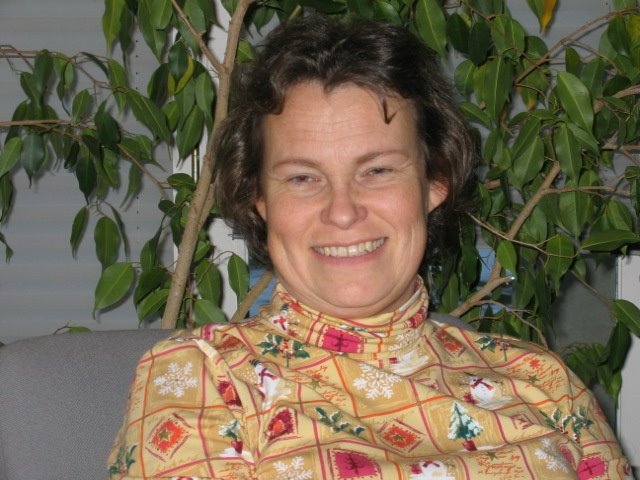
It will come as no surprise that many career re-entry programs, designed to help at-home mothers return to the work force, are disappearing, victims of hard times among the Wall Street firms and banks that led the so-called on-ramping trend.
But a new bright spot is emerging. Small, innovative return-to-work programs are springing up in other sectors -- specifically in science, engineering and technology. Prospects for long-term job growth in these fields are relatively good, and many employers expect a talent shortage, partly because of high quit rates among experienced women.
Honeywell, General Electric, the Massachusetts Institute of Technology and even the British government have all launched programs to provide women scientists, engineers and technicians the tools they need to jump-start stalled careers. Some of the new programs provide only training, coaching, networking and referrals, while others offer actual jobs with lower return-to-work barriers through special training or mentoring.
"Even in this troubled labor market, their prospects are good," says Carol Fishman Cohen, a career re-entry consultant, of women in these fields. Government contractors, engineering-related businesses and other employers that stand to benefit from the government's economic-stimulus plan, in particular, are faring relatively well, adds Ms. Cohen, co-founder of iRelaunch.com, a Web site for professionals, employers and universities.
Rachelle Berk, Northborough, Mass., a nuclear engineer and a student in a "Career Reengineering" retraining program offered by MIT, is among those who stand to gain. The MIT program, now in its third year, is instilling the confidence she needs to return to work after four years at home with her children, now 3 and 6, says Ms. Berk, who hopes to find work developing sustainable-energy sources. "It was exactly what I needed," she says of the MIT program. Dawna Levenson, director of the 10-month program, sees enrollment expanding to 24 as early as next fall, up from 10 currently.
The new efforts aim to counteract a "brain drain" caused by the exodus of large numbers of women from these fields in the prime of their careers. While 41% of highly qualified scientists, engineers and technicians in lower-tier jobs are female, more than half eventually quit midcareer, based on research by the Center for Work-Life Policy's Sylvia Hewlett and others, published last year in the Harvard Business Review. Women in these fields face isolation, extreme job pressures and long hours; they often become most discouraged about 10 years into their careers -- just as family pressures also tend to intensify.
Still, after years at home, many women scientists and engineers yearn to return to research and development. Last November, Honeywell launched a hiring program with an extensive training and mentoring component for engineers who have been out of the work force, in partnership with the Society of Women Engineers. The company has received hundreds of resumes and plans to begin hiring soon, says Lee Woodward, a vice president. Among the applicants: Karen English, an Alpharetta, Ga., product-development scientist. After six years at home with her daughter, now 12, Ms. English is excited about her prospects; "everything looks possible," she says.
BBN Technologies, a 700-employee research concern in Cambridge, Mass., is stepping up recruiting efforts to lure at-home professionals back to work, with plans to start holding luncheons for ex-employees this year, says Susan Wuellner, vice president, human resources. The networking seems to be working: Barbara MacKay, an engineer who rejoined BBN in 2007 after five years at home, now is recruiting another at-home mom to the company, Ms. MacKay says.
On a larger scale, IBM offers an extended-leave program that enabled Tami Garneau, a software product manager in Research Triangle Park, N.C., to return to work there amid the economic gloom of last October, after an extended leave with her two children.
Despite the sagging economy, "IBM was fully receptive," allowing her to work from home, she says. "That transition back in was great."
Internationally, General Electric has launched a program called Restart in its Bangalore, India, research center, offering flexible work and other incentives to lure female technologists back to work after having children, a spokesman says. And the British government is funding a 12-week on-ramping program in Bradford, England, and recently began handing out re-training grants, says Annette Williams, director.
Write to Sue Shellenbarger at sue.shellenbarger@wsj.com Printed in The Wall Street Journal, page D1
Copyright 2008 Dow Jones & Company, Inc. All Rights Reserved
Wednesday, February 25, 2009

Tuesday, February 24, 2009
Men and Mothering
February 24, 2009
BALANCING ACT
Men and Mothering
University policies and academic culture continue to discourage men from being active parents
By MARY ANN MASON
It's no secret that more than 40 years after Title VII guaranteed them equal treatment in the workplace, women with children still go home from work and begin their second shift. Our study of faculty members at the University of California revealed that mothers, on average, worked 95 hours a week, with 43 percent of those hours devoted to child care and housework and the rest to professional activities. Fathers worked 80 hours a week, with only 31 percent devoted to their domestic duties.
Some might dismiss that as a phenomenon of an older generation that is on the wane. But the 8,000 doctoral students we surveyed at the university revealed the same pattern — except they worked longer hours. Graduate students who were mothers, on average, worked 101 hours a week and spent about half of that time on child care and housework. Student fathers worked 89 hours, with 37 percent spent on home duties.
Before we point fingers at fathers, let's acknowledge that they are, in fact, contributing a significant number of hours to child care and housework. Let's also acknowledge the social and institutional barriers that may prevent them from doing more. Consider the following comment from a scientist who responded to my column, "Do Babies Matter in Science?" (The Chronicle, October 17, 2008):
"For our daughter's (a special-needs child) first couple of years," he wrote, "I took her to physical therapy three times a week, losing about seven hours of work time. I was pre-tenure at that point. Everyone assumed that my wife (also a tenure-track scientist) was the primary caregiver, including the male chair and female dean and provost, so she was offered special consideration on scheduling classes and such. She had to tell them that I was the primary caregiver with respect to physical therapy, since our daughter wanted to nurse, not work, when my wife was there. No special scheduling was then offered to me. I think their minds simply couldn't get around the idea of a man being the primary caregiver."
Andrea Doucet, in her thoughtful book, Do Men Mother? Fathering, Care, and Domestic Responsibility, examines the lives of more than 100 fathers, mostly single ones, who consider themselves the primary parent. Doucet found that men do take over the primary role of protective care when there is no mother, but that their overall style of nurturing tends to emphasize fun, playfulness, and physical activity, while mothers tend toward cuddling, holding, and emotional sympathy.
The book shows it was not easy for those single fathers because, just as in the scientist's case, American society is not always willing to accept them as the primary caregivers. Particularly tricky is being accepted by other parents in social situations and at schools. As one father commented in the book, "There's a lot of networks for moms and there isn't a network for guys, and I think a huge part of that is it isn't easy for a guy. I've been out to the library, and I've seen a guy pushing a baby carriage. But it's just not so easy for a guy to go up to another guy and say, 'Hey, how old is she? Do you want to be friends?'"
Our colleges and universities are not always welcoming to men as active parents, either. Among the members of the Association of American Universities (the 62 top-ranked research institutions), only a handful offer paid parental leave to fathers after their children are born — the majority offer it to mothers — and none offer graduate-student fathers paid parental leave (a few offer it to mothers).
Over the years I have sat around many conference tables arguing with colleagues about whether new fathers should be allowed to stop the tenure clock, or should receive special accommodations in teaching and other work. The opposition is always the same: "Men won't use the time for parenting; they'll use it to write another book or publish more articles." Fathers, for their part, even if they are full participants in parenting, don't often use parental accommodations, because, like many mothers, they fear they will be considered less committed by their institutions.
Father as breadwinner is a deeply held cultural stereotype within the society and the university; despite many instances in which women, particularly professional women, earn salaries larger than their husbands'. In Doucet's study, the married fathers who had chosen to be stay-at-home parents included those whose wives made a much higher salary and those in couples who had decided that the father was the better choice for stay-at-home parent. In virtually all of those cases, the father returned to work within three years. Most of them attributed it to the social stigma they had experienced by not being the breadwinner.
In the university world, we've found that women are more likely than men to marry a fellow student. Bargains are struck about whose career takes precedence and who will earn more money. They may cling to the ideal of equality and agree to take turns when it comes time to move careers — his choice now, hers later. The possibility of starting a family can play an important part in that bargaining process. But our research shows that, ultimately, the woman is likelier to defer to her partner's career — a decision that the culture applauds.
A common explanation for a couple's decision to have the father be the main breadwinner and the mother to work mainly at home is that fathers can't nurse an infant. Ironically, as women have moved into the workplace, breast-feeding has become not just popular but a requirement of good motherhood. In an article in the February 19 issue of The New Yorker called "Baby Food," Jill Lepore chronicles the long, strange story of breast-feeding through history. Over the past two centuries, it has gone in and out of fashion every few generations. As recently as the 1950s in this country — my mother's generation — formula milk was considered far more healthy for an infant. The women who nursed their babies were poor ones who could not afford formula.
Whatever the merits of breast-feeding, it imposes a short leash on mother and infant. An adaptive consequence for modern women in the workplace, according to Lepore, has been an exploding industry of breast pumps: "Today, breast pumps are such a ubiquitous personal accessory that they're more like cellphones than like catheters."
Universities rarely provide on-campus infant-care centers, or lactation rooms for nursing and pumping, as many progressive corporations now do. Such accommodations would benefit both academic parents and would allow fathers to share more equally in the early months, when caretaking patterns are often set.
If we want fathers to become equal participants in child raising, we must encourage them to do so. Family-friendly policies must include fathers as well as mothers. Cultural change occurs with participation; only then will the strongly held gender stereotypes against men as committed caregivers dissipate. In Sweden the government changed its generous 18-month parental-leave policy to insist that fathers take at least six months of the total; otherwise the leave is reduced to 12 months. The intention was not to save money but to make fatherly participation in raising children an accepted norm. And as it becomes the norm, the culture will no longer look upon family-friendly policies as a "mommy trap."
Mary Ann Mason is a professor and co-director of the Berkeley Law Center on Health, Economic & Family Security and the author (with her daughter, Eve Ekman), of Mothers on the Fast Track. She writes regularly on work and family issues for our Balancing Act column and invites readers to send in questions or personal concerns about those issues. She will answer your questions in a future column. E-mail your comments to careers@chronicle.com or to mamason@law.berkeley.edu. To read previous Balancing Act columns, see http://chronicle.com/jobs/news/archives/columns/balancing_act.
BALANCING ACT
Men and Mothering
University policies and academic culture continue to discourage men from being active parents
By MARY ANN MASON
It's no secret that more than 40 years after Title VII guaranteed them equal treatment in the workplace, women with children still go home from work and begin their second shift. Our study of faculty members at the University of California revealed that mothers, on average, worked 95 hours a week, with 43 percent of those hours devoted to child care and housework and the rest to professional activities. Fathers worked 80 hours a week, with only 31 percent devoted to their domestic duties.
Some might dismiss that as a phenomenon of an older generation that is on the wane. But the 8,000 doctoral students we surveyed at the university revealed the same pattern — except they worked longer hours. Graduate students who were mothers, on average, worked 101 hours a week and spent about half of that time on child care and housework. Student fathers worked 89 hours, with 37 percent spent on home duties.
Before we point fingers at fathers, let's acknowledge that they are, in fact, contributing a significant number of hours to child care and housework. Let's also acknowledge the social and institutional barriers that may prevent them from doing more. Consider the following comment from a scientist who responded to my column, "Do Babies Matter in Science?" (The Chronicle, October 17, 2008):
"For our daughter's (a special-needs child) first couple of years," he wrote, "I took her to physical therapy three times a week, losing about seven hours of work time. I was pre-tenure at that point. Everyone assumed that my wife (also a tenure-track scientist) was the primary caregiver, including the male chair and female dean and provost, so she was offered special consideration on scheduling classes and such. She had to tell them that I was the primary caregiver with respect to physical therapy, since our daughter wanted to nurse, not work, when my wife was there. No special scheduling was then offered to me. I think their minds simply couldn't get around the idea of a man being the primary caregiver."
Andrea Doucet, in her thoughtful book, Do Men Mother? Fathering, Care, and Domestic Responsibility, examines the lives of more than 100 fathers, mostly single ones, who consider themselves the primary parent. Doucet found that men do take over the primary role of protective care when there is no mother, but that their overall style of nurturing tends to emphasize fun, playfulness, and physical activity, while mothers tend toward cuddling, holding, and emotional sympathy.
The book shows it was not easy for those single fathers because, just as in the scientist's case, American society is not always willing to accept them as the primary caregivers. Particularly tricky is being accepted by other parents in social situations and at schools. As one father commented in the book, "There's a lot of networks for moms and there isn't a network for guys, and I think a huge part of that is it isn't easy for a guy. I've been out to the library, and I've seen a guy pushing a baby carriage. But it's just not so easy for a guy to go up to another guy and say, 'Hey, how old is she? Do you want to be friends?'"
Our colleges and universities are not always welcoming to men as active parents, either. Among the members of the Association of American Universities (the 62 top-ranked research institutions), only a handful offer paid parental leave to fathers after their children are born — the majority offer it to mothers — and none offer graduate-student fathers paid parental leave (a few offer it to mothers).
Over the years I have sat around many conference tables arguing with colleagues about whether new fathers should be allowed to stop the tenure clock, or should receive special accommodations in teaching and other work. The opposition is always the same: "Men won't use the time for parenting; they'll use it to write another book or publish more articles." Fathers, for their part, even if they are full participants in parenting, don't often use parental accommodations, because, like many mothers, they fear they will be considered less committed by their institutions.
Father as breadwinner is a deeply held cultural stereotype within the society and the university; despite many instances in which women, particularly professional women, earn salaries larger than their husbands'. In Doucet's study, the married fathers who had chosen to be stay-at-home parents included those whose wives made a much higher salary and those in couples who had decided that the father was the better choice for stay-at-home parent. In virtually all of those cases, the father returned to work within three years. Most of them attributed it to the social stigma they had experienced by not being the breadwinner.
In the university world, we've found that women are more likely than men to marry a fellow student. Bargains are struck about whose career takes precedence and who will earn more money. They may cling to the ideal of equality and agree to take turns when it comes time to move careers — his choice now, hers later. The possibility of starting a family can play an important part in that bargaining process. But our research shows that, ultimately, the woman is likelier to defer to her partner's career — a decision that the culture applauds.
A common explanation for a couple's decision to have the father be the main breadwinner and the mother to work mainly at home is that fathers can't nurse an infant. Ironically, as women have moved into the workplace, breast-feeding has become not just popular but a requirement of good motherhood. In an article in the February 19 issue of The New Yorker called "Baby Food," Jill Lepore chronicles the long, strange story of breast-feeding through history. Over the past two centuries, it has gone in and out of fashion every few generations. As recently as the 1950s in this country — my mother's generation — formula milk was considered far more healthy for an infant. The women who nursed their babies were poor ones who could not afford formula.
Whatever the merits of breast-feeding, it imposes a short leash on mother and infant. An adaptive consequence for modern women in the workplace, according to Lepore, has been an exploding industry of breast pumps: "Today, breast pumps are such a ubiquitous personal accessory that they're more like cellphones than like catheters."
Universities rarely provide on-campus infant-care centers, or lactation rooms for nursing and pumping, as many progressive corporations now do. Such accommodations would benefit both academic parents and would allow fathers to share more equally in the early months, when caretaking patterns are often set.
If we want fathers to become equal participants in child raising, we must encourage them to do so. Family-friendly policies must include fathers as well as mothers. Cultural change occurs with participation; only then will the strongly held gender stereotypes against men as committed caregivers dissipate. In Sweden the government changed its generous 18-month parental-leave policy to insist that fathers take at least six months of the total; otherwise the leave is reduced to 12 months. The intention was not to save money but to make fatherly participation in raising children an accepted norm. And as it becomes the norm, the culture will no longer look upon family-friendly policies as a "mommy trap."
Mary Ann Mason is a professor and co-director of the Berkeley Law Center on Health, Economic & Family Security and the author (with her daughter, Eve Ekman), of Mothers on the Fast Track. She writes regularly on work and family issues for our Balancing Act column and invites readers to send in questions or personal concerns about those issues. She will answer your questions in a future column. E-mail your comments to careers@chronicle.com or to mamason@law.berkeley.edu. To read previous Balancing Act columns, see http://chronicle.com/jobs/news/archives/columns/balancing_act.
Monday, February 9, 2009
Swimming Against the Tide
African American Girls and Science Education
Sandra L. Hanson
"Swimming Against the Tide" addresses a crucial lacunae in the body of literature on women in science, particularly women of color. This is a ‘new’ and innovative approach, since very few book publications on women in science have addressed the subject of African American women in science and from an age specific and culturally relevant perspective. Theoretically and methodologically strong, this is an example of feminist scholarship at its best." —Josephine Beoku-Betts, Professor of Women’s Studies and Sociology, Florida Atlantic University
“They looked at us like we were not supposed to be scientists,” says one young African American girl, describing one openly hostile reaction she encountered in the classroom. In this significant study, Sandra Hanson explains that although many young minority girls are interested in science, the racism and sexism in the field discourage them from pursuing it after high school. Those girls that remain highly motivated to continue studying science must “swim against the tide.”
Hanson examines the experiences of African American girls in science education using multiple methods of quantitative and qualitative research, including a web survey and vignette techniques. She understands the complex interaction between race and gender in the science domain and, using a multicultural and feminist framework of analysis, addresses the role of agency and resistance that encourages and sustains interest in science in African American families and communities.
Sandra L. Hanson
"Swimming Against the Tide" addresses a crucial lacunae in the body of literature on women in science, particularly women of color. This is a ‘new’ and innovative approach, since very few book publications on women in science have addressed the subject of African American women in science and from an age specific and culturally relevant perspective. Theoretically and methodologically strong, this is an example of feminist scholarship at its best." —Josephine Beoku-Betts, Professor of Women’s Studies and Sociology, Florida Atlantic University
“They looked at us like we were not supposed to be scientists,” says one young African American girl, describing one openly hostile reaction she encountered in the classroom. In this significant study, Sandra Hanson explains that although many young minority girls are interested in science, the racism and sexism in the field discourage them from pursuing it after high school. Those girls that remain highly motivated to continue studying science must “swim against the tide.”
Hanson examines the experiences of African American girls in science education using multiple methods of quantitative and qualitative research, including a web survey and vignette techniques. She understands the complex interaction between race and gender in the science domain and, using a multicultural and feminist framework of analysis, addresses the role of agency and resistance that encourages and sustains interest in science in African American families and communities.
Friday, January 30, 2009
A Measure of Equity: Women's Progress in Higher Education
Judy Touchton with Caryn McTighe Musil and Kathryn Peltier Campbell
ISBN/ISSN: 978-0-9796181-6-1
SKU: EQUITY
Year Published: 2008
Pages: 37
A Measure of Equity: Women’s Progress in Higher Education presents the only current comprehensive overview of data on women’s status in higher education. It documents areas of progress and identifies needed action to move even further down the path towards equity for women in higher education. This publication details specific areas of concern and actions that would advance gender equity in colleges and universities. The research examines women’s access to college, areas of study in undergraduate and post-graduate work, and women’s status as faculty, administrators, and college presidents.
ISBN/ISSN: 978-0-9796181-6-1
SKU: EQUITY
Year Published: 2008
Pages: 37
A Measure of Equity: Women’s Progress in Higher Education presents the only current comprehensive overview of data on women’s status in higher education. It documents areas of progress and identifies needed action to move even further down the path towards equity for women in higher education. This publication details specific areas of concern and actions that would advance gender equity in colleges and universities. The research examines women’s access to college, areas of study in undergraduate and post-graduate work, and women’s status as faculty, administrators, and college presidents.
Wednesday, January 21, 2009
In ‘Geek Chic’ and Obama, New Hope for Lifting Women in Science
By NATALIE ANGIER
Published: January 19, 2009
With the inauguration of an administration avowedly committed to Science as the grand elixir for the nation’s economic, environmental and psycho-reputational woes, a number of scientists say that now is the time to tackle a chronic conundrum of their beloved enterprise: how to attract more women into the fold, and keep them once they are there.
Researchers who have long promoted the cause of women in science view the incoming administration with a mix of optimism and we’ll-see-ism. On the one hand, they said, the new president’s apparent enthusiasm for science, and the concomitant rise of “geek chic” and “smart is the new cool” memes, can only redound to the benefit of all scientists, particularly if the enthusiasm is followed by a bolus of new research funds. On the other hand, they said, how about appointing a woman to the president’s personal Poindexter club, the President’s Council of Advisers on Science and Technology? The designated leaders so far include superstars like Harold Varmus, a Nobel laureate, and Eric Lander, genome meister.
The Rosalind Franklin Society, a group devoted to “recognizing the work of prominent women scientists,” has suggested possible co-chairwomen for the panel. Its candidates include Shirley Ann Jackson, a nuclear physicist and president of Rensselaer Polytechnic Institute, and Shirley Tilghman, a molecular biologist and president of Princeton University. Others have proposed Jacqueline Barton, a chemist and MacArthur fellow at the California Institute of Technology. Or, given the increasing importance of brain research, how about a prominent female neuroscientist like Nancy Kanwisher of the Massachusetts Institute of Technology or Carla Shatz of Stanford University?
“People say, oh, we shouldn’t have quotas, but diversity is a form of excellence, and there are plenty of outstanding women out there,” Jo Handelsman, president of the Franklin society and a microbiologist at the University of Wisconsin, said in an interview. “You don’t have to lower your standards in the slightest — you just have to pay attention.”
Some would like to see novel approaches to treating systemic problems that often work against women’s scientific ambitions. Mary Ann Mason and Marc Goulden of the University of California, Berkeley, have gathered extensive data showing stark male-female differences in the family structure and personal lives of academic researchers at the top tiers of the profession.
Surveying outcomes for 160,000 Ph.D. recipients across the United States, the researchers determined that 70 percent of male tenured professors were married with children, compared with only 44 percent of their tenured female colleagues. Twelve years or more after receiving their doctorates, tenured women were more than twice as likely as tenured men to be single and significantly more likely to be divorced. And lest all of this look like “personal choice,” when the researchers asked 8,700 faculty members in the University of California system about family and work issues, nearly 40 percent of the women agreed with the statement, “I had fewer children than I wanted,” compared with less than 20 percent of the men. The take-home message, Dr. Mason said in a telephone interview, is, “Men can have it all, but women can’t.”
From a purely Darwinian point of view, expecting a young woman to sacrifice her reproductive fitness for the sake of career advancement is simply too much, and yet the structure of academic research, in which one must spend one’s 20s and early 30s as a poorly compensated and minimally empowered graduate student and postdoctoral fellow, and the remainder of one’s 30s and into the low 40s working madly to earn tenure, can demand exactly that.
Nor do all young men in science accept the notion that their lab bench must double as a sleeping cot while their wives take care of the kids. In a new survey of 19,000 doctoral students at the University of California, Dr. Mason and her colleagues found that while two-thirds of the respondents either had or planned to have children, 84 percent of the women and 74 percent of the men expressed worry about the family-unfriendliness of their intended profession, and many had changed their plans accordingly. While 40 percent of the male science graduate students and 31 percent of the women said they had begun their Ph.D. programs intent on pursuing an academic career — still considered the premier path to science glory — a year or more into their studies, only 28 percent of the men and 20 percent of the women still hoped to become research scientists at a university.
Dr. Mason and other legal experts suggest that President Obama might be able to change things significantly for young women in science — and young men — by signing an executive order that would provide added family leave and parental benefits to the recipients of federal grants, a huge pool of people that includes many research scientists.
Whatever the impediments, women have made great strides in most areas of science. According to Joan Burrelli of the National Science Foundation, whereas 50 years ago women earned a piddling 8 percent of the science and engineering doctorates, by 2006 they claimed a 40 percent share. In 1973, only 6 percent of the Ph.D. scientists employed full time in academia, business or elsewhere were women; by 2006 the number had risen to 27 percent. Over that same time frame, women’s share of full professorships in the sciences quadrupled, to about 20 percent. Yet the stats vary sharply from field to field: 26 percent of full professors in the life sciences are women, but in physics, 6 percent.
For many female physicists, the mystery of women’s slow progress through their ranks is nearly as baffling as the research mysteries they confront in the lab. Of course, only 6 percent of physics professors are female; only 4 to 6 percent of the matter in the universe is visible. “Sound familiar?” Evalyn Gates, the assistant director of the Kavli Institute for Cosmological Physics at the University of Chicago, said wryly.
She has urged her colleagues to attack the problem of low female numbers as they would any scientific problem, by systematically gathering data, checking their detectors, factoring out background noise. Yes, girls and women leak out of the pipeline in comparatively greater numbers than males for every scientific discipline, she said, but they fall out of physics first and fastest. Why should it be, she said, that almost half of high school students in Advanced Placement physics classes are girls, but women earn only a fifth of bachelor’s degrees in physics? What turns girls away from physics so early?
Some have suggested that girls just can’t handle the advanced math of physics. Yet in an analysis of high school students’ performance on standardized math tests, published last summer in the journal Science, Janet Hyde and her colleagues found no gender differences in average performance, and even at the uppermost tails of achievement the discrepancies were minor and inconsistent: among whites who scored in the top 1 percent, there were two boys for every girl, whereas among Asian top scorers, there was one full girl for every nine-tenths of a boy. Besides, said Dr. Gates, female students earn half of the bachelor’s degrees in another math-heavy discipline called — mathematics.
Others have insisted that women just don’t like physics, perhaps because it seems cold and abstract, concerned with things rather than the flesh-and-blood focus of female-friendly fields like biology. But such reasoning, Dr. Gates said, cannot account for the fact that women earn half of the undergraduate degrees in chemistry, which is not quite plush toy material. “Something different is going on with physics, and we don’t know what it is yet,” she said. The culture? Bubble-headed television shows like “The Big Bang Theory,” with its four nerdy male physics prodigies and the fetching blond girl next door?
The difficulties are not confined to America. Surveying some 1,350 female physicists in 70 countries, Rachel Ivie and Stacy Guo of the American Institute of Physics found that, worse than family balance issues or lack of day care options, was the problem of public perception. The women were passionate about their work. They didn’t choose physics; physics chose them. Yet 80 percent agreed that attitudes about women in physics needed a serious overhaul.
As long as we’re making geek chic, let’s lose the Einstein ’do and moustache.
Published: January 19, 2009
With the inauguration of an administration avowedly committed to Science as the grand elixir for the nation’s economic, environmental and psycho-reputational woes, a number of scientists say that now is the time to tackle a chronic conundrum of their beloved enterprise: how to attract more women into the fold, and keep them once they are there.
Researchers who have long promoted the cause of women in science view the incoming administration with a mix of optimism and we’ll-see-ism. On the one hand, they said, the new president’s apparent enthusiasm for science, and the concomitant rise of “geek chic” and “smart is the new cool” memes, can only redound to the benefit of all scientists, particularly if the enthusiasm is followed by a bolus of new research funds. On the other hand, they said, how about appointing a woman to the president’s personal Poindexter club, the President’s Council of Advisers on Science and Technology? The designated leaders so far include superstars like Harold Varmus, a Nobel laureate, and Eric Lander, genome meister.
The Rosalind Franklin Society, a group devoted to “recognizing the work of prominent women scientists,” has suggested possible co-chairwomen for the panel. Its candidates include Shirley Ann Jackson, a nuclear physicist and president of Rensselaer Polytechnic Institute, and Shirley Tilghman, a molecular biologist and president of Princeton University. Others have proposed Jacqueline Barton, a chemist and MacArthur fellow at the California Institute of Technology. Or, given the increasing importance of brain research, how about a prominent female neuroscientist like Nancy Kanwisher of the Massachusetts Institute of Technology or Carla Shatz of Stanford University?
“People say, oh, we shouldn’t have quotas, but diversity is a form of excellence, and there are plenty of outstanding women out there,” Jo Handelsman, president of the Franklin society and a microbiologist at the University of Wisconsin, said in an interview. “You don’t have to lower your standards in the slightest — you just have to pay attention.”
Some would like to see novel approaches to treating systemic problems that often work against women’s scientific ambitions. Mary Ann Mason and Marc Goulden of the University of California, Berkeley, have gathered extensive data showing stark male-female differences in the family structure and personal lives of academic researchers at the top tiers of the profession.
Surveying outcomes for 160,000 Ph.D. recipients across the United States, the researchers determined that 70 percent of male tenured professors were married with children, compared with only 44 percent of their tenured female colleagues. Twelve years or more after receiving their doctorates, tenured women were more than twice as likely as tenured men to be single and significantly more likely to be divorced. And lest all of this look like “personal choice,” when the researchers asked 8,700 faculty members in the University of California system about family and work issues, nearly 40 percent of the women agreed with the statement, “I had fewer children than I wanted,” compared with less than 20 percent of the men. The take-home message, Dr. Mason said in a telephone interview, is, “Men can have it all, but women can’t.”
From a purely Darwinian point of view, expecting a young woman to sacrifice her reproductive fitness for the sake of career advancement is simply too much, and yet the structure of academic research, in which one must spend one’s 20s and early 30s as a poorly compensated and minimally empowered graduate student and postdoctoral fellow, and the remainder of one’s 30s and into the low 40s working madly to earn tenure, can demand exactly that.
Nor do all young men in science accept the notion that their lab bench must double as a sleeping cot while their wives take care of the kids. In a new survey of 19,000 doctoral students at the University of California, Dr. Mason and her colleagues found that while two-thirds of the respondents either had or planned to have children, 84 percent of the women and 74 percent of the men expressed worry about the family-unfriendliness of their intended profession, and many had changed their plans accordingly. While 40 percent of the male science graduate students and 31 percent of the women said they had begun their Ph.D. programs intent on pursuing an academic career — still considered the premier path to science glory — a year or more into their studies, only 28 percent of the men and 20 percent of the women still hoped to become research scientists at a university.
Dr. Mason and other legal experts suggest that President Obama might be able to change things significantly for young women in science — and young men — by signing an executive order that would provide added family leave and parental benefits to the recipients of federal grants, a huge pool of people that includes many research scientists.
Whatever the impediments, women have made great strides in most areas of science. According to Joan Burrelli of the National Science Foundation, whereas 50 years ago women earned a piddling 8 percent of the science and engineering doctorates, by 2006 they claimed a 40 percent share. In 1973, only 6 percent of the Ph.D. scientists employed full time in academia, business or elsewhere were women; by 2006 the number had risen to 27 percent. Over that same time frame, women’s share of full professorships in the sciences quadrupled, to about 20 percent. Yet the stats vary sharply from field to field: 26 percent of full professors in the life sciences are women, but in physics, 6 percent.
For many female physicists, the mystery of women’s slow progress through their ranks is nearly as baffling as the research mysteries they confront in the lab. Of course, only 6 percent of physics professors are female; only 4 to 6 percent of the matter in the universe is visible. “Sound familiar?” Evalyn Gates, the assistant director of the Kavli Institute for Cosmological Physics at the University of Chicago, said wryly.
She has urged her colleagues to attack the problem of low female numbers as they would any scientific problem, by systematically gathering data, checking their detectors, factoring out background noise. Yes, girls and women leak out of the pipeline in comparatively greater numbers than males for every scientific discipline, she said, but they fall out of physics first and fastest. Why should it be, she said, that almost half of high school students in Advanced Placement physics classes are girls, but women earn only a fifth of bachelor’s degrees in physics? What turns girls away from physics so early?
Some have suggested that girls just can’t handle the advanced math of physics. Yet in an analysis of high school students’ performance on standardized math tests, published last summer in the journal Science, Janet Hyde and her colleagues found no gender differences in average performance, and even at the uppermost tails of achievement the discrepancies were minor and inconsistent: among whites who scored in the top 1 percent, there were two boys for every girl, whereas among Asian top scorers, there was one full girl for every nine-tenths of a boy. Besides, said Dr. Gates, female students earn half of the bachelor’s degrees in another math-heavy discipline called — mathematics.
Others have insisted that women just don’t like physics, perhaps because it seems cold and abstract, concerned with things rather than the flesh-and-blood focus of female-friendly fields like biology. But such reasoning, Dr. Gates said, cannot account for the fact that women earn half of the undergraduate degrees in chemistry, which is not quite plush toy material. “Something different is going on with physics, and we don’t know what it is yet,” she said. The culture? Bubble-headed television shows like “The Big Bang Theory,” with its four nerdy male physics prodigies and the fetching blond girl next door?
The difficulties are not confined to America. Surveying some 1,350 female physicists in 70 countries, Rachel Ivie and Stacy Guo of the American Institute of Physics found that, worse than family balance issues or lack of day care options, was the problem of public perception. The women were passionate about their work. They didn’t choose physics; physics chose them. Yet 80 percent agreed that attitudes about women in physics needed a serious overhaul.
As long as we’re making geek chic, let’s lose the Einstein ’do and moustache.
Tuesday, November 18, 2008
On Campus with Women
Associate of American Colleges and Universities
ISSUE TOPIC:Rethinking Scientific Pedagogies The current issue of On Campus with Women examines ways to improve student retention and engagement in the fields of science, technology, engineering, and mathematics (STEM). The issue explores how feminist pedagogies, by connecting academic learning and personal experience, can transform cultures and classrooms to be more inclusive and hospitable to all students, particularly women across races and ethnicities whose participation in certain fields remains low. READ MORE
ISSUE TOPIC:Rethinking Scientific Pedagogies The current issue of On Campus with Women examines ways to improve student retention and engagement in the fields of science, technology, engineering, and mathematics (STEM). The issue explores how feminist pedagogies, by connecting academic learning and personal experience, can transform cultures and classrooms to be more inclusive and hospitable to all students, particularly women across races and ethnicities whose participation in certain fields remains low. READ MORE
Monday, November 17, 2008
Executive Leadership in Academic Medicine® (ELAM®) Program for Women
In this month’s letter, Dr. Rick Valachovic, Executive Director of the American Dental Education Association, talks with graduates of the only in-depth national program that focuses on leadership development for women faculty in academic medicine, dentistry, and public health.
From 0 to 13 in 13 Years: ELAM’s Impressive Track Record in Preparing Women for Leadership
The Hedwig van Ameringen Executive Leadership in Academic Medicine® (ELAM®) Program for Women is now in its thirteenth year preparing women faculty in academic health centers for senior executive leadership positions, and the results are striking. Thirteen U.S. dental schools, almost a quarter of the total, can boast women deans today, and close to 600 ELAM graduates are waiting in the wings, ready to move into senior leadership in U.S. and Canadian schools of dentistry, medicine, dentistry, and public health.
Headquartered at the Drexel University College of Medicine in Philadelphia, Pennsylvania, the ELAM program has achieved a high level of success by maintaining a steady focus on three principal goals: to advance women to leadership positions, to support and sustain women who attain leadership positions, and ultimately to change the culture of academic health care so that the contributions of women are recognized and valued.
What makes ELAM special? According to Rosalyn Richman, the program’s co-director, ELAM is more intensive and goes into greater depth than other leadership programs. The program now focuses exclusively on medicine, dentistry, and public health. Its three-session format gives Fellows a chance to apply their learning throughout the fellowship year. Classes are broken down into geographically related peer-learning communities that communicate regularly, sometimes monthly, both during and after the fellowship year. Alumnae interact directly at ADEA and Association of American Medical Colleges (AAMC) meetings, through collaborative grants and projects, and at group-initiated reunions and retreats.
The program also places a heavy emphasis on ensuring that Fellows succeed once they return to their institutions. ELAM requires a commitment on the part of the sponsoring institution to provide Fellows with opportunities that can be a springboard to the next level of leadership, and supervising deans must attend a forum on emerging issues at the close of the fellowship year so that they, too, have a direct experience of the program.
“For some of these deans, it’s the first time they’ve sat in a high-level meeting where half the participants are women. It’s really a cultural immersion,” says Roz. One dean was so excited by what he saw that he is now serving on the ELAM faculty.
ELAM also gives participants insights into how administrators and policymakers think. Dr. Sharon Turner, Dean of the University of Kentucky College of Dentistry and an ELAM participant in the early years, welcomed this broader perspective.
“Before I became a dean, I never paid attention to what was going on at the state legislative level or at the national level,” says Sharon. “Now I understand that it’s not just a matter of how good the school is. The states must balance competing interests, and they need to take a pragmatic approach to funding our institutions.”
This is Sharon’s eleventh year as a dean, first at Oregon Health & Science University and now at the University of Kentucky. Sharon values the ELAM program for giving her the confidence to apply for the dean’s position and a network of women with good judgment and similar experience, which she can use as a sounding board. That continuing connection with the program has prompted Sharon to serve as both a Board member and President of SELAM, the alumnae association founded by ELAM graduates.
ELAM dental graduates have played key roles in SELAM’s leadership and have proven to be effective recruiters for ELAM. In fact, Roz Richman reports that alumnae bonds are so strong that she is in touch with all but a handful of the program’s 570 graduates.
ELAM was started in 1996 as a program for women in medical education under the leadership of our colleague Dr. D. Walter Cohen, who was then Chancellor of Drexel University College of Medicine. Women in dental education were invited to participate on a limited basis the following year, thanks in part to the efforts of Dr. Jeanne Sinkford, Associate Executive Director and Director of the ADEA Center for Equity and Diversity. She remembers well the challenges that women in our community faced at that time. “In the larger community of health sciences, women’s leadership in dental education needed to be developed. We didn’t have many women associate deans. Some women were assistants to the dean, but their titles did not represent their value to their institutions. We thought about having a separate women’s leadership program, but I felt that medical and dental education should be together so that emerging leaders could have a chance to meet and develop their skills in a competitive arena.”
ELAM agreed, and ADEA nominated two candidates for a pilot effort to include women in dental education: Dr. Lisa A. Tedesco and Professor Pamela Zarkowski. At that time, Lisa was Associate Dean for Academic Affairs at the University of Michigan School of Dentistry. Today she is Dean of the Graduate School and Vice Provost, Academic Affairs-Graduate Studies, at Emory University in Atlanta. Pam, an attorney and dental hygienist by education, has been Executive Associate Dean of the University of Detroit Mercy (UDM) School of Dentistry and currently serves as Acting Provost and Vice President of Academic Affairs at UDM.
Today women from dental education compete with women in medicine and public health for ELAM’s 48 available slots, almost double the number in its inaugural class. Since the program’s inception, 43 dental Fellows from 34 dental schools (or 61% of all U.S. dental schools) have participated in ELAM. Comparatively, 530 Fellows from 111 U.S. medical schools (87%) and five Canadian medical schools (29%) have taken part. We hope that all U.S. dental schools will have ELAM Fellows on campus in the not too distant future.
Although proportionally fewer women in dentistry have gone through the program, their successes have been striking. Of the first six original dental Fellows, three have made become deans and one is a provost. Today 22% percent of U.S. dental schools have women deans, compared to 12% of U.S. allopathic medical schools. And while no ELAM graduates have become the chief elected officer of the Association of American Medical Colleges, two dental Fellows, Lisa Tedesco and Pam Zarkowski, have served as President of ADEA. It’s also worth noting that 26% of all the women deans serving in U.S. schools of medicine, dentistry, and public health are ELAM alumnae. That’s an impressive track record.
Jeanne Sinkford believes that the timing of the program was fortuitous. “Ten years ago, we did not have the women with the credentials, preparation, and willingness to apply for these positions. We've had a lot of deanships open in recent years, and thanks to ELAM, many of these positions have been filled by women.”
Lisa Tedesco also credits ELAM’s efforts to foster women’s leadership with helping to create a rich pipeline of women that institutions can draw from when looking to recruit top academic talent.
“In the health professions and in academia, careers are tremendously intensive,” Lisa adds. “Over the last decade, we’ve seen the development of clinical and research ladders in health professions education. This has come about because of programs and organizations working to make academia more welcoming to women, and ELAM can take credit for part of that.” This is a promising development, especially in light of the fact that academic health centers have been slow to catch up with the corporate world when it comes to providing the kind of flexibility that might draw women and young people to academic careers.
Dr. Sandra Andrieu has been at Louisiana State University (LSU) since her days as a dental hygiene student. She was the first dental hygienist at the LSU School of Dentistry to earn a Ph.D., and in 1994, she became the first woman to be promoted to the senior ranks of the dental school when she was named Associate Dean for Academic Affairs at that institution. Although another woman served as Dean of Educational Services for a few years, today Sandra remains the only woman in her school in a senior leadership role.
Sandra learned about ELAM when she began attending ADEA meetings. There she met other women academic deans, and that’s when she says “the light bulb went off. I had the preparation and the opportunity to serve as an academic dean, but I lacked mentors and guidance.” Early on she was invited to attend a SELAM reception, and there she found role models among the ELAM alums.
“They were amazing. They opened my eyes and, without even knowing it at first, they became my mentors.” Today Sandra is also an ELAM Fellow. Despite the fact that she began her fellowship only days after being evacuated from Hurricane Gustav, she left the first session invigorated.
“I had a narrow focus regarding my future, but after meeting with my ELAM mentor, I realized I have a broad array of options in higher education.” ELAM’s superb reputation provides an entrée for its Fellows in the upper echelons of academia and government. Sandra especially looks forward to the opportunity ELAM provides to meet with senior administrators throughout her university and on the boards that oversee higher education in her state.
The relationships between ELAM alums can be transformative, not only for individual Fellows, but for their institutions as well. Jeanne Sinkford agrees. "We know that our women leaders are human capital that enrich our academic communities and contribute to a more inclusive environment for all students and faculty." Indeed, ELAM aspires to create a “critical mass” of women in high-level leadership positions in academic health centers so that the culture of those institutions will begin to evolve in ways that support women’s inclusion at the highest levels.
One campus where ELAM’s impact is very much in evidence is the Medical College of Georgia (MCG). Dr. Connie Drisko is a 2001 ELAM alum and Dean of MCG’s School of Dentistry. MCG has six ELAM alums, three in dentistry and three in medicine, with a fourth on the way. Four of the campus’s five deans are women, as are many of the vice presidents.
Many of you know that Connie is Chair of the ADEA Women’s Affairs Advisory Committee, which serves as the screening committee for ELAM dental Fellows. She tells me that ELAM alums have been extraordinarily supportive of each other during the recruitment process on her campus, but she’d like to see them do more. “We have a strong network at MCG. That has potential, but we haven't fully leveraged that potential yet.”
“Each of us in leadership has a responsibility to mentor and bring along the next generation. It’s clear that consciously promoting and mentoring women has had a positive effect. How much longer will we need to do that? I don't know, but it didn't just happen on its own.”
Of course women’s leadership does not need to stop at the decanal level. Kathy Atchison, a 2005 ELAM dental Fellow, serves as Vice Provost for Intellectual Property and Industry Relations and as Associate Vice Chancellor for Research at the University of California at Los Angeles. Sandra Andrieu is contemplating a range of possibilities in higher education, and Sharon Turner can envision a day when she might relocate to Washington, D.C., to work on health policy. Many women also choose to take advantage of other competitive programs, such as the American Council on Education (ACE) Fellows Program and the Robert Wood Johnson Foundation Health Policy Fellowships Program.
For a list of other leadership programs open to women in dental education, visit the ADEA Center for Equity and Diversity website. It also includes a complete list of ADEA’s ELAM alums.
Richard W. Valachovic, D.M.D., M.P.H.Executive Directorvalachovicr@adea.org
From 0 to 13 in 13 Years: ELAM’s Impressive Track Record in Preparing Women for Leadership
The Hedwig van Ameringen Executive Leadership in Academic Medicine® (ELAM®) Program for Women is now in its thirteenth year preparing women faculty in academic health centers for senior executive leadership positions, and the results are striking. Thirteen U.S. dental schools, almost a quarter of the total, can boast women deans today, and close to 600 ELAM graduates are waiting in the wings, ready to move into senior leadership in U.S. and Canadian schools of dentistry, medicine, dentistry, and public health.
Headquartered at the Drexel University College of Medicine in Philadelphia, Pennsylvania, the ELAM program has achieved a high level of success by maintaining a steady focus on three principal goals: to advance women to leadership positions, to support and sustain women who attain leadership positions, and ultimately to change the culture of academic health care so that the contributions of women are recognized and valued.
What makes ELAM special? According to Rosalyn Richman, the program’s co-director, ELAM is more intensive and goes into greater depth than other leadership programs. The program now focuses exclusively on medicine, dentistry, and public health. Its three-session format gives Fellows a chance to apply their learning throughout the fellowship year. Classes are broken down into geographically related peer-learning communities that communicate regularly, sometimes monthly, both during and after the fellowship year. Alumnae interact directly at ADEA and Association of American Medical Colleges (AAMC) meetings, through collaborative grants and projects, and at group-initiated reunions and retreats.
The program also places a heavy emphasis on ensuring that Fellows succeed once they return to their institutions. ELAM requires a commitment on the part of the sponsoring institution to provide Fellows with opportunities that can be a springboard to the next level of leadership, and supervising deans must attend a forum on emerging issues at the close of the fellowship year so that they, too, have a direct experience of the program.
“For some of these deans, it’s the first time they’ve sat in a high-level meeting where half the participants are women. It’s really a cultural immersion,” says Roz. One dean was so excited by what he saw that he is now serving on the ELAM faculty.
ELAM also gives participants insights into how administrators and policymakers think. Dr. Sharon Turner, Dean of the University of Kentucky College of Dentistry and an ELAM participant in the early years, welcomed this broader perspective.
“Before I became a dean, I never paid attention to what was going on at the state legislative level or at the national level,” says Sharon. “Now I understand that it’s not just a matter of how good the school is. The states must balance competing interests, and they need to take a pragmatic approach to funding our institutions.”
This is Sharon’s eleventh year as a dean, first at Oregon Health & Science University and now at the University of Kentucky. Sharon values the ELAM program for giving her the confidence to apply for the dean’s position and a network of women with good judgment and similar experience, which she can use as a sounding board. That continuing connection with the program has prompted Sharon to serve as both a Board member and President of SELAM, the alumnae association founded by ELAM graduates.
ELAM dental graduates have played key roles in SELAM’s leadership and have proven to be effective recruiters for ELAM. In fact, Roz Richman reports that alumnae bonds are so strong that she is in touch with all but a handful of the program’s 570 graduates.
ELAM was started in 1996 as a program for women in medical education under the leadership of our colleague Dr. D. Walter Cohen, who was then Chancellor of Drexel University College of Medicine. Women in dental education were invited to participate on a limited basis the following year, thanks in part to the efforts of Dr. Jeanne Sinkford, Associate Executive Director and Director of the ADEA Center for Equity and Diversity. She remembers well the challenges that women in our community faced at that time. “In the larger community of health sciences, women’s leadership in dental education needed to be developed. We didn’t have many women associate deans. Some women were assistants to the dean, but their titles did not represent their value to their institutions. We thought about having a separate women’s leadership program, but I felt that medical and dental education should be together so that emerging leaders could have a chance to meet and develop their skills in a competitive arena.”
ELAM agreed, and ADEA nominated two candidates for a pilot effort to include women in dental education: Dr. Lisa A. Tedesco and Professor Pamela Zarkowski. At that time, Lisa was Associate Dean for Academic Affairs at the University of Michigan School of Dentistry. Today she is Dean of the Graduate School and Vice Provost, Academic Affairs-Graduate Studies, at Emory University in Atlanta. Pam, an attorney and dental hygienist by education, has been Executive Associate Dean of the University of Detroit Mercy (UDM) School of Dentistry and currently serves as Acting Provost and Vice President of Academic Affairs at UDM.
Today women from dental education compete with women in medicine and public health for ELAM’s 48 available slots, almost double the number in its inaugural class. Since the program’s inception, 43 dental Fellows from 34 dental schools (or 61% of all U.S. dental schools) have participated in ELAM. Comparatively, 530 Fellows from 111 U.S. medical schools (87%) and five Canadian medical schools (29%) have taken part. We hope that all U.S. dental schools will have ELAM Fellows on campus in the not too distant future.
Although proportionally fewer women in dentistry have gone through the program, their successes have been striking. Of the first six original dental Fellows, three have made become deans and one is a provost. Today 22% percent of U.S. dental schools have women deans, compared to 12% of U.S. allopathic medical schools. And while no ELAM graduates have become the chief elected officer of the Association of American Medical Colleges, two dental Fellows, Lisa Tedesco and Pam Zarkowski, have served as President of ADEA. It’s also worth noting that 26% of all the women deans serving in U.S. schools of medicine, dentistry, and public health are ELAM alumnae. That’s an impressive track record.
Jeanne Sinkford believes that the timing of the program was fortuitous. “Ten years ago, we did not have the women with the credentials, preparation, and willingness to apply for these positions. We've had a lot of deanships open in recent years, and thanks to ELAM, many of these positions have been filled by women.”
Lisa Tedesco also credits ELAM’s efforts to foster women’s leadership with helping to create a rich pipeline of women that institutions can draw from when looking to recruit top academic talent.
“In the health professions and in academia, careers are tremendously intensive,” Lisa adds. “Over the last decade, we’ve seen the development of clinical and research ladders in health professions education. This has come about because of programs and organizations working to make academia more welcoming to women, and ELAM can take credit for part of that.” This is a promising development, especially in light of the fact that academic health centers have been slow to catch up with the corporate world when it comes to providing the kind of flexibility that might draw women and young people to academic careers.
Dr. Sandra Andrieu has been at Louisiana State University (LSU) since her days as a dental hygiene student. She was the first dental hygienist at the LSU School of Dentistry to earn a Ph.D., and in 1994, she became the first woman to be promoted to the senior ranks of the dental school when she was named Associate Dean for Academic Affairs at that institution. Although another woman served as Dean of Educational Services for a few years, today Sandra remains the only woman in her school in a senior leadership role.
Sandra learned about ELAM when she began attending ADEA meetings. There she met other women academic deans, and that’s when she says “the light bulb went off. I had the preparation and the opportunity to serve as an academic dean, but I lacked mentors and guidance.” Early on she was invited to attend a SELAM reception, and there she found role models among the ELAM alums.
“They were amazing. They opened my eyes and, without even knowing it at first, they became my mentors.” Today Sandra is also an ELAM Fellow. Despite the fact that she began her fellowship only days after being evacuated from Hurricane Gustav, she left the first session invigorated.
“I had a narrow focus regarding my future, but after meeting with my ELAM mentor, I realized I have a broad array of options in higher education.” ELAM’s superb reputation provides an entrée for its Fellows in the upper echelons of academia and government. Sandra especially looks forward to the opportunity ELAM provides to meet with senior administrators throughout her university and on the boards that oversee higher education in her state.
The relationships between ELAM alums can be transformative, not only for individual Fellows, but for their institutions as well. Jeanne Sinkford agrees. "We know that our women leaders are human capital that enrich our academic communities and contribute to a more inclusive environment for all students and faculty." Indeed, ELAM aspires to create a “critical mass” of women in high-level leadership positions in academic health centers so that the culture of those institutions will begin to evolve in ways that support women’s inclusion at the highest levels.
One campus where ELAM’s impact is very much in evidence is the Medical College of Georgia (MCG). Dr. Connie Drisko is a 2001 ELAM alum and Dean of MCG’s School of Dentistry. MCG has six ELAM alums, three in dentistry and three in medicine, with a fourth on the way. Four of the campus’s five deans are women, as are many of the vice presidents.
Many of you know that Connie is Chair of the ADEA Women’s Affairs Advisory Committee, which serves as the screening committee for ELAM dental Fellows. She tells me that ELAM alums have been extraordinarily supportive of each other during the recruitment process on her campus, but she’d like to see them do more. “We have a strong network at MCG. That has potential, but we haven't fully leveraged that potential yet.”
“Each of us in leadership has a responsibility to mentor and bring along the next generation. It’s clear that consciously promoting and mentoring women has had a positive effect. How much longer will we need to do that? I don't know, but it didn't just happen on its own.”
Of course women’s leadership does not need to stop at the decanal level. Kathy Atchison, a 2005 ELAM dental Fellow, serves as Vice Provost for Intellectual Property and Industry Relations and as Associate Vice Chancellor for Research at the University of California at Los Angeles. Sandra Andrieu is contemplating a range of possibilities in higher education, and Sharon Turner can envision a day when she might relocate to Washington, D.C., to work on health policy. Many women also choose to take advantage of other competitive programs, such as the American Council on Education (ACE) Fellows Program and the Robert Wood Johnson Foundation Health Policy Fellowships Program.
For a list of other leadership programs open to women in dental education, visit the ADEA Center for Equity and Diversity website. It also includes a complete list of ADEA’s ELAM alums.
Richard W. Valachovic, D.M.D., M.P.H.Executive Directorvalachovicr@adea.org
Thursday, November 6, 2008
Female Professors at U. of Texas-Austin Earn $9,000 Less Than Male Peers
The Chronicle of Higher Education's Daily Report
November 5, 2008
Female professors at the University of Texas at Austin earned an average of $9,028 less than their male counterparts in 2007, and senior female faculty members there feel more isolated and less recognized for their work than do their male colleagues.
Those are among the findings of a new report on gender issues affecting the faculty that was written by a 22-member panel created by the university’s provost in 2007.
In a news release issued this week, the university said the provost, Steven W. Leslie, had accepted the panel’s recommendation that the university develop a five- to 10-year plan to reduce or eliminate gender inequity on its faculty.
The panel also found that more women than men at Texas left before winning tenure, and of those who stayed a smaller proportion of women than men achieved tenure within seven years. Thirty-six percent of women hired as assistant professors in 1997 had earned tenure and been promoted to associate professor within seven years, compared with 56 percent of men. The task force also conducted a survey of faculty members that found that 14 percent of female professors said they had been sexually harassed.
Gender inequities in the professoriate have been a major concern for other prominent universities — most notably Harvard University, which has had a poor record of offering tenure to women, and the Massachusetts Institute of Technology, which nearly a decade ago conducted a gender-equity review like the one at Texas and found similar results. —Robin WilsonPosted on Wednesday November 5, 2008 Permalink
Comments
My own experience with these studies is that the inequities are always demonstrated in the aggregate, that is, typically part of a flawed regression equation that precisely measures income and ambiguously measures productivity. When we said, fine, let’s address the individual cases where a particular woman is underpaid and the specific reasons why, the opposition melted away, presumably because the unaggregated cases didn’t seem as clear as the situation taken as a whole. The lesson I took from this is that inequities are best handled on a case-by-case basis, rather than part of a far-flung study that cannot correctly process the predictor variables.
— kp Nov 5, 12:59 PM #
“Unaggreggated cases didn’t seem as clear …” Sounds like gobbledook from the notoriously sexist economics department, where sex ratios are usually about 25:1, male to female. In 1982, I wrote a similar expose about underpaid female faculty at my university. Nothing has changed, not even the wornout arguments about “human capital,” she had a baby and wrote one less article, she failed to bargain hard upon entry (code for we took advantage of her when we hired her), she served on too many committees (which her chair required) and didn’t write enough at promotion time (while she provided gazillion hours in service) … familiar sexist CRAP. Equal pay for equal work PERIOD. No apologies. No excuses. Women are valuable and vital to academia. Indeed, without underpaying female faculty the budget might have to cut into the football department. OOOh let’s not go there. And while making less money she got little or no pay/support when she had a baby. Would have been better to have a heart attack, 6 to 12 weeks paid, supportive colleagues, in the middle of a semester no less. Class action lawsuit and enforcement of federal legislation are the only solution.
— Dr. Mo Nov 5, 04:04 PM #
Were these findings corrected for confounding variables like, oh, academic specialty?
— Take Back the U! Nov 5, 04:13 PM #
Don’t worry. Obama will fix it all.
— IG Nov 5, 04:29 PM #
Why do so many of the comments on Chronicle articles sound as if they come from cranky old white men? Are they the only ones not busy with really useful academic activities?
— johntee Nov 5, 04:47 PM #
so kp (#1)….what you are trying to say is that female professors are not as “productive” as their male counter-parts? Please give us the benefits of your analysis of black, asian & hispanic instructors too. We want to know if you’re also a bigot or just a chauvinist pig.
— Gary Nov 5, 05:04 PM #
I was expressly told that I couldn’t negotiate salary by a member of the administration. Later, I discovered that a male colleague did not receive this response and negotiated a higher starting salary. All I can say is that I learned a valuable lesson-take what they offer and add 5K to 9K to it. Then, if they reject your counter-offer, decide whether you really want the job or not. Part of the solution to gender pay inequity has to come from women standing up for their own worth and taking the risks that stance implies. Men do it all the time.
— J.D. Nov 5, 05:34 PM #
It’s always interesting to read comments from people who did not even bother to click on the link and read the report. All of your concerns are explicitly addressed therein.
Yes, they did control for discipline. No, they did not control for productivity, even though most of the wage gap was concentrated among the most productive faculty.
The gender pay gap was only statistically significant at the full professor level, and for non-tenure track instructors.
The report also speculates that female faculty use leaves of absence more than males, which extends their time to promotion. However, child care is not a significant factor.
Some of the human capital controls do reduce the wage gap.
Read the report. Unless statistically modeling is “gobbledy-gook” to you, in which case your predetermined ideological knee-jerk response is probably the best you can muster.
— tb Nov 5, 05:51 PM #
As my kindegarten teacher used to say, let’s play nice boys and girls!
— Innocent By-Stander Nov 6, 08:34 AM #
Ditto #2 and #6…#7 so true, but when I did negotiate like a man I was told that people would see me as a department destroying shrew…I decided I needed the money (and I only got half of what I asked for). I am very productive, still underpaid, and apparently a shrew.
— DJ Nov 6, 08:51 AM #
I would find it hard to believe that within a given discipline there was any department where women were earning anything less than men.
I don’t find any comparisons withing disciplines within this study. Could it be that these comparisons destroy the conclusions.
More fair studies are cited at http://www.trinity.edu/rjensen/HigherEdControversies.htm#GenderSalaryDifferences
— Robert E. Jensen Nov 6, 09:17 AM #
Get DOWN, Dr. Mo!Tell it like it is.
— Ginger Nov 6, 09:52 AM #
The study is very vague about controlling for differences by discipline. It would have been much better had the study showed us differences is in starting salaries between men and women by discipline. If there were differences here it’s time to get a pit bull lawyer.It would’ve been nice to make similar gender comparisons among full professors after factoring out the super-salaried endowed professorships. Where there may be differences is in the associate professor ranks, especially if there are “permanent” associate professors who are tenured but have not been promoted for ten or more years. I think it might be more fair in this case to compare salary differences between men and women by discipline in the year of promotion to full professorships. If there are differences here it would be very disturbing.
November 5, 2008
Female professors at the University of Texas at Austin earned an average of $9,028 less than their male counterparts in 2007, and senior female faculty members there feel more isolated and less recognized for their work than do their male colleagues.
Those are among the findings of a new report on gender issues affecting the faculty that was written by a 22-member panel created by the university’s provost in 2007.
In a news release issued this week, the university said the provost, Steven W. Leslie, had accepted the panel’s recommendation that the university develop a five- to 10-year plan to reduce or eliminate gender inequity on its faculty.
The panel also found that more women than men at Texas left before winning tenure, and of those who stayed a smaller proportion of women than men achieved tenure within seven years. Thirty-six percent of women hired as assistant professors in 1997 had earned tenure and been promoted to associate professor within seven years, compared with 56 percent of men. The task force also conducted a survey of faculty members that found that 14 percent of female professors said they had been sexually harassed.
Gender inequities in the professoriate have been a major concern for other prominent universities — most notably Harvard University, which has had a poor record of offering tenure to women, and the Massachusetts Institute of Technology, which nearly a decade ago conducted a gender-equity review like the one at Texas and found similar results. —Robin WilsonPosted on Wednesday November 5, 2008 Permalink
Comments
My own experience with these studies is that the inequities are always demonstrated in the aggregate, that is, typically part of a flawed regression equation that precisely measures income and ambiguously measures productivity. When we said, fine, let’s address the individual cases where a particular woman is underpaid and the specific reasons why, the opposition melted away, presumably because the unaggregated cases didn’t seem as clear as the situation taken as a whole. The lesson I took from this is that inequities are best handled on a case-by-case basis, rather than part of a far-flung study that cannot correctly process the predictor variables.
— kp Nov 5, 12:59 PM #
“Unaggreggated cases didn’t seem as clear …” Sounds like gobbledook from the notoriously sexist economics department, where sex ratios are usually about 25:1, male to female. In 1982, I wrote a similar expose about underpaid female faculty at my university. Nothing has changed, not even the wornout arguments about “human capital,” she had a baby and wrote one less article, she failed to bargain hard upon entry (code for we took advantage of her when we hired her), she served on too many committees (which her chair required) and didn’t write enough at promotion time (while she provided gazillion hours in service) … familiar sexist CRAP. Equal pay for equal work PERIOD. No apologies. No excuses. Women are valuable and vital to academia. Indeed, without underpaying female faculty the budget might have to cut into the football department. OOOh let’s not go there. And while making less money she got little or no pay/support when she had a baby. Would have been better to have a heart attack, 6 to 12 weeks paid, supportive colleagues, in the middle of a semester no less. Class action lawsuit and enforcement of federal legislation are the only solution.
— Dr. Mo Nov 5, 04:04 PM #
Were these findings corrected for confounding variables like, oh, academic specialty?
— Take Back the U! Nov 5, 04:13 PM #
Don’t worry. Obama will fix it all.
— IG Nov 5, 04:29 PM #
Why do so many of the comments on Chronicle articles sound as if they come from cranky old white men? Are they the only ones not busy with really useful academic activities?
— johntee Nov 5, 04:47 PM #
so kp (#1)….what you are trying to say is that female professors are not as “productive” as their male counter-parts? Please give us the benefits of your analysis of black, asian & hispanic instructors too. We want to know if you’re also a bigot or just a chauvinist pig.
— Gary Nov 5, 05:04 PM #
I was expressly told that I couldn’t negotiate salary by a member of the administration. Later, I discovered that a male colleague did not receive this response and negotiated a higher starting salary. All I can say is that I learned a valuable lesson-take what they offer and add 5K to 9K to it. Then, if they reject your counter-offer, decide whether you really want the job or not. Part of the solution to gender pay inequity has to come from women standing up for their own worth and taking the risks that stance implies. Men do it all the time.
— J.D. Nov 5, 05:34 PM #
It’s always interesting to read comments from people who did not even bother to click on the link and read the report. All of your concerns are explicitly addressed therein.
Yes, they did control for discipline. No, they did not control for productivity, even though most of the wage gap was concentrated among the most productive faculty.
The gender pay gap was only statistically significant at the full professor level, and for non-tenure track instructors.
The report also speculates that female faculty use leaves of absence more than males, which extends their time to promotion. However, child care is not a significant factor.
Some of the human capital controls do reduce the wage gap.
Read the report. Unless statistically modeling is “gobbledy-gook” to you, in which case your predetermined ideological knee-jerk response is probably the best you can muster.
— tb Nov 5, 05:51 PM #
As my kindegarten teacher used to say, let’s play nice boys and girls!
— Innocent By-Stander Nov 6, 08:34 AM #
Ditto #2 and #6…#7 so true, but when I did negotiate like a man I was told that people would see me as a department destroying shrew…I decided I needed the money (and I only got half of what I asked for). I am very productive, still underpaid, and apparently a shrew.
— DJ Nov 6, 08:51 AM #
I would find it hard to believe that within a given discipline there was any department where women were earning anything less than men.
I don’t find any comparisons withing disciplines within this study. Could it be that these comparisons destroy the conclusions.
More fair studies are cited at http://www.trinity.edu/rjensen/HigherEdControversies.htm#GenderSalaryDifferences
— Robert E. Jensen Nov 6, 09:17 AM #
Get DOWN, Dr. Mo!Tell it like it is.
— Ginger Nov 6, 09:52 AM #
The study is very vague about controlling for differences by discipline. It would have been much better had the study showed us differences is in starting salaries between men and women by discipline. If there were differences here it’s time to get a pit bull lawyer.It would’ve been nice to make similar gender comparisons among full professors after factoring out the super-salaried endowed professorships. Where there may be differences is in the associate professor ranks, especially if there are “permanent” associate professors who are tenured but have not been promoted for ten or more years. I think it might be more fair in this case to compare salary differences between men and women by discipline in the year of promotion to full professorships. If there are differences here it would be very disturbing.
Monday, October 20, 2008
Do Babies Matter in Science?
A true measure of gender equity in academe would look at both the career and family outcomes of female Ph.D.'s
The Chronicle of Higher Education
By MARY ANN MASON
Federal investigators of Title IX, the law that forbids sexual discrimination in education, have only recently discovered that there may be a problem for women in science.
Investigators for the National Science Foundation, the National Aeronautics and Space Administration, and the Department of Energy have been inspecting several campuses for potential Title IX violations in mathematics, science, and engineering departments (The Chronicle, January 20, 2006). The New York Times revisited the issue this summer and found that, "So far, these Title IX compliance reviews haven't had much visible impact on campuses beyond inspiring a few complaints from faculty members."
Evidence of the problems women face pursuing careers in academic science shouldn't be hard to find.
Look around the campus of any large research university. In most humanities and social-science disciplines, departments are blooming with female graduate students where there would have been few 30 years ago. But in math, engineering, and the physical sciences, the numbers remain embarrassingly low. In 2006, women received 28 percent of the doctorates awarded in the physical sciences, including computer science and math, and only 20 percent of those awarded in engineering. But that is great progress compared with 20 years ago when the numbers were often too small to register statistically.
The great loss is the absence of women on the faculty in those fields, because those are the women who have walked the whole walk.
Only 10 percent of faculty members in physics are women, the American Institute of Physics found in 2005, in a study that prompted the Title IX investigation. Less than half of the women who earn Ph.D's. in these challenging fields continue through to positions in academic research.
So far, as the Times article reported this summer, scientists seem to be telling Title IX investigators that the problem in academe is not so much discrimination as a lack of interest.
While proponents of women in science say there is evidence of discrimination in certain fields, the article said, "The quality of that evidence is disputed. Critics say there is far better research showing that on average, women's interest in some fields isn't the same as men's."
Some researchers quoted in the article found that "information technology workers (more often men) especially enjoyed manipulating objects and machines, whereas workers (more often women) in other occupations preferred dealing with people." Susan Pinker, in her book, The Sexual Paradox, argues that "the campaign for gender parity infantilizes women by assuming that they don't know what they want." She said her interviews with women who had abandoned successful careers in science and engineering convinced her that they chose other careers because they lost interest in science.
I would invite Title IX investigators to talk directly to graduate students and postdocs in the sciences, mathematics, and engineering to find out what discrimination looks like.
You will find women like Jennifer Mitchell, a Ph.D. in neuroscience and a postdoc at the University of California at Berkeley. When Eve Mason Ekman (my daughter) and I interviewed Mitchell for our 2007 book, Mothers on the Fast Track, Mitchell told us, "I don't think I'll ever do a tenure-track job, and people were very upfront about that when I had my child."
You'll also find women like Sherry M.J. Towers, a particle physicist and a postdoctoral fellow, who had a baby and was effectively blacklisted by her adviser (The Chronicle, November 11, 2005). When she was pregnant, she said, her adviser refused to write a letter of recommendation for her unless she returned to work almost immediately. She did return, and he still refused. She received no interviews for any of the positions to which she applied.
Discrimination against job candidates who are pregnant or have children is a very real part of gender discrimination. Some scientists may believe that women who have families cannot be serious scientists because academic science demands exclusive attention to research. But they do not hold the same beliefs about male scientists with kids. In fact, research shows that male scientists are far more likely to have children than female scientists; two years after their Ph.D.'s, nearly 50 percent of men, but only 30 percent of women, had children.
Women in science and math learn that truth early on. When I was dean of the graduate division at Berkeley, my staff members and I studied thousands of graduate students and faculty members to learn more about the effects of family formation on the careers of Ph.D.'s. Our project — "Do Babies Matter?" — traced the career tracks of academic men and women through their doctoral years to retirement. We found firm evidence that the lack of family-friendly policies turns away both men and women, but far more often the women, from careers in academic research.
That is true across all disciplines, but more notably in the physical sciences, technology, engineering, and mathematics, where the number of women is small to begin with.
Women who do pursue careers in academic science pay a high price for playing the game. Nationally, "married with children" is the academic-success formula for men, but the opposite is true for women, for whom there is a serious "baby gap." Among scientists who achieved tenure, 72 percent of the men are married with children as opposed to only 50 percent of women. Is that gender equity?
Federal investigators, when counting heads, shouldn't just consider the number of women who have succeeded in academic research. A true measure of gender equity in academe would look at both the career and family outcomes of female Ph.D.'s. We call that two-pronged measure the "baby-gap test," because it takes into account both the gap in professional outcomes for women with children compared with men and the gap in family formation for academically successful women.
Investigators need to ask not only how many women are professors and deans relative to their male counterparts, but also how many women with children are in high places compared with men with children. Viewing the situation in that way reveals that women have much further to go to achieve gender equity than we think.
Subtle maternal discrimination is difficult to deal with, but concrete measures, such as parental leave, child care, and other support at both the student and faculty levels, would go far to reduce this unnecessary loss.
Mary Ann Mason is a professor and co-director of the Berkeley Center on Health, Economic and Family Security and author of Mothers on the Fast Track (Oxford University Press). She will write regularly on work and family issues for our Balancing Act column. She invites readers to send questions or personal concerns about those issues, and she will answer your questions in a future column.
E-mail your comments to careers@chronicle.com or to mamason@law.berkeley.edu.
To read previous Balancing Act columns, see http://chronicle.com/jobs/news/archives/columns/balancing_act
The Chronicle of Higher Education
By MARY ANN MASON
Federal investigators of Title IX, the law that forbids sexual discrimination in education, have only recently discovered that there may be a problem for women in science.
Investigators for the National Science Foundation, the National Aeronautics and Space Administration, and the Department of Energy have been inspecting several campuses for potential Title IX violations in mathematics, science, and engineering departments (The Chronicle, January 20, 2006). The New York Times revisited the issue this summer and found that, "So far, these Title IX compliance reviews haven't had much visible impact on campuses beyond inspiring a few complaints from faculty members."
Evidence of the problems women face pursuing careers in academic science shouldn't be hard to find.
Look around the campus of any large research university. In most humanities and social-science disciplines, departments are blooming with female graduate students where there would have been few 30 years ago. But in math, engineering, and the physical sciences, the numbers remain embarrassingly low. In 2006, women received 28 percent of the doctorates awarded in the physical sciences, including computer science and math, and only 20 percent of those awarded in engineering. But that is great progress compared with 20 years ago when the numbers were often too small to register statistically.
The great loss is the absence of women on the faculty in those fields, because those are the women who have walked the whole walk.
Only 10 percent of faculty members in physics are women, the American Institute of Physics found in 2005, in a study that prompted the Title IX investigation. Less than half of the women who earn Ph.D's. in these challenging fields continue through to positions in academic research.
So far, as the Times article reported this summer, scientists seem to be telling Title IX investigators that the problem in academe is not so much discrimination as a lack of interest.
While proponents of women in science say there is evidence of discrimination in certain fields, the article said, "The quality of that evidence is disputed. Critics say there is far better research showing that on average, women's interest in some fields isn't the same as men's."
Some researchers quoted in the article found that "information technology workers (more often men) especially enjoyed manipulating objects and machines, whereas workers (more often women) in other occupations preferred dealing with people." Susan Pinker, in her book, The Sexual Paradox, argues that "the campaign for gender parity infantilizes women by assuming that they don't know what they want." She said her interviews with women who had abandoned successful careers in science and engineering convinced her that they chose other careers because they lost interest in science.
I would invite Title IX investigators to talk directly to graduate students and postdocs in the sciences, mathematics, and engineering to find out what discrimination looks like.
You will find women like Jennifer Mitchell, a Ph.D. in neuroscience and a postdoc at the University of California at Berkeley. When Eve Mason Ekman (my daughter) and I interviewed Mitchell for our 2007 book, Mothers on the Fast Track, Mitchell told us, "I don't think I'll ever do a tenure-track job, and people were very upfront about that when I had my child."
You'll also find women like Sherry M.J. Towers, a particle physicist and a postdoctoral fellow, who had a baby and was effectively blacklisted by her adviser (The Chronicle, November 11, 2005). When she was pregnant, she said, her adviser refused to write a letter of recommendation for her unless she returned to work almost immediately. She did return, and he still refused. She received no interviews for any of the positions to which she applied.
Discrimination against job candidates who are pregnant or have children is a very real part of gender discrimination. Some scientists may believe that women who have families cannot be serious scientists because academic science demands exclusive attention to research. But they do not hold the same beliefs about male scientists with kids. In fact, research shows that male scientists are far more likely to have children than female scientists; two years after their Ph.D.'s, nearly 50 percent of men, but only 30 percent of women, had children.
Women in science and math learn that truth early on. When I was dean of the graduate division at Berkeley, my staff members and I studied thousands of graduate students and faculty members to learn more about the effects of family formation on the careers of Ph.D.'s. Our project — "Do Babies Matter?" — traced the career tracks of academic men and women through their doctoral years to retirement. We found firm evidence that the lack of family-friendly policies turns away both men and women, but far more often the women, from careers in academic research.
That is true across all disciplines, but more notably in the physical sciences, technology, engineering, and mathematics, where the number of women is small to begin with.
Women who do pursue careers in academic science pay a high price for playing the game. Nationally, "married with children" is the academic-success formula for men, but the opposite is true for women, for whom there is a serious "baby gap." Among scientists who achieved tenure, 72 percent of the men are married with children as opposed to only 50 percent of women. Is that gender equity?
Federal investigators, when counting heads, shouldn't just consider the number of women who have succeeded in academic research. A true measure of gender equity in academe would look at both the career and family outcomes of female Ph.D.'s. We call that two-pronged measure the "baby-gap test," because it takes into account both the gap in professional outcomes for women with children compared with men and the gap in family formation for academically successful women.
Investigators need to ask not only how many women are professors and deans relative to their male counterparts, but also how many women with children are in high places compared with men with children. Viewing the situation in that way reveals that women have much further to go to achieve gender equity than we think.
Subtle maternal discrimination is difficult to deal with, but concrete measures, such as parental leave, child care, and other support at both the student and faculty levels, would go far to reduce this unnecessary loss.
Mary Ann Mason is a professor and co-director of the Berkeley Center on Health, Economic and Family Security and author of Mothers on the Fast Track (Oxford University Press). She will write regularly on work and family issues for our Balancing Act column. She invites readers to send questions or personal concerns about those issues, and she will answer your questions in a future column.
E-mail your comments to careers@chronicle.com or to mamason@law.berkeley.edu.
To read previous Balancing Act columns, see http://chronicle.com/jobs/news/archives/columns/balancing_act
Women Accuse Rutgers Political-Science Department of Bias and Hostility
By KATE MOSER
Female faculty members and graduate students in Rutgers University at New Brunswick's political-science department feel unfairly compensated and shut out of leadership positions by their male counterparts, says an internal university report obtained by The Chronicle. In at least one case, a woman has been afraid to complain about sexual harassment because of worries about retaliation.
"We were often shocked to hear that the kind of discriminatory attitudes that, sadly, were prevalent in much of the academy decades ago and that have long been unacceptable in our own departments are apparently still prevalent in political science," concludes the July report, put together by a faculty committee convened by top administration officials. Several faculty members have taken the additional step of filing a complaint with New Jersey's Office of the Attorney General.
Historically, political science has been one of the most male-dominated disciplines among the social sciences, and observers say that may contribute to a culture of bias.
Reviewing a variety of salary data, the committee uncovered "evidence of subtle and not-so-subtle bias against women in the department," leading committee members to recommend that the university "take decisive action to remedy the departmental culture," the report says.
Douglas Greenberg, the university's new dean of the School of Arts and Sciences, told The Chronicle that the report has been at the top of his agenda since his first day on the job in August. No steps have been taken yet to deal with the report's findings. Mr. Greenberg said he wanted to fully understand the "very serious charges" in the report before he acts.
The matter surfaced officially in April 2007, when some of the female faculty members in the department lodged a formal complaint with the then-dean of the School of Arts and Sciences, citing inequalities in compensation. The school examined the complaint but found no evidence of unequal pay. Female faculty members disputed that conclusion and followed up with a letter to the university's president, Richard L. McCormick, in May 2007.
After the dean's office had analyzed the claims and concluded that they were unfounded, in December Philip Furmanski, executive vice president for academic affairs, assembled the investigative committee. Four faculty members from a variety of disciplines across the university sat on the committee, which conducted its investigation from late fall of 2007 to June 2008.
Gatherings of Men
Their report cites many acts of exclusion, such as a longstanding Tuesday dinner regularly held by male senior faculty members. The report found that many in the department considered the dinner an unofficial decision-making venue to which women were not invited. Emeriti professors, all male and some of them former chairmen, still have offices in the department and shape the culture there, the committee also says. The report describes a feeling within the department that the subdiscipline of women and politics isn't valued highly, exacerbating the gender-equity problems.
The report stops short of delving into allegations of "a long-term and persistent pattern of sexual harassment" but does describe two issues, based on interviews with faculty members: at least one graduate student who "is said to be 'terrified of retaliation' if she lodges a complaint" and at least one male faculty member described by women interviewed by the committee as a "creep."
The committee summed up a pervasive impression of behavior in the department as a culture of a cliquish group of senior men. "Members of this club apparently have no clue about modern norms of what is acceptable in the workplace," the report says.
Unhappy because the university did not immediately respond to the report, five political-science faculty members at Rutgers filed complaints of differential compensation, based on gender, with the civil-rights division of the state attorney general's office on August 13. The division was informed on September 29 that the parties involved decided to participate in private mediation, said Lee Moore, a spokesman for that office.
Mr. Greenberg said he could not comment on the question of mediation. Faculty members who lodged the complaint with the state did not respond to The Chronicle's phone and e-mail messages.
Political science and international relations, along with economics, are traditionally among the most male-dominated fields in the social sciences. Women earned 38.5 percent of total political-science and international-relations doctoral degrees granted in the United States in 2006, compared with 30.4 percent in 1996, according to the most recent survey of earned doctorates by the National Opinion Research Center, at the University of Chicago.
A Broader Pattern
Across disciplines, female faculty members continue to lag behind men in pay, particularly at doctoral universities, where their average salaries are 78.1 percent of their male colleagues', according to the most recent study on gender equity in the professoriate, which was conducted in 2006 by the American Association of University Professors (The Chronicle, November 3, 2006).
"It's an issue we've been seeing in the last couple of years again," said John W. Curtis, the AAUP's director of research and public policy and an author of that report. "There's an attitude that this is something we've taken care of already, but the data indicate otherwise."
The Rutgers committee comes to a less definitive conclusion on what the data say about the alleged gender inequity in faculty salaries, though it does conclude that the department's gender bias is reflected in salaries, particularly at the associate-professor level. In one example the report provides, female associate professors earned 82 percent of what their male counterparts made during the 2006-7 academic year. One senior female faculty member in the department was earning $113,029 after 35 years at Rutgers, the report says, compared with a senior male faculty member who was earning $123,359 after 16 years at the university.
During the 2007-8 academic year, the School of Arts and Sciences "took aggressive steps to correct several of the most blatant examples of salary inequity for women faculty members," the report says.
Many universities respond to allegations of gender inequity in pay by considering individual cases, Mr. Curtis said. But that approach doesn't change the way promotion decisions are made or how starting salaries are determined, he said: "It doesn't fix the underlying structure."
http://chronicle.com
Section: The FacultyVolume 55, Issue 8, Page A14
Female faculty members and graduate students in Rutgers University at New Brunswick's political-science department feel unfairly compensated and shut out of leadership positions by their male counterparts, says an internal university report obtained by The Chronicle. In at least one case, a woman has been afraid to complain about sexual harassment because of worries about retaliation.
"We were often shocked to hear that the kind of discriminatory attitudes that, sadly, were prevalent in much of the academy decades ago and that have long been unacceptable in our own departments are apparently still prevalent in political science," concludes the July report, put together by a faculty committee convened by top administration officials. Several faculty members have taken the additional step of filing a complaint with New Jersey's Office of the Attorney General.
Historically, political science has been one of the most male-dominated disciplines among the social sciences, and observers say that may contribute to a culture of bias.
Reviewing a variety of salary data, the committee uncovered "evidence of subtle and not-so-subtle bias against women in the department," leading committee members to recommend that the university "take decisive action to remedy the departmental culture," the report says.
Douglas Greenberg, the university's new dean of the School of Arts and Sciences, told The Chronicle that the report has been at the top of his agenda since his first day on the job in August. No steps have been taken yet to deal with the report's findings. Mr. Greenberg said he wanted to fully understand the "very serious charges" in the report before he acts.
The matter surfaced officially in April 2007, when some of the female faculty members in the department lodged a formal complaint with the then-dean of the School of Arts and Sciences, citing inequalities in compensation. The school examined the complaint but found no evidence of unequal pay. Female faculty members disputed that conclusion and followed up with a letter to the university's president, Richard L. McCormick, in May 2007.
After the dean's office had analyzed the claims and concluded that they were unfounded, in December Philip Furmanski, executive vice president for academic affairs, assembled the investigative committee. Four faculty members from a variety of disciplines across the university sat on the committee, which conducted its investigation from late fall of 2007 to June 2008.
Gatherings of Men
Their report cites many acts of exclusion, such as a longstanding Tuesday dinner regularly held by male senior faculty members. The report found that many in the department considered the dinner an unofficial decision-making venue to which women were not invited. Emeriti professors, all male and some of them former chairmen, still have offices in the department and shape the culture there, the committee also says. The report describes a feeling within the department that the subdiscipline of women and politics isn't valued highly, exacerbating the gender-equity problems.
The report stops short of delving into allegations of "a long-term and persistent pattern of sexual harassment" but does describe two issues, based on interviews with faculty members: at least one graduate student who "is said to be 'terrified of retaliation' if she lodges a complaint" and at least one male faculty member described by women interviewed by the committee as a "creep."
The committee summed up a pervasive impression of behavior in the department as a culture of a cliquish group of senior men. "Members of this club apparently have no clue about modern norms of what is acceptable in the workplace," the report says.
Unhappy because the university did not immediately respond to the report, five political-science faculty members at Rutgers filed complaints of differential compensation, based on gender, with the civil-rights division of the state attorney general's office on August 13. The division was informed on September 29 that the parties involved decided to participate in private mediation, said Lee Moore, a spokesman for that office.
Mr. Greenberg said he could not comment on the question of mediation. Faculty members who lodged the complaint with the state did not respond to The Chronicle's phone and e-mail messages.
Political science and international relations, along with economics, are traditionally among the most male-dominated fields in the social sciences. Women earned 38.5 percent of total political-science and international-relations doctoral degrees granted in the United States in 2006, compared with 30.4 percent in 1996, according to the most recent survey of earned doctorates by the National Opinion Research Center, at the University of Chicago.
A Broader Pattern
Across disciplines, female faculty members continue to lag behind men in pay, particularly at doctoral universities, where their average salaries are 78.1 percent of their male colleagues', according to the most recent study on gender equity in the professoriate, which was conducted in 2006 by the American Association of University Professors (The Chronicle, November 3, 2006).
"It's an issue we've been seeing in the last couple of years again," said John W. Curtis, the AAUP's director of research and public policy and an author of that report. "There's an attitude that this is something we've taken care of already, but the data indicate otherwise."
The Rutgers committee comes to a less definitive conclusion on what the data say about the alleged gender inequity in faculty salaries, though it does conclude that the department's gender bias is reflected in salaries, particularly at the associate-professor level. In one example the report provides, female associate professors earned 82 percent of what their male counterparts made during the 2006-7 academic year. One senior female faculty member in the department was earning $113,029 after 35 years at Rutgers, the report says, compared with a senior male faculty member who was earning $123,359 after 16 years at the university.
During the 2007-8 academic year, the School of Arts and Sciences "took aggressive steps to correct several of the most blatant examples of salary inequity for women faculty members," the report says.
Many universities respond to allegations of gender inequity in pay by considering individual cases, Mr. Curtis said. But that approach doesn't change the way promotion decisions are made or how starting salaries are determined, he said: "It doesn't fix the underlying structure."
http://chronicle.com
Section: The FacultyVolume 55, Issue 8, Page A14
Thursday, October 16, 2008
Prizes for women. Progress for women?
It Could Go Either WayOctober 15, 2008
Janet Stemwedel discusses three German prizes for women in science that are only open to female researchers who have children. She wonders if that requirement implies that to be fulfilled women have to be mothers, or if it shows that serious women scientists can also be mothers. Suzanne Franks weighs in, saying, "Complaining about the awards is aiming our wrath at the wrong target. The proper target is the structural inequalities that leave women mostly responsible for raising the next generation and caring for the sick and elderly, without that labor being recognized and/or valued."
Prizes for women. Progress for women?
Category: Globalizing science * Social issues * Tribe of Science * Women and sciencePosted on: October 9, 2008 12:01 PM, by Janet D. Stemwedel
2008 is the tenth year of the L'Oréal-UNESCO For Women in Science awards to remarkable female scientists from around the world. Indeed, our sister-site, ScienceBlogs.de, covered this year's award ceremony and is celebrating women in science more generally with a For Women in Science blog. (It, like the rest of ScienceBlogs.de, is in German. Just so you know.)
In addition to the global contest, three further scholarships are given to women scientists in Germany. But, the only women eligible for these awards are women with kids. (The rationale for this is that childcare options in Germany are not as good as they should be for working mothers, so women scientists with kids need special support.)
I was chatting about these awards with some woman friends of mine with science backgrounds, and there were some mixed views of these awards.
On the one hand, children are labor-intensive (as is science), so help caring for children is a good thing. But in theory at least, this would also be an issue for male scientists with kids.
It's possible to interpret scholarships like this as saying that no woman, remarkable scientist or not, could be completely fulfilled if she is not also a mother. Is this a social pressure that really needs to be reinforced with cash prizes?
On the other hand, it is still not uncommon for women in science to feel like having kids will be taken as definitive evidence that they weren't really serious about being great scientists -- because if they were, they would never sacrifice the time and energy children require, but would devote all of that to their research. (For some reason, kids aren't counted against the seriousness of male scientists in quite the same way. Maybe it is still assumed that they have wives who will carry the burden of the care-work so their husbands can attend to the mind-work.)
In the grand scheme of things, three prizes don't accomplish much more than helping three female scientists in Germany piece together some of the additional resources they need to take care of their kids and their scientific careers. Real change would be more structural, whether in terms of societal support of childrearing more generally, societal acceptance that not having kids is a perfectly reasonable choice, scientific workplaces that recognize that even scientists might have important things in their lives beyond their scientific work, etc., etc.
But until real change comes, what kind of message does an award like this send to you? Do you think it's a step in the right direction, or does it entrench assumptions that ought to be abandoned?
http://scienceblogs.com/ethicsandscience/2008/10/prizes_for_women_progress_for.php
What's Wrong With These Scholarships?
Category: Daily Struggles * Manifestoes * Naming Experience * Why There Are No Women in SciencePosted on: October 14, 2008 9:52 PM, by Zuska
Janet at Adventures in Ethics and Science writes about prizes for women:
2008 is the tenth year of the L'Oreal-UNESCO For Women in Science awards to remarkable female scientists from around the world. Indeed, our sister-site, ScienceBlogs.de, covered this year's award ceremony and is celebrating women in science more generally with a For Women in Science blog. (It, like the rest of ScienceBlogs.de, is in German. Just so you know.)
In addition to the global contest, three further scholarships are given to women scientists in Germany. But, the only women eligible for these awards are women with kids...On the one hand, children are labor-intensive (as is science), so help caring for children is a good thing. But in theory at least, this would also be an issue for male scientists with kids.
It's possible to interpret scholarships like this as saying that no woman, remarkable scientist or not, could be completely fulfilled if she is not also a mother. Is this a social pressure that really needs to be reinforced with cash prizes?
On the other hand, it is still not uncommon for women in science to feel like having kids will be taken as definitive evidence that they weren't really serious about being great scientists -- because if they were, they would never sacrifice the time and energy children require, but would devote all of that to their research...
...[W]hat kind of message does an award like this send to you? Do you think it's a step in the right direction, or does it entrench assumptions that ought to be abandoned?
Here are my thoughts in response.
I have no patience with those who would constrain the value of women's lives to their reproductive capacity. But neither do I worry about a few tiny bits of funding going to women researchers with kids. It isn't a few scholarships that support the notion that women ought to have kids. In fact you could argue the opposite, that a scholarship for a woman with kids undermines the notion that the only thing a woman ought to be doing is have kids. We need to value the choices of women who want to have kids AND a career. We might well argue that working to establish affordable, accessible daycare for all parents would be a more effective way to achieve this than to provide individual solutions for a few elite women but that's another story.The fact is that the way things are now, women still have primary responsibility for childcare, and academic science still operates in a way to disadvantage people (mostly women) who have to devote large amounts of time to childcare. The L'Oreal awards are an attempt to mitigate these circumstances. It might be cool if the award was revised to allow support for women involved in any major family care situation - elder care, say, as well as child care. But complaining about the awards is aiming our wrath at the wrong target. The proper target is the structural inequalities that leave women mostly responsible for raising the next generation and caring for the sick and elderly, without that labor being recognized and/or valued. On the one hand, we have massive societal pressure on women to have kids and to obtain their complete identity through motherhood, while on the other hand we have massive societal denial that the work of motherhood is in any way an important societal function. It is seen as a purely individual choice and private matter and therefore society has no obligation to help those who are having kids. The problem, as I see it, with something like the L'Oreal scholarships is that they are just a band-aid. They are an acknowledgment of a widespread culture that sees child-rearing, or indeed any life event requiring one's time and attention, as an undesirable infringement upon work. They don't challenge or change this norm; they merely offer a coping strategy for a few lucky individual women. Band-aids aren't bad, but they aren't transformational change, either.
Yes, it needs to be okay for women not to be mothers. But it also needs to be okay for women to be mothers AND have careers. Or, to be only mothers and have that work seen as an important part of contributing to society. All three choices need to be equally valid, equally valued, equally viable. No one of them can be truly a choice for any woman until and unless all three are really truly a choice. No matter what we do it isn't valued and we end up vilified by someone. Vilified by conservatives if we choose career and motherhood for supposedly harming the kids; vilified by some feminists if we choose only motherhood, for being retrograde and setting back the cause of women; vilified if we choose not to have children in favor of a career as somehow being unnatural women who can never really be fulfilled. There is no choice a woman can make that is neutral, or positive. Criticizing some initiative that attempts to help a subset of women navigate the impossible set of "choices" before them misses the wider problem, which is the system that sets up the impossible choices to begin with.
We absolutely have to fight for our freedom not to have kids if we don't want to, and not to be defined solely by our ability to bear children. But our antagonists in that fight are not women who chose to have children, or some foundation that throws some money their way. There isn't just one way to win this fight. Over here we battle for the right of mothers to have careers. Over there we battle for the right of women not to be defined by childbearing. Multiple strategies, multiple fronts, multiple fights going on all the time. It's a false dichotomy to think that you have to be opposed to support for working mothers if you are also for support for women not to be defined by reproductive biology.
I will say this, however. I do think that the somewhat excessive focus on childcare issues in the gender-and-science arena is not a good thing. The implication sometimes is almost as if the ONLY issue facing women in science is childcare. This completely ignores all the problems faced by women who do not have children, and all the problems women with children face that have nothing to do with them having children. It also produces the nagging feeling that if those darn women would just stop insisting upon having kids and a demanding science career, there wouldn't be an issue. You know, everything in science is good, except we have to make special accommodations for those demanding baby mamas, who don't realize they really ought to go home and stop bothering all the rest of us who've devoted our lives to science. It makes it seem like the problem is those darn reproducing women, not the structure of science, or the misplaced values of society.
In this regard it's good to see the way that some of the NSF ADVANCE programs deal with this issue. For example, the University of Washington ADVANCE program has a Transitional Support Program that is available to women and men, and that posits childcare as just one of an array of life issues for which a faculty member might need some extra help. Rather than the extremes of either ignoring or singling out childcare, it normalizes childcare as just one of many parts of life that people have to deal with while managing their careers. By being open to women and men, the program also makes clear that it does not view responsibility for such life issues as solely belonging to women. That's a good start.
Janet Stemwedel discusses three German prizes for women in science that are only open to female researchers who have children. She wonders if that requirement implies that to be fulfilled women have to be mothers, or if it shows that serious women scientists can also be mothers. Suzanne Franks weighs in, saying, "Complaining about the awards is aiming our wrath at the wrong target. The proper target is the structural inequalities that leave women mostly responsible for raising the next generation and caring for the sick and elderly, without that labor being recognized and/or valued."
Prizes for women. Progress for women?
Category: Globalizing science * Social issues * Tribe of Science * Women and sciencePosted on: October 9, 2008 12:01 PM, by Janet D. Stemwedel
2008 is the tenth year of the L'Oréal-UNESCO For Women in Science awards to remarkable female scientists from around the world. Indeed, our sister-site, ScienceBlogs.de, covered this year's award ceremony and is celebrating women in science more generally with a For Women in Science blog. (It, like the rest of ScienceBlogs.de, is in German. Just so you know.)
In addition to the global contest, three further scholarships are given to women scientists in Germany. But, the only women eligible for these awards are women with kids. (The rationale for this is that childcare options in Germany are not as good as they should be for working mothers, so women scientists with kids need special support.)
I was chatting about these awards with some woman friends of mine with science backgrounds, and there were some mixed views of these awards.
On the one hand, children are labor-intensive (as is science), so help caring for children is a good thing. But in theory at least, this would also be an issue for male scientists with kids.
It's possible to interpret scholarships like this as saying that no woman, remarkable scientist or not, could be completely fulfilled if she is not also a mother. Is this a social pressure that really needs to be reinforced with cash prizes?
On the other hand, it is still not uncommon for women in science to feel like having kids will be taken as definitive evidence that they weren't really serious about being great scientists -- because if they were, they would never sacrifice the time and energy children require, but would devote all of that to their research. (For some reason, kids aren't counted against the seriousness of male scientists in quite the same way. Maybe it is still assumed that they have wives who will carry the burden of the care-work so their husbands can attend to the mind-work.)
In the grand scheme of things, three prizes don't accomplish much more than helping three female scientists in Germany piece together some of the additional resources they need to take care of their kids and their scientific careers. Real change would be more structural, whether in terms of societal support of childrearing more generally, societal acceptance that not having kids is a perfectly reasonable choice, scientific workplaces that recognize that even scientists might have important things in their lives beyond their scientific work, etc., etc.
But until real change comes, what kind of message does an award like this send to you? Do you think it's a step in the right direction, or does it entrench assumptions that ought to be abandoned?
http://scienceblogs.com/ethicsandscience/2008/10/prizes_for_women_progress_for.php
What's Wrong With These Scholarships?
Category: Daily Struggles * Manifestoes * Naming Experience * Why There Are No Women in SciencePosted on: October 14, 2008 9:52 PM, by Zuska
Janet at Adventures in Ethics and Science writes about prizes for women:
2008 is the tenth year of the L'Oreal-UNESCO For Women in Science awards to remarkable female scientists from around the world. Indeed, our sister-site, ScienceBlogs.de, covered this year's award ceremony and is celebrating women in science more generally with a For Women in Science blog. (It, like the rest of ScienceBlogs.de, is in German. Just so you know.)
In addition to the global contest, three further scholarships are given to women scientists in Germany. But, the only women eligible for these awards are women with kids...On the one hand, children are labor-intensive (as is science), so help caring for children is a good thing. But in theory at least, this would also be an issue for male scientists with kids.
It's possible to interpret scholarships like this as saying that no woman, remarkable scientist or not, could be completely fulfilled if she is not also a mother. Is this a social pressure that really needs to be reinforced with cash prizes?
On the other hand, it is still not uncommon for women in science to feel like having kids will be taken as definitive evidence that they weren't really serious about being great scientists -- because if they were, they would never sacrifice the time and energy children require, but would devote all of that to their research...
...[W]hat kind of message does an award like this send to you? Do you think it's a step in the right direction, or does it entrench assumptions that ought to be abandoned?
Here are my thoughts in response.
I have no patience with those who would constrain the value of women's lives to their reproductive capacity. But neither do I worry about a few tiny bits of funding going to women researchers with kids. It isn't a few scholarships that support the notion that women ought to have kids. In fact you could argue the opposite, that a scholarship for a woman with kids undermines the notion that the only thing a woman ought to be doing is have kids. We need to value the choices of women who want to have kids AND a career. We might well argue that working to establish affordable, accessible daycare for all parents would be a more effective way to achieve this than to provide individual solutions for a few elite women but that's another story.The fact is that the way things are now, women still have primary responsibility for childcare, and academic science still operates in a way to disadvantage people (mostly women) who have to devote large amounts of time to childcare. The L'Oreal awards are an attempt to mitigate these circumstances. It might be cool if the award was revised to allow support for women involved in any major family care situation - elder care, say, as well as child care. But complaining about the awards is aiming our wrath at the wrong target. The proper target is the structural inequalities that leave women mostly responsible for raising the next generation and caring for the sick and elderly, without that labor being recognized and/or valued. On the one hand, we have massive societal pressure on women to have kids and to obtain their complete identity through motherhood, while on the other hand we have massive societal denial that the work of motherhood is in any way an important societal function. It is seen as a purely individual choice and private matter and therefore society has no obligation to help those who are having kids. The problem, as I see it, with something like the L'Oreal scholarships is that they are just a band-aid. They are an acknowledgment of a widespread culture that sees child-rearing, or indeed any life event requiring one's time and attention, as an undesirable infringement upon work. They don't challenge or change this norm; they merely offer a coping strategy for a few lucky individual women. Band-aids aren't bad, but they aren't transformational change, either.
Yes, it needs to be okay for women not to be mothers. But it also needs to be okay for women to be mothers AND have careers. Or, to be only mothers and have that work seen as an important part of contributing to society. All three choices need to be equally valid, equally valued, equally viable. No one of them can be truly a choice for any woman until and unless all three are really truly a choice. No matter what we do it isn't valued and we end up vilified by someone. Vilified by conservatives if we choose career and motherhood for supposedly harming the kids; vilified by some feminists if we choose only motherhood, for being retrograde and setting back the cause of women; vilified if we choose not to have children in favor of a career as somehow being unnatural women who can never really be fulfilled. There is no choice a woman can make that is neutral, or positive. Criticizing some initiative that attempts to help a subset of women navigate the impossible set of "choices" before them misses the wider problem, which is the system that sets up the impossible choices to begin with.
We absolutely have to fight for our freedom not to have kids if we don't want to, and not to be defined solely by our ability to bear children. But our antagonists in that fight are not women who chose to have children, or some foundation that throws some money their way. There isn't just one way to win this fight. Over here we battle for the right of mothers to have careers. Over there we battle for the right of women not to be defined by childbearing. Multiple strategies, multiple fronts, multiple fights going on all the time. It's a false dichotomy to think that you have to be opposed to support for working mothers if you are also for support for women not to be defined by reproductive biology.
I will say this, however. I do think that the somewhat excessive focus on childcare issues in the gender-and-science arena is not a good thing. The implication sometimes is almost as if the ONLY issue facing women in science is childcare. This completely ignores all the problems faced by women who do not have children, and all the problems women with children face that have nothing to do with them having children. It also produces the nagging feeling that if those darn women would just stop insisting upon having kids and a demanding science career, there wouldn't be an issue. You know, everything in science is good, except we have to make special accommodations for those demanding baby mamas, who don't realize they really ought to go home and stop bothering all the rest of us who've devoted our lives to science. It makes it seem like the problem is those darn reproducing women, not the structure of science, or the misplaced values of society.
In this regard it's good to see the way that some of the NSF ADVANCE programs deal with this issue. For example, the University of Washington ADVANCE program has a Transitional Support Program that is available to women and men, and that posits childcare as just one of an array of life issues for which a faculty member might need some extra help. Rather than the extremes of either ignoring or singling out childcare, it normalizes childcare as just one of many parts of life that people have to deal with while managing their careers. By being open to women and men, the program also makes clear that it does not view responsibility for such life issues as solely belonging to women. That's a good start.
Wednesday, October 15, 2008
Opening Opportunities for Girls in Science, Technology, Engineering, and Math (STEM)
Visit AAUW's new website on STEM.
There are many projects devoted to increasing the number of girls interested in STEM across the country, and the premise of the National Girls Collaborative Project (NGCP) is that these programs could be more effective if they worked together.
Often, individuals working on one "girls in STEM" project are unaware of similar projects nearby. The goal of the NGCP is to facilitate collaboration among projects so that they can share resources, work together, and learn from one another. A big part of the National Girls Collaborative Project is the creation of a Program Directory of these girl-serving projects. You can find the Program Directory here.
The Program Directory allows organizations interested in creating more opportunities for girls in STEM to register and learn about similar organizations in their area. Another big part of the NGCP is the mini-grant program. NGCP will make $1000 mini-grants available to collaborations of 2 or more participating programs who apply through the Program Directory.
For example, if one organization has meeting space with computers available, and another organization has mentors and girls available, the two organizations both register in the program directory and then apply for a $1000 mini-grant to help pay for the costs of their joint event.
The NGCP is now accepting applications for mini-grants! Click here for more information on mini-grants.
Click here for a list of mini-grants awarded from September, 2007 - May, 2008.
The NGCP will also provide research-based promising practices in informal learning environments and evaluation and assessment to the participating programs to help further advance the work of these girl-serving projects.
AAUW members across the country are acting as Regional Liaisons for the National Girls Collaborative Project. These Regional Liaisons help the people involved in the NGCP to make connections — to one another, to resources on gender equity, and to AAUW.
There are many projects devoted to increasing the number of girls interested in STEM across the country, and the premise of the National Girls Collaborative Project (NGCP) is that these programs could be more effective if they worked together.
Often, individuals working on one "girls in STEM" project are unaware of similar projects nearby. The goal of the NGCP is to facilitate collaboration among projects so that they can share resources, work together, and learn from one another. A big part of the National Girls Collaborative Project is the creation of a Program Directory of these girl-serving projects. You can find the Program Directory here.
The Program Directory allows organizations interested in creating more opportunities for girls in STEM to register and learn about similar organizations in their area. Another big part of the NGCP is the mini-grant program. NGCP will make $1000 mini-grants available to collaborations of 2 or more participating programs who apply through the Program Directory.
For example, if one organization has meeting space with computers available, and another organization has mentors and girls available, the two organizations both register in the program directory and then apply for a $1000 mini-grant to help pay for the costs of their joint event.
The NGCP is now accepting applications for mini-grants! Click here for more information on mini-grants.
Click here for a list of mini-grants awarded from September, 2007 - May, 2008.
The NGCP will also provide research-based promising practices in informal learning environments and evaluation and assessment to the participating programs to help further advance the work of these girl-serving projects.
AAUW members across the country are acting as Regional Liaisons for the National Girls Collaborative Project. These Regional Liaisons help the people involved in the NGCP to make connections — to one another, to resources on gender equity, and to AAUW.
Tuesday, October 14, 2008
The Lab Is Her Kingdom
The Lab Is Her Kingdom
October 2008 By Matthew Dublin
To try and encapsulate in a few sentences what Mary-Claire King has done, not only for genomics and female scientists around the world, but for the human race, is a futile pursuit. Clearly, this is one woman who needs no introduction, but it behooves us to mention a few key achievements for which King will surely be remembered in years to come.
To say that her career started with a bang is an understatement. In 1973 at the University of California, Berkeley, King published her doctoral dissertation - and it landed on the cover of Science. In it, she demonstrated through comparative protein analysis that the humans and chimpanzees are 99 percent genetically identical. Since the early 1980s, King used her skills to spearhead efforts fighting human rights abuses in South American, Asia, and Europe with a method she developed that used mitochondrial DNA and HLA-serotyping markers. In 1990, while at Berkeley, King developed techniques that led to the discovery of the BRCA1 gene, which is now well known to be strongly implicated in breast and ovarian cancer.
But King, currently a professor of genome sciences and medicine at the University of Washington, says that her graduate studies did not begin without some struggles. In fact, King says she grew frustrated while first attempting to complete her graduate work on the Berkeley campus during those wild and wooly days of the late 1960s, with the constant presence of the US Army and local police. "From the time I started graduate school and finished, it was long and fraught," King says. "I ended up dropping out in the middle and going to work for Ralph Nader and then coming back."
Upon returning, she began working in the lab of the late Allan Wilson, whom she credits with informing her on the finer points of running a successful lab. It is worth noting that it was Wilson who convinced King to stay at Berkeley and continue working on her PhD, rather than taking a job offer with Nader in Washington, DC. "Working with Allan was transformative. He was always focused on the science and focused on the data, and he allowed one to free oneself of all the insecurities," she says. "It didn't make failed experiments any less discouraging, but it did mean that you weren't being judged as a person, you just needed to do the experiment again."
She also says Wilson was great when it came to listening to what everyone in the lab had to say. The ability to hear what the people in one's lab are saying and try to give useful feedback is enormously important, she says - and it's something she is still trying to perfect in her own work to this day.
Confidence and funding
King says that the key characteristics she looks for in young researchers aiming to join her lab are curiosity and a strong work ethic. "Background can be learned and techniques can be taught, but only to a receptive person who is curious and is prepared to put in the time when experiments don't work," she says. "Those are the most valuable types of people I've found since doing this since 1974."
A key element of being a good leader is bringing home the proverbial bacon, and the ability to do so is one thing King makes an effort to instill in her postdocs as they venture out into the world. "Clearly you can't run a lab if you can't bring in the money, and the primary job of the lab director is to bring in the money and let the postdocs and students have at it," she says. "So you need to give them a sense of where the money is buried, and not to get discouraged when it takes multiple rounds to get it."
Eric Lynch, co-founder of Sound Pharmaceuticals, a biotech company focusing on drug discovery for the auditory system, remembers his time with King fondly. "She instilled in me a desire to take on really hard problems and pursue the answers doggedly despite the critics and status quo," he says. "She definitely gave me confidence in myself as a researcher and let me know that the results mattered. ... She was also an inspiration on how to build research teams."
One event during his stay in the King lab was particularly memorable: the presentation of the team's findings for BRCA1 at the Cold Spring Harbor Laboratory. "I went up to the podium showing a slide with a razor blade and a pulsed field gel. I then proceeded to explain how YACs could be gel isolated in sufficient quantity for radio labeling and screening of cDNA libraries - oh, and here are all the genes we found," he says. "People were pretty surprised and supportive, and with all of the genomic sequencing taking hold and the enamorization of exon trapping, here was the King lab getting it out and getting results."
King feels that it is important for would-be researchers to understand what being in a lab is all about, and that it's so much more than just science. "Very few people outside of experimental science recognize what a lab culture is. It's somewhere a cross between a kibbutz and a family, and it's very hard to convey to people who don't live it," she says. "The combination of the closeness day to day, the transition of people coming out and new people coming in so that people start as newbies and then end up mentoring other people, it's a very special kind of culture."
Naming Names
King says that more than 50 postdocs and graduate students have passed through her lab. Here are just a few of those who were lucky enough to do so.
Lori FriedmanDuring her time with King, Friedman was hard at work helping her mentor to further elucidate the role of BRCA1 in breast and ovarian cancers. After completing her graduate studies in 1995 and landing several fellowships, she eventually headed to her current position, director of cancer signaling and translational oncology at Genentech.
Jeff HallKing remembers former graduate student Jeff Hall fondly as the one who helped map BRCA1. After leaving academia, Hall jumped the fence to industry, serving as the vice president and director of several biotech companies. He is currently vice president of cell biology at Genoptix Medical Laboratory.
Jeanette McCarthyThis former King lab member is now focused on the dyslipidemia associated with chronic hepatitis C virus infection. McCarthy is currently an associate professor in the Department of Community and Family Medicine at the Duke Institute for Genome Sciences and Policy.
Ruth OttmanOttman's primary research area is genetic epidemiology and research designs for testing gene-environment interaction, methods for collection of valid family history data, and approaches to assessing familial aggregation. She is a professor of epidemiology at the Columbia University Mailman School of Public Health.
Nancy SpinnerSpinner left the King lab after finishing her PhD in 1984 and went on to focus her efforts on identifying genes that cause congenital diseases. Currently, she is a professor of pediatrics and genetics at the University of Pennsylvania School of Medicine.
Elizabeth SwisherSince her time as a grad student in King's lab, Swisher has continued to work on breast and ovarian cancers - both independently and with King. She is now an associate professor of gynecologic oncology at the University of Washington.
© Copyright 2008 GenomeWeb Daily News. All rights Reserved.
October 2008 By Matthew Dublin
To try and encapsulate in a few sentences what Mary-Claire King has done, not only for genomics and female scientists around the world, but for the human race, is a futile pursuit. Clearly, this is one woman who needs no introduction, but it behooves us to mention a few key achievements for which King will surely be remembered in years to come.
To say that her career started with a bang is an understatement. In 1973 at the University of California, Berkeley, King published her doctoral dissertation - and it landed on the cover of Science. In it, she demonstrated through comparative protein analysis that the humans and chimpanzees are 99 percent genetically identical. Since the early 1980s, King used her skills to spearhead efforts fighting human rights abuses in South American, Asia, and Europe with a method she developed that used mitochondrial DNA and HLA-serotyping markers. In 1990, while at Berkeley, King developed techniques that led to the discovery of the BRCA1 gene, which is now well known to be strongly implicated in breast and ovarian cancer.
But King, currently a professor of genome sciences and medicine at the University of Washington, says that her graduate studies did not begin without some struggles. In fact, King says she grew frustrated while first attempting to complete her graduate work on the Berkeley campus during those wild and wooly days of the late 1960s, with the constant presence of the US Army and local police. "From the time I started graduate school and finished, it was long and fraught," King says. "I ended up dropping out in the middle and going to work for Ralph Nader and then coming back."
Upon returning, she began working in the lab of the late Allan Wilson, whom she credits with informing her on the finer points of running a successful lab. It is worth noting that it was Wilson who convinced King to stay at Berkeley and continue working on her PhD, rather than taking a job offer with Nader in Washington, DC. "Working with Allan was transformative. He was always focused on the science and focused on the data, and he allowed one to free oneself of all the insecurities," she says. "It didn't make failed experiments any less discouraging, but it did mean that you weren't being judged as a person, you just needed to do the experiment again."
She also says Wilson was great when it came to listening to what everyone in the lab had to say. The ability to hear what the people in one's lab are saying and try to give useful feedback is enormously important, she says - and it's something she is still trying to perfect in her own work to this day.
Confidence and funding
King says that the key characteristics she looks for in young researchers aiming to join her lab are curiosity and a strong work ethic. "Background can be learned and techniques can be taught, but only to a receptive person who is curious and is prepared to put in the time when experiments don't work," she says. "Those are the most valuable types of people I've found since doing this since 1974."
A key element of being a good leader is bringing home the proverbial bacon, and the ability to do so is one thing King makes an effort to instill in her postdocs as they venture out into the world. "Clearly you can't run a lab if you can't bring in the money, and the primary job of the lab director is to bring in the money and let the postdocs and students have at it," she says. "So you need to give them a sense of where the money is buried, and not to get discouraged when it takes multiple rounds to get it."
Eric Lynch, co-founder of Sound Pharmaceuticals, a biotech company focusing on drug discovery for the auditory system, remembers his time with King fondly. "She instilled in me a desire to take on really hard problems and pursue the answers doggedly despite the critics and status quo," he says. "She definitely gave me confidence in myself as a researcher and let me know that the results mattered. ... She was also an inspiration on how to build research teams."
One event during his stay in the King lab was particularly memorable: the presentation of the team's findings for BRCA1 at the Cold Spring Harbor Laboratory. "I went up to the podium showing a slide with a razor blade and a pulsed field gel. I then proceeded to explain how YACs could be gel isolated in sufficient quantity for radio labeling and screening of cDNA libraries - oh, and here are all the genes we found," he says. "People were pretty surprised and supportive, and with all of the genomic sequencing taking hold and the enamorization of exon trapping, here was the King lab getting it out and getting results."
King feels that it is important for would-be researchers to understand what being in a lab is all about, and that it's so much more than just science. "Very few people outside of experimental science recognize what a lab culture is. It's somewhere a cross between a kibbutz and a family, and it's very hard to convey to people who don't live it," she says. "The combination of the closeness day to day, the transition of people coming out and new people coming in so that people start as newbies and then end up mentoring other people, it's a very special kind of culture."
Naming Names
King says that more than 50 postdocs and graduate students have passed through her lab. Here are just a few of those who were lucky enough to do so.
Lori FriedmanDuring her time with King, Friedman was hard at work helping her mentor to further elucidate the role of BRCA1 in breast and ovarian cancers. After completing her graduate studies in 1995 and landing several fellowships, she eventually headed to her current position, director of cancer signaling and translational oncology at Genentech.
Jeff HallKing remembers former graduate student Jeff Hall fondly as the one who helped map BRCA1. After leaving academia, Hall jumped the fence to industry, serving as the vice president and director of several biotech companies. He is currently vice president of cell biology at Genoptix Medical Laboratory.
Jeanette McCarthyThis former King lab member is now focused on the dyslipidemia associated with chronic hepatitis C virus infection. McCarthy is currently an associate professor in the Department of Community and Family Medicine at the Duke Institute for Genome Sciences and Policy.
Ruth OttmanOttman's primary research area is genetic epidemiology and research designs for testing gene-environment interaction, methods for collection of valid family history data, and approaches to assessing familial aggregation. She is a professor of epidemiology at the Columbia University Mailman School of Public Health.
Nancy SpinnerSpinner left the King lab after finishing her PhD in 1984 and went on to focus her efforts on identifying genes that cause congenital diseases. Currently, she is a professor of pediatrics and genetics at the University of Pennsylvania School of Medicine.
Elizabeth SwisherSince her time as a grad student in King's lab, Swisher has continued to work on breast and ovarian cancers - both independently and with King. She is now an associate professor of gynecologic oncology at the University of Washington.
© Copyright 2008 GenomeWeb Daily News. All rights Reserved.
Math Skills Suffer in U.S., Study Finds
October 10, 2008
Math Skills Suffer in U.S., Study Finds
By SARA RIMER
Laura Pedrick for The New York Times
In 1998, Melanie Wood at 16 became the first girl on the USA Mathematical Olympiad team. Today, at 27, Ms. Wood is a doctoral candidate in mathematics at Princeton University.
Jodi Hilton for The New York Times
Since Ms. Wood's first, Sherry Gong, 19, now a sophomore at Harvard, has also won gold medals on the United States team.
Steven Dunbar
Alison Miller, 22, a recent Harvard graduate, was also a gold medal recipient for the U.S. team.
The United States is failing to develop the math skills of both girls and boys, especially among those who could excel at the highest levels, a new study asserts, and girls who do succeed in the field are almost all immigrants or the daughters of immigrants from countries where mathematics is more highly valued.
The study suggests that while many girls have exceptional talent in math - the talent to become top math researchers, scientists and engineers - they are rarely identified in the United States. A major reason, according to the study, is that American culture does not highly value talent in math, and so discourages girls - and boys, for that matter - from excelling in the field. The study will be published Friday in Notices of the American Mathematical Society.
"We're living in a culture that is telling girls you can't do math - that's telling everybody that only Asians and nerds do math," said the study's lead author, Janet E. Mertz, an oncology professor at the University of Wisconsin, whose son is a winner of what is viewed as the world's most-demanding math competitions. "Kids in high school, where social interactions are really important, think, 'If I'm not an Asian or a nerd, I'd better not be on the math team.' Kids are self selecting. For social reasons they're not even trying."
Many studies have examined and debated gender differences and math, but most rely on the results of the SAT and other standardized tests, Dr. Mertz and many mathematicians say. But those tests were never intended to measure the dazzling creativity, insight and reasoning skills required to solve math problems at the highest levels, Dr. Mertz and others say.
Dr. Mertz asserts that the new study is the first to examine data from the most difficult math competitions for young people, including the USA and International Mathematical Olympiads for high school students, and the Putnam Mathematical Competition for college undergraduates. For winners of these competitions, the Michael Phelpses and Kobe Bryants of math, getting an 800 on the math SAT is routine. The study found that many students from the United States in these competitions are immigrants or children of immigrants from countries where education in mathematics is prized and mathematical talent is thought to be widely distributed and able to be cultivated through hard work and persistence.
The International Olympiad, which began in Romania in 1959, is considered to be the world's toughest math competition for high school students. About 500 students from as many as 95 countries compete each year, with contestants solving six problems in nine hours. (Question 5 from the 1996 test was famously difficult, with only six students out of several hundred able to solve it fully.)
The United States has competed in the Olympiad since 1974. Its six-member teams are selected over years of high-level contests, and trained during intensive summer math camps.
One two-time Olympiad gold medalist, 22-year-old Daniel M. Kane, now a graduate student at Harvard, is the son of Dr. Mertz and her husband, Jonathan M. Kane, a professor of mathematics and computer science at the University of Wisconsin, and a co-author of the study. The other two co-authors are Joseph A. Gallian, a math professor at the University of Minnesota and president of the Mathematical Association of America, and Titu Andreescu, a professor of math education at the University of Texas at Dallas and a former leader of the United States Olympiad team.
All members of the United States team were boys until 1998, when 16-year-old Melanie Wood, a cheerleader, student newspaper editor and math whiz from a public high school in Indianapolis, made the team. She won a silver medal, missing the gold by a single point. Since then, two female high school students, Alison Miller, from upstate New York, and Sherry Gong, whose parents emigrated to the United States from China, have made the United States team (they both won gold).
By comparison, relatively small Bulgaria has sent 21 girls to the competition since 1959 (six since 1988), according to the study, and since 1974 the highly ranked Bulgarian, East German/German and Soviet Union/Russian IMO teams have included 9, 10 and 13 girls respectively. "What most of these countries have in common," the study says, "are rigorous national mathematics curricula along with cultures and educational systems that value, encourage and support students who excel in mathematics."
Ms. Wood is now 27 and completing her doctorate in math at Princeton University. "There's just a stigma in this country about math being really hard and feared, and people who do it being strange," she said in a telephone interview. "It's particularly hard for girls, especially at the ages when people start doing competitions. If you look at schools, there is often a social group of nerdy boys. There's that image of what it is to be a nerdy boy in mathematics. It's still in some way socially unacceptable for boys, but at least it's a position and it's clearly defined."
Ms. Miller, who is 22 and recently graduated from Harvard, and Ms. Gong, 19 and a Harvard sophomore, both cite Ms. Wood as their role model. Ms. Wood and Ms. Miller helped coach the United States girls' team that began competing in the Girls' Math Olympiad in China two years ago. Thirteen girls from the United States have competed in the last two years, according to the study, and all are of Asian descent except one, Jennifer Iglesias.
The leader of those two teams, and of the United States Olympiad team is Zuming Feng, who grew up in China and teaches math at Phillips Exeter Academy in New Hampshire.
Dr. Feng says that in China math is regarded as an essential skill that everyone should try to develop at some level. Parents in China, he said, view math as parents in the United States do baseball, hockey and soccer.
"Here everybody plays baseball," Dr. Feng said. "Everybody throws a few balls, regardless of whether you're good at it, or not. If you don't play well, it's O.K. Everybody gives you a few claps. But people don't treat math that way."
A big part of the problem, Dr. Mertz and others say, is that while the young math Olympians are wooed by elite colleges like Harvard and the Massachusetts Institute of Technology, as well as the country's leading hedge fund firms, they are mostly invisible to the public.
"There is something about the culture in American society today which doesn't really seem to encourage men or women in mathematics," said Michael Sipser, the head of M.I.T.'s math department. "Sports achievement gets lots of coverage in the media. Academic achievement gets almost none."
Ana Caraiani, 23 and a graduate student in math at Harvard, is a two-time Romanian International Olympiad gold medalist. "In Romania, math is not considered as something you need to be a nerd to do," Ms. Caraiani said. "Math is about being smart. It's about having intuition. It's about being creative."
Still, she says, it was not easy excelling in mathematics as a girl in Romania. In 2001, in fact, she was the first girl to make the country's Olympiad team in 25 years.
Related
International Mathematical Olympiad (imo-official.org)
Math Olympiad archives (unl.edu)
2008 Questions (unl.edu, PDF)
2008 Solutions (unl.edu, PDF)
Girls Math Olympiad 2007 (msri.org)
Op-Ed: Girls Math Olympiad 2008 blog (msri.org)
Copyright 2008 The New York Times Company
Tuesday, September 16, 2008
Presidential Candidates' Positions on Science Issues
September 16, 2008
Presidential Candidates' Positions on Science Issues
By WILLIAM J. BROAD
Both presidential candidates have now issued answers to a series of questions about science policy, Senator Barack Obama having done so in late August and Senator John McCain on Monday.
Their responses show clear areas of agreement on such apple-pie issues as ocean health, as well as sharp contrasts, as when Mr. Obama stresses the role of government and Mr. McCain that of business in addressing some of the nation's main challenges.
What follows is a digest of their answers, as posted by Science Debate 2008. The private group, in an effort endorsed by leading scientific organizations, has worked since November to get candidates to articulate positions on science policy. The full answers are at www.sciencedebate2008.com.
INNOVATION Mr. Obama calls for doubling federal budgets for basic research over a decade and supports broadband Internet connections "for all Americans." Mr. McCain stresses policies to provide "broad pools of capital, low taxes and incentives for research in America," as well as the streamlining of "burdensome regulations." Mr. McCain also said Congress, "under my guiding hand," adopted wireless policies that "spurred the rapid rise of mobile phones and WiFi technology."
CLIMATE CHANGE Both candidates talk of human activities' warming the planet, with Mr. McCain saying that they "threaten disastrous changes" and Mr. Obama that "they are influencing the global climate." In terms of 1990 levels of carbon emissions, Mr. McCain would ultimately have the nation's output drop by 60 percent and Mr. Obama by 80 percent.
ENERGY Mr. Obama would increase federal investment in clean energy by $150 billion over a decade, including research on alternative fuels and conservation. Mr. McCain would speed the building of 45 new reactors and make government "an ally but not an arbiter" in developing alternative energy sources.
EDUCATION Both candidates advocate policies to develop a highly skilled workforce, partly with cash incentives for teachers. Mr. McCain would put $250 million into a program to help states expand online education.
NATIONAL SECURITY Mr. Obama would put his administration "on a path" to doubling federal spending on basic defense research. Mr. McCain is much less specific, speaking of ensuring "that America retains the edge."
GENETICS RESEARCH Both laud the potential benefits and point out the social dangers, with Mr. Obama saying he backed the recently passed Genetic Information Nondiscrimination Act. Mr. McCain speaks of "a new green revolution" in food development.
STEM CELLS Both support federal financing for embryonic stem cell research.
SPACE Both candidates say they want to revitalize space exploration, with Mr. McCain calling for "new technologies to take Americans to the Moon, Mars and beyond." He also suggests possibly extending the space shuttle's life. Mr. Obama would re-establish a White House Space Council to coordinate all the nation's space efforts, including ones intended to aid understanding of climate change and expand "our reach into the heavens."
SCIENTIFIC INTEGRITY Both implicitly fault President Bush, whom critics have assailed as weakening the federal advisory apparatus and politicizing scientific panels. Copyright 2008 The New York Times Company
Presidential Candidates' Positions on Science Issues
By WILLIAM J. BROAD
Both presidential candidates have now issued answers to a series of questions about science policy, Senator Barack Obama having done so in late August and Senator John McCain on Monday.
Their responses show clear areas of agreement on such apple-pie issues as ocean health, as well as sharp contrasts, as when Mr. Obama stresses the role of government and Mr. McCain that of business in addressing some of the nation's main challenges.
What follows is a digest of their answers, as posted by Science Debate 2008. The private group, in an effort endorsed by leading scientific organizations, has worked since November to get candidates to articulate positions on science policy. The full answers are at www.sciencedebate2008.com.
INNOVATION Mr. Obama calls for doubling federal budgets for basic research over a decade and supports broadband Internet connections "for all Americans." Mr. McCain stresses policies to provide "broad pools of capital, low taxes and incentives for research in America," as well as the streamlining of "burdensome regulations." Mr. McCain also said Congress, "under my guiding hand," adopted wireless policies that "spurred the rapid rise of mobile phones and WiFi technology."
CLIMATE CHANGE Both candidates talk of human activities' warming the planet, with Mr. McCain saying that they "threaten disastrous changes" and Mr. Obama that "they are influencing the global climate." In terms of 1990 levels of carbon emissions, Mr. McCain would ultimately have the nation's output drop by 60 percent and Mr. Obama by 80 percent.
ENERGY Mr. Obama would increase federal investment in clean energy by $150 billion over a decade, including research on alternative fuels and conservation. Mr. McCain would speed the building of 45 new reactors and make government "an ally but not an arbiter" in developing alternative energy sources.
EDUCATION Both candidates advocate policies to develop a highly skilled workforce, partly with cash incentives for teachers. Mr. McCain would put $250 million into a program to help states expand online education.
NATIONAL SECURITY Mr. Obama would put his administration "on a path" to doubling federal spending on basic defense research. Mr. McCain is much less specific, speaking of ensuring "that America retains the edge."
GENETICS RESEARCH Both laud the potential benefits and point out the social dangers, with Mr. Obama saying he backed the recently passed Genetic Information Nondiscrimination Act. Mr. McCain speaks of "a new green revolution" in food development.
STEM CELLS Both support federal financing for embryonic stem cell research.
SPACE Both candidates say they want to revitalize space exploration, with Mr. McCain calling for "new technologies to take Americans to the Moon, Mars and beyond." He also suggests possibly extending the space shuttle's life. Mr. Obama would re-establish a White House Space Council to coordinate all the nation's space efforts, including ones intended to aid understanding of climate change and expand "our reach into the heavens."
SCIENTIFIC INTEGRITY Both implicitly fault President Bush, whom critics have assailed as weakening the federal advisory apparatus and politicizing scientific panels. Copyright 2008 The New York Times Company
Subscribe to:
Posts (Atom)